
Silicone seals for automotive applications: why are they more demanding?
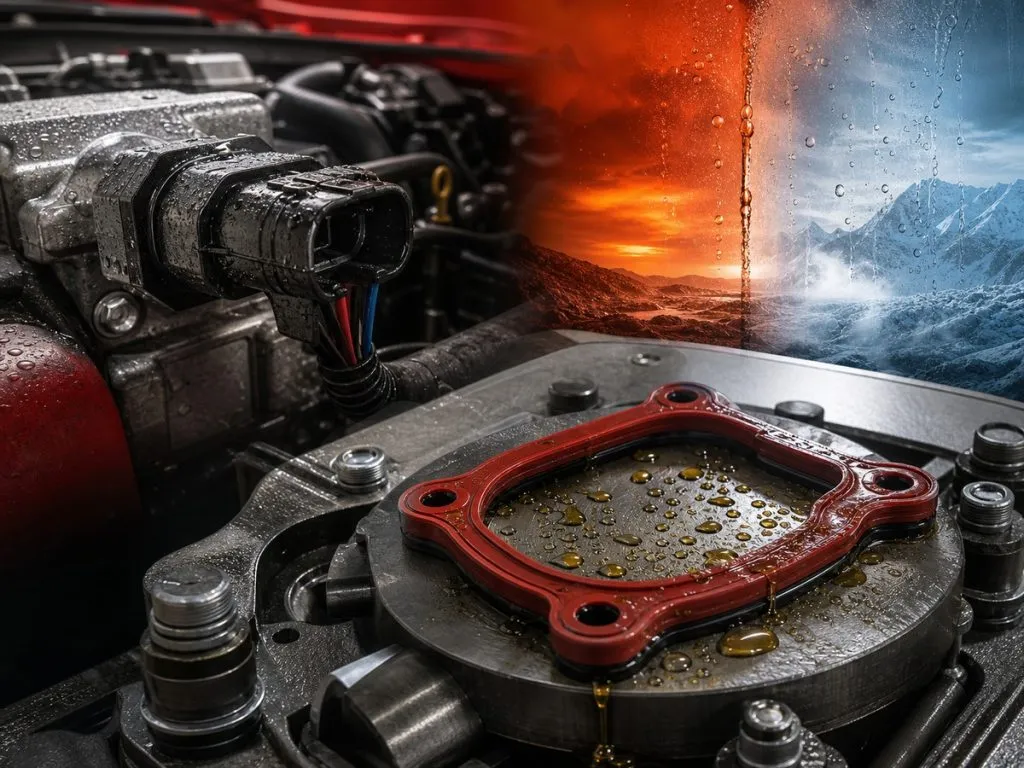
Common Challenges in the Automotive Environment:
- High-temperature cabin environments and hot/cold cycles
- Oil, fuel, coolant and other media
- Long-term vibration and shock
- Higher life and consistency requirements
Therefore, the key to automotive seals is:Matched media + structural resistance to fluctuations + proven reliability.
typical application
- Dust and waterproof sealing of sensors, lamps and connectors
- Shell face seals
- Wire Harness Perforation Seal
Design recommendations (engineering-oriented, implementable)
1) Screening materials by medium first
- Exposure to oil/fuel: need to focus on oil resistance and volume change
- Exposure to coolant/chemical media: compatibility concerns
2) Structurally "assembly-proof"
- Increased lead-in corners and chamfers to reduce the risk of scratching
- Stabilized positioning of seals to avoid assembly deflection
- Make compression less sensitive to tolerance stacking
3) Control of extrusion and nibbling
Easier to extrude at high temperatures + pressure fluctuations + large gaps.
- Options: control of clearance, improvement of hardness, optimization of groove structure (according to working conditions)
4) Define critical dimensions (CTQ)
Mark the dimensions that will affect the seal, agree on the inspection method and sampling frequency.
Automotive projects are often not just "made to order", but "every batch is the same".
Suggested Validation Ideas (select as needed for project)
- Sealing test: spray/water immersion/airtight (specify pressure, time, temperature)
- Resistance to media: change in size/hardness/appearance after immersion
- Thermal Aging: Evaluating Hardening and Resilience Changes
- Vibration/shock: displacement or leakage after assembly
- Compression set: one of the key indicators of long-term sealing capability
Frequently Asked Questions (FAQ)
Q: The sample was fine, why did it leak when I got in the car?
Common causes: assembly differences, temperature cycling leading to relaxation, insufficient media compatibility, gap extrusion.
Q: Is higher hardness better?
Not necessarily. Higher hardness resists extrusion, but decreased fit and more sensitive to surface roughness and assembly.