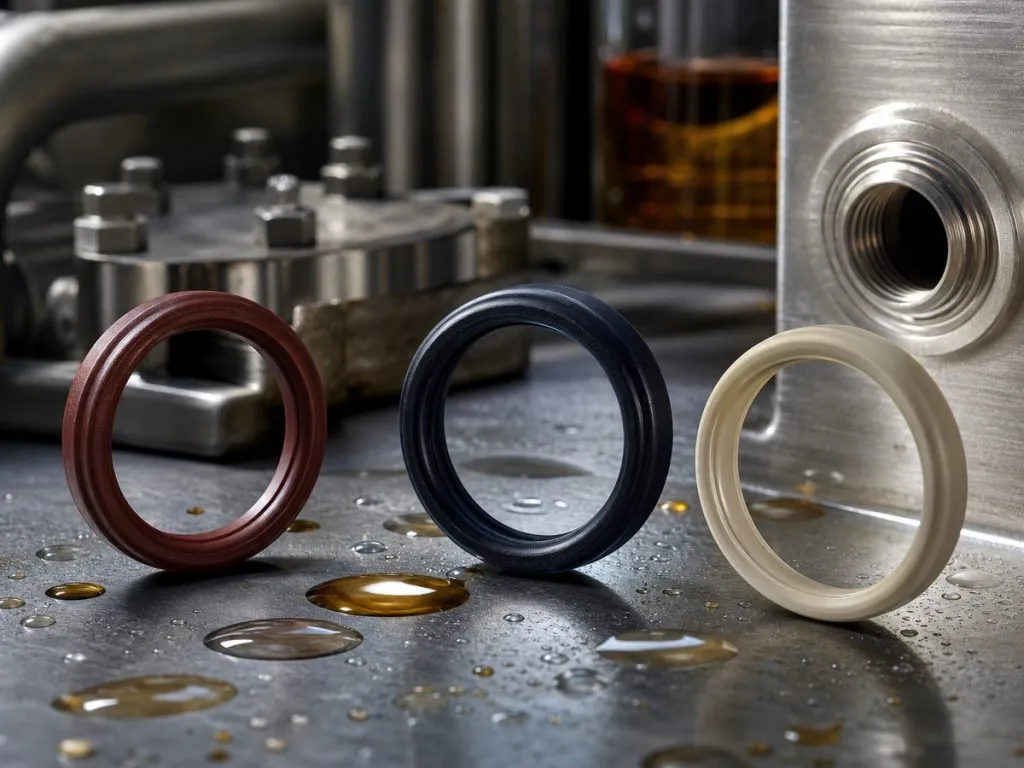
At the heart of oil and chemical resistant seal selection is the combination of "medium + temperature + time". This article uses engineering comparisons to help quickly determine when FKM/NBR should be used and when silicone is more appropriate.
1. Typical advantages of the three types of materials
- Silicone (VMQ): high and low temperature resistance, good weather resistance, suitable for outdoor and high temperature environment; but general compatibility with certain oil media.
- NBR: better oil resistance, cost advantage is obvious, commonly used in general oil environment; weather resistance and high temperature resistance is limited.
- FKM: more resistant to oil and chemicals, suitable for more demanding media; high cost, low temperature flexibility needs to be evaluated.
2. Selection process: first get the "media list"
- Specify the medium: mineral oil/synthetic oil/fuel/cleaner/coolant, etc.
- Combined temperature and immersion time: different risks for short-term exposure versus long-term immersion
- If the medium is uncertain: it is recommended to do multi-media immersion screening (including volume change, hardness change)
3. Structure and assembly also change the "material answer".
- Insufficient preload can magnify material differences and lead to leakage
- Poor groove design can lead to extrusion, wear and early failure
4. Recommended validation combinations
- Before and after media immersion: size/hardness/appearance/sealing performance
- Thermal aging: assessing life margins
- Leakage test: under real assembly conditions
5. Cost and supply chain recommendations
- Meet needs with standard materials before considering "performance overdesign"
- Establishment of alternative materials and suppliers for critical projects to minimize the risk of supply disruptions
FAQ
1. Is it always safest to use FKM?
Not necessarily. If the temperature is low or the assembly window is narrow, FKM may have insufficient rebound or difficult to assemble, which needs to be comprehensively verified.
2. Can silicone not be used at all in an oil environment?
Neither. The key is in the type of media and immersion conditions, and it is recommended to verify with a combination of immersion + leakage before deciding.