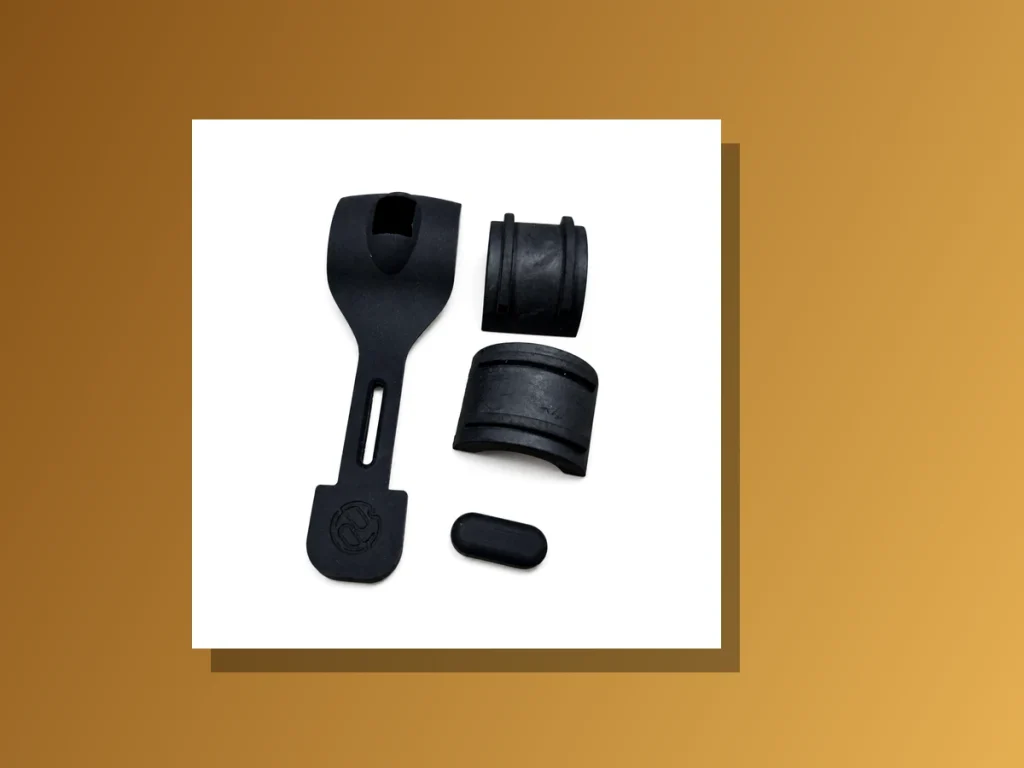
Short answer:Silicone molding of metal inserts requires solutions for in-mold positioning, injection impact, interface bonding, and thermal expansion differences. Reliability depends on both surface treatment and mechanical interlocking features such as holes, grooves, and knurling.
In what kinds of situations are these silicone parts suitable?
Clearly defining the actual application scenarios helps translate material, structural, and validation requirements into actionable technical specifications.
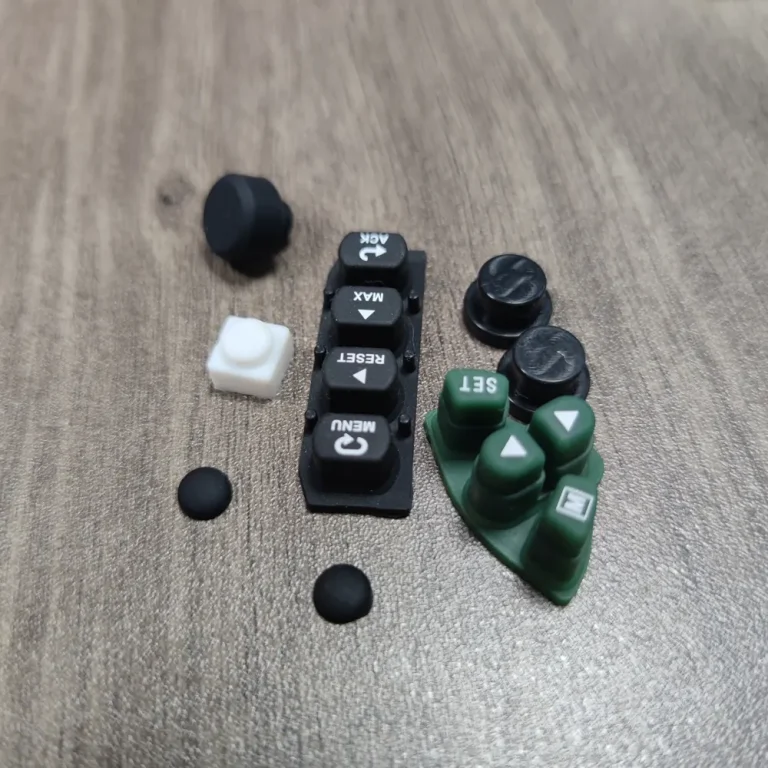
- Sealed terminals, valves, pushbutton frames, and connectors
- Metal-Supported Shock-Absorbing, Insulating, and Waterproof Components
- Composite parts requiring high positioning accuracy and resistance to pull-out
Parameters to Confirm Before Selecting a Model
We recommend providing the following information before requesting a quote or ordering a sample to minimize the need for repeated prototyping and misunderstandings regarding specifications.
- Specify the metal material, surface finish, and dimensional tolerances
- Specify requirements for bonding, insulation, sealing, and pull-out resistance
- Verify the operating temperature, medium, and cyclic load
Key Points in Structural Design
Structural dimensions, assembly relationships, and material elasticity must be evaluated together; simply increasing a single parameter generally does not directly improve reliability.
- Form a mechanical lock using through-holes, reverse threads, or knurling
- Ensure the minimum coating thickness and avoid sharp edges
- The positioning surfaces of the inserts should be stable and suitable for automatic or manual loading.
Production and Quality Control
Consistency in mass production results from the combined control of material batches, mold condition, molding windows, and inspection methods.
- Metal must be degreased, cleaned, and primed according to the procedure.
- Molds prevent insert misalignment, floating, and material leakage
- Control preheating, vulcanization, and cooling to reduce residual stress
Recommended Verification Items
Validation should be conducted using actual or equivalent operating conditions whenever possible, and functionality should be reconfirmed after aging or cycling.
- Testing for Pull-Out, Torsion, Peel, and Sealing Performance
- Interface for Retesting After Temperature Cycling, Vibration, and Media Exposure
- Cut open to inspect the coating thickness, air bubbles, and areas with insufficient adhesive
Frequently Asked Questions
If there's a knurled finish, is a primer unnecessary?
Not necessarily; mechanical interlocking and chemical bonding can be designed in conjunction with one another based on the load.
Can the insert be completely enclosed?
Yes, but you'll need to design the positioning points, venting, and material flow paths.
How do I provide information to suppliers?
Please provide 2D or 3D drawings, photos of samples, material and hardness specifications, operating environment, target quantity, acceptance criteria, and a list of compliance documents. Based on this information, Chengxin Silicone Rubber can evaluate the materials, molds, molding process, and validation plan.