Scope and common interpretation errors
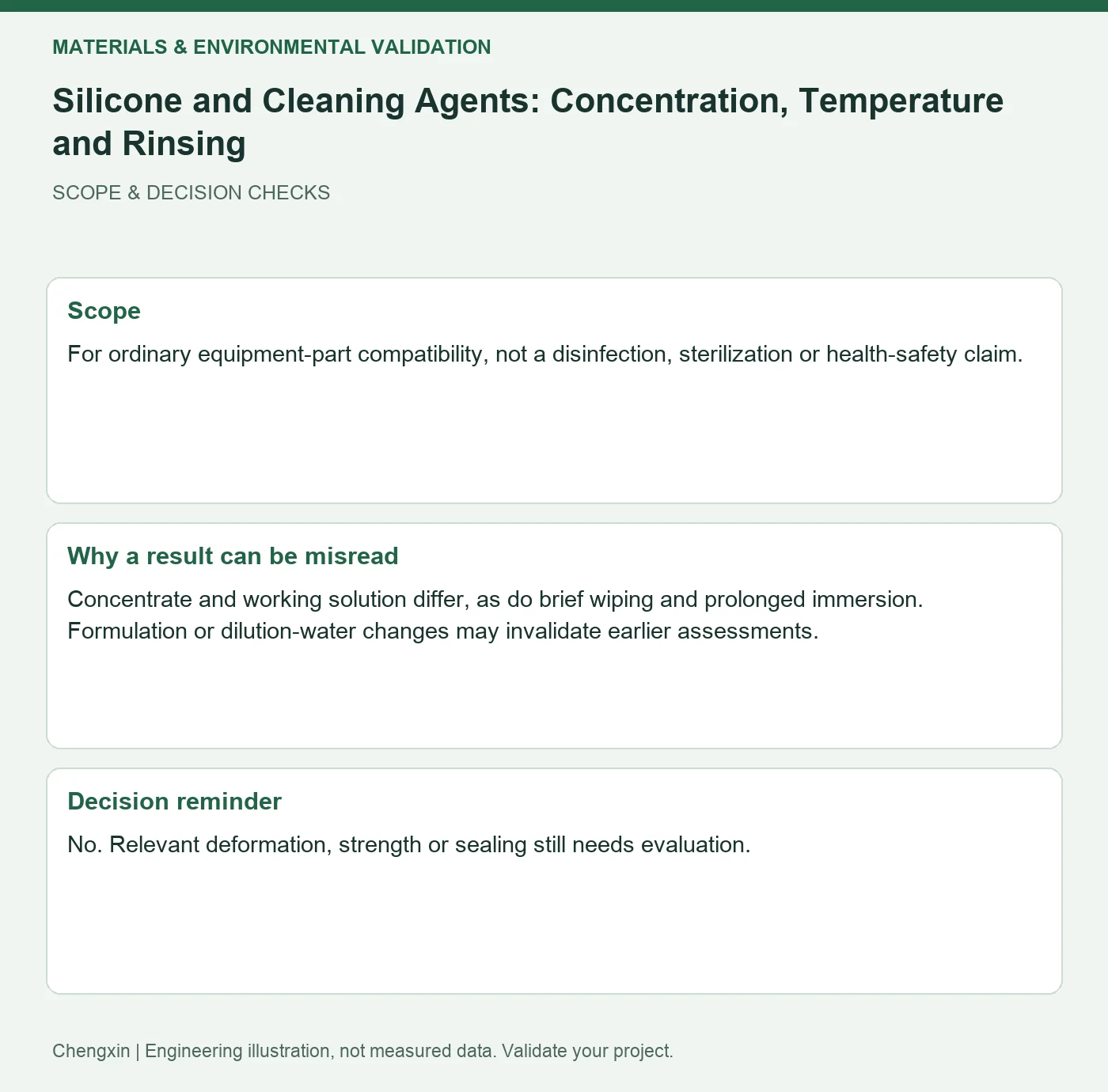
For ordinary equipment-part compatibility, not a disinfection, sterilization or health-safety claim.
Concentrate and working solution differ, as do brief wiping and prolonged immersion. Formulation or dilution-water changes may invalidate earlier assessments.
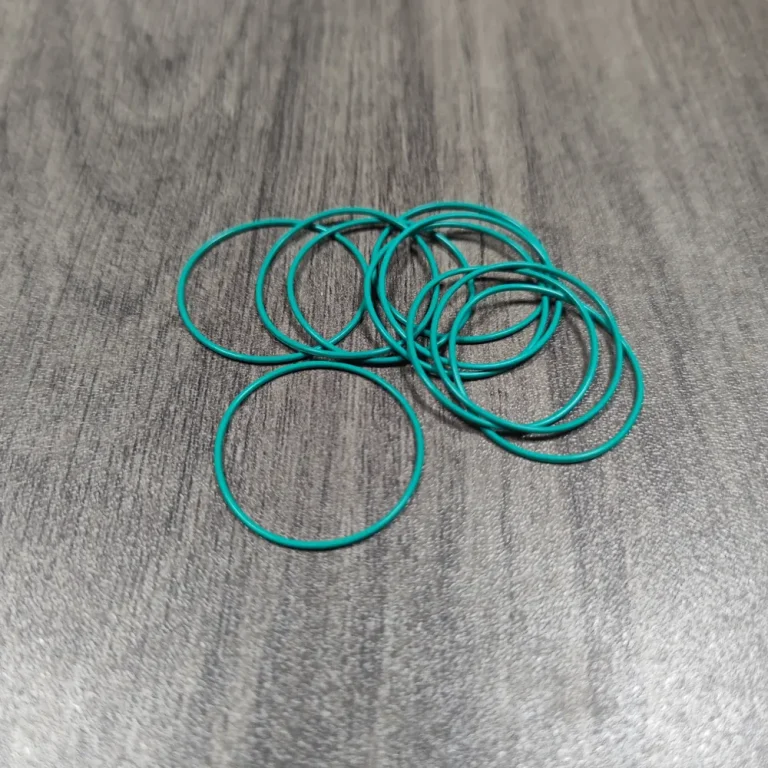
Turn the review into recorded checks
| Step | Action and evidence |
|---|---|
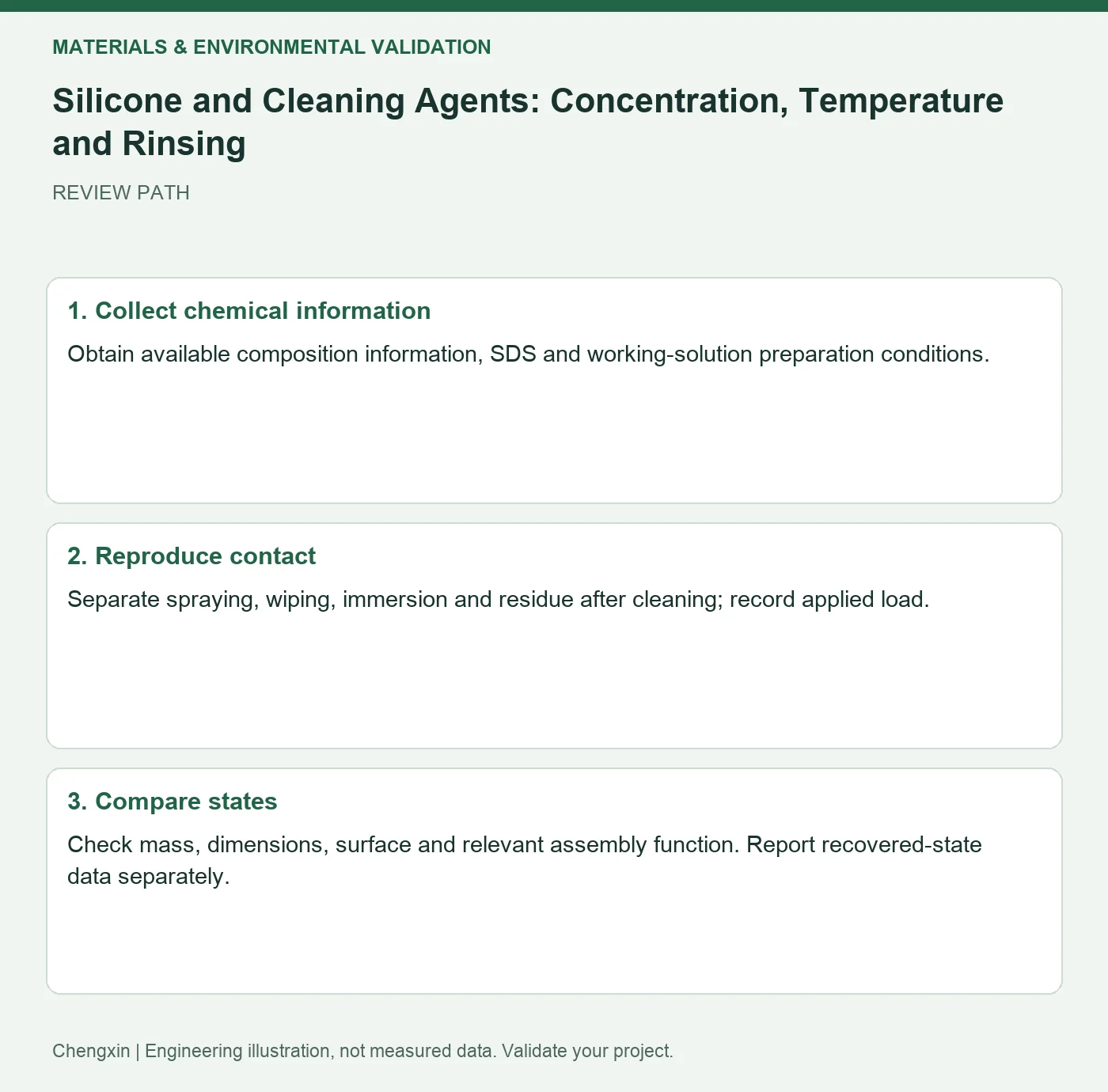
| 1 · Collect chemical information | Obtain available composition information, SDS and working-solution preparation conditions. |
| 2 · Reproduce contact | Separate spraying, wiping, immersion and residue after cleaning; record applied load. |
| 3 · Compare states | Check mass, dimensions, surface and relevant assembly function. Report recovered-state data separately. |
A comparison to avoid misinterpretation
Concentrate immersion may be exploratory when actual use involves dilution, but must not silently replace use-condition validation. Passing a working solution does not permit every concentration.
Frequently asked question
Does no whitening after cleaning prove compatibility?
No. Relevant deformation, strength or sealing still needs evaluation.
Background and further reading
This note addresses one specific question. For broader concepts, see the related background guide.
Related question: Sticky Silicone Keypads After Wiping: Coating and Cleaner Checks.
External references support the relevant concepts. The review steps and scenarios are independent engineering discussion guidance, not quotations from a standard or external organization. Use agreed methods, applicable document revisions and complete conditions.
Apply this to your custom part
Compare the structure with Rubber O-Rings for Cleaning-Equipment Water Circuits. Describe the application, geometry, operating conditions, quantity and problem to solve. Submit a custom-parts inquiry, or see how to send drawings and sample photographs by business email. Confirm material, dimensions, costs, testing and delivery requirements for the project.