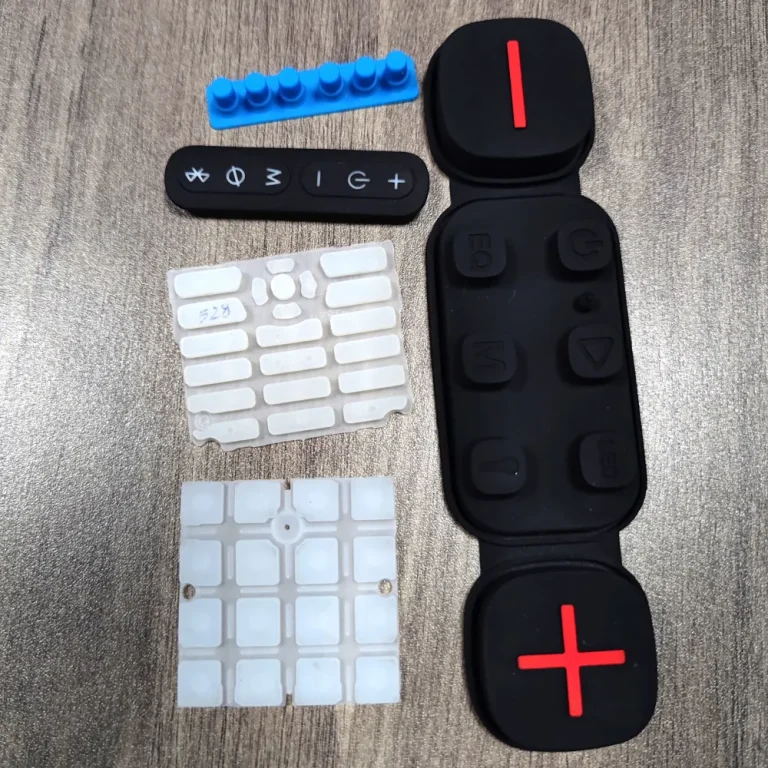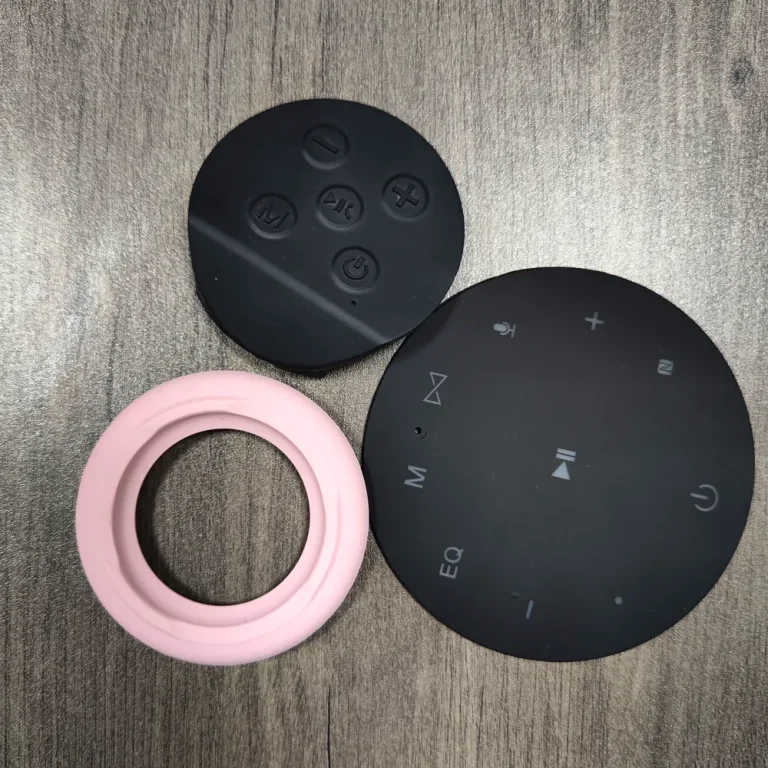
Scope and common interpretation errors
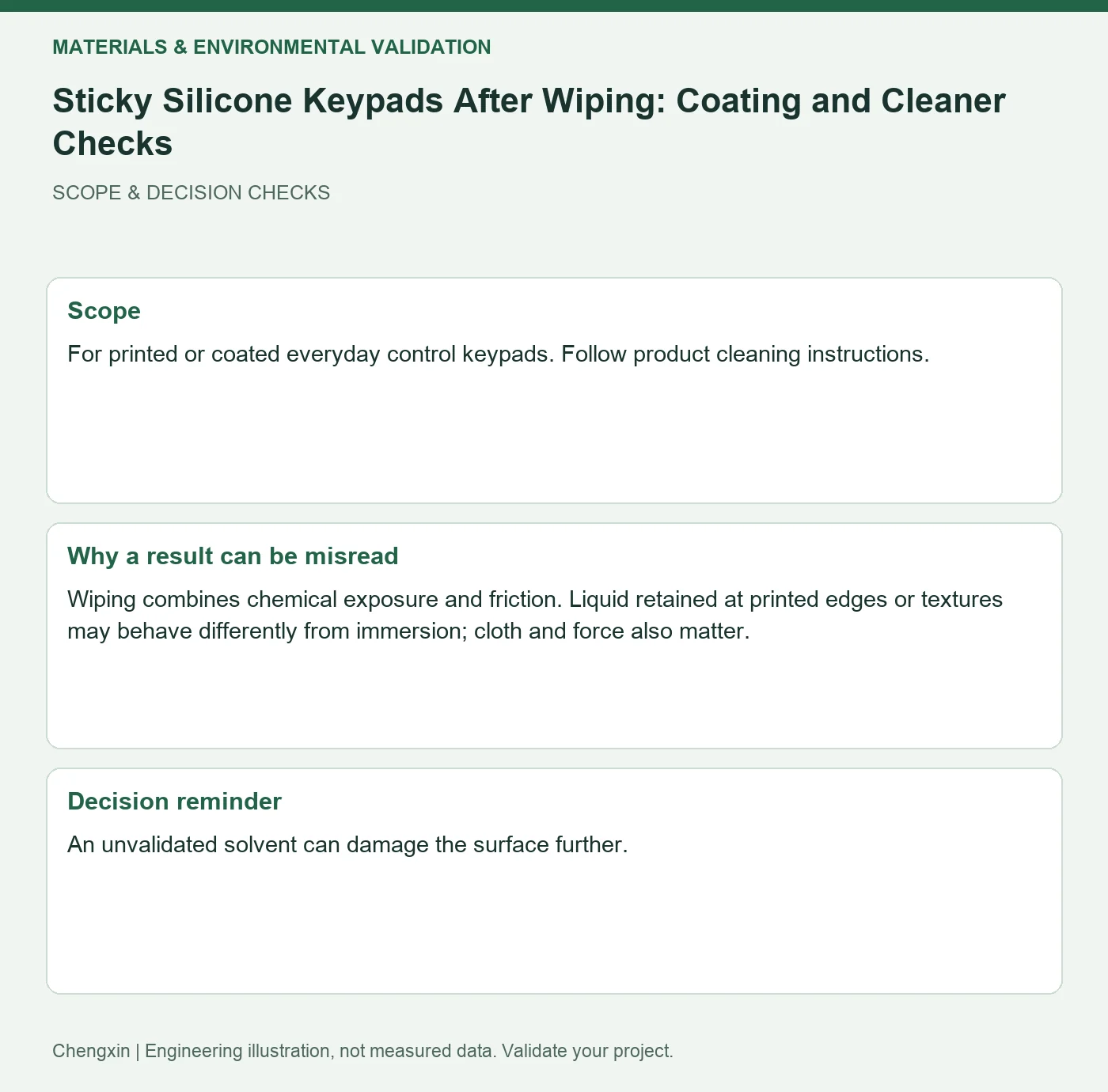
For printed or coated everyday control keypads. Follow product cleaning instructions.
Wiping combines chemical exposure and friction. Liquid retained at printed edges or textures may behave differently from immersion; cloth and force also matter.
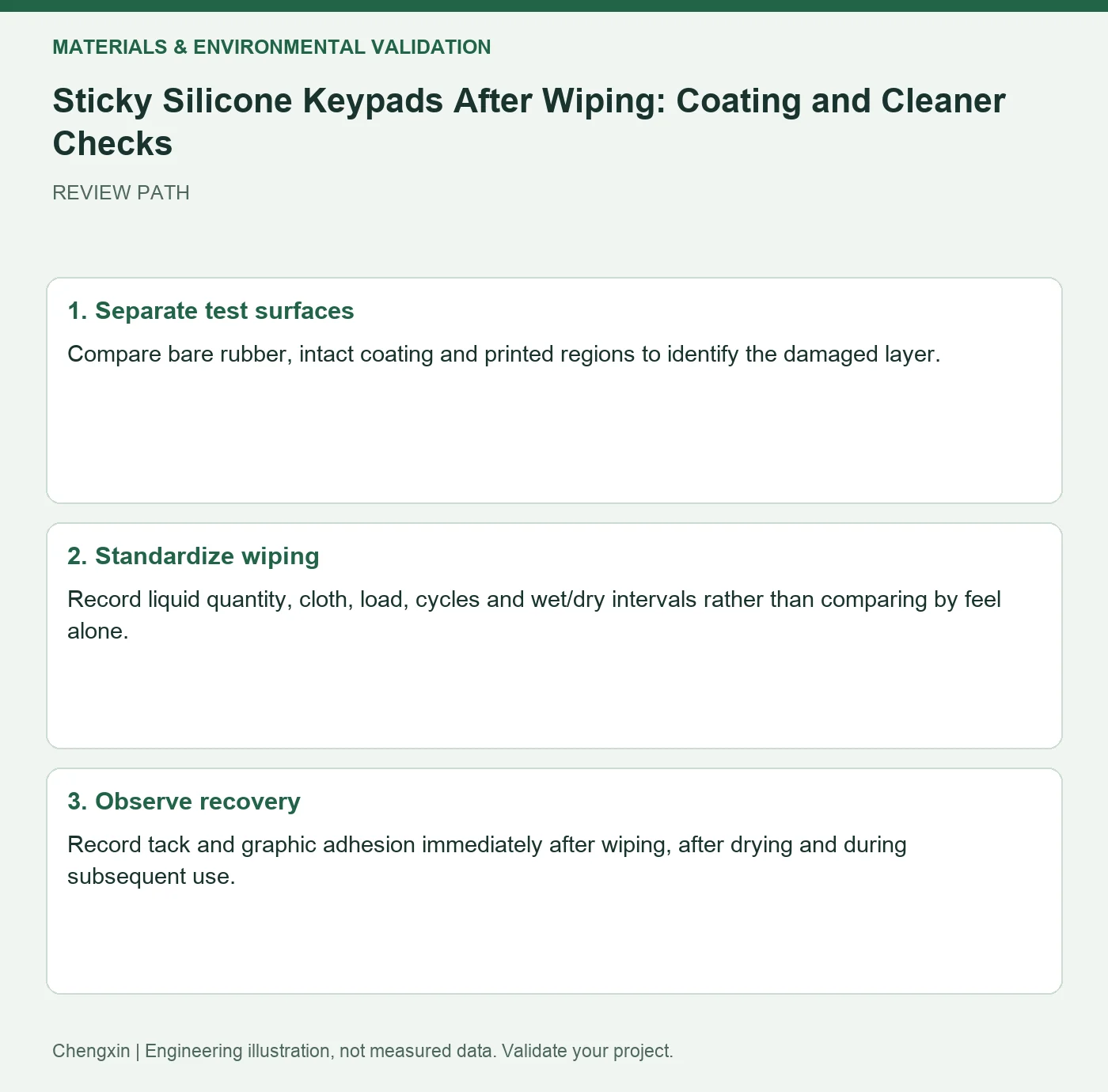
Turn the review into recorded checks
| Step | Action and evidence |
|---|---|
| 1 · Separate test surfaces | Compare bare rubber, intact coating and printed regions to identify the damaged layer. |
| 2 · Standardize wiping | Record liquid quantity, cloth, load, cycles and wet/dry intervals rather than comparing by feel alone. |
| 3 · Observe recovery | Record tack and graphic adhesion immediately after wiping, after drying and during subsequent use. |
A comparison to avoid misinterpretation
If bare rubber remains stable but printed areas become sticky first, investigate coating and cleaning together, then reproduce the result on the complete keypad.
Frequently asked question
Should a stronger solvent remove the sticky layer?
An unvalidated solvent can damage the surface further.
Background and further reading
This note addresses one specific question. For broader concepts, see the related background guide.
Related question: Sweat Resistance of Wearable Silicone: Sebum and Skin-Care Exposure.
External references support the relevant concepts. The review steps and scenarios are independent engineering discussion guidance, not quotations from a standard or external organization. Use agreed methods, applicable document revisions and complete conditions.
Apply this to your custom part
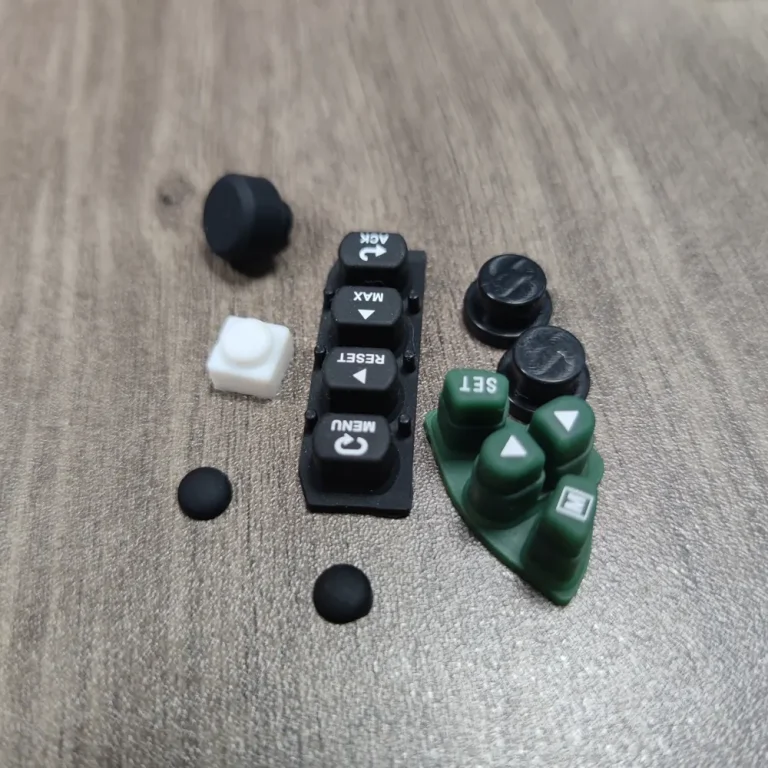
Compare the structure with Custom Silicone Single-Key Button Caps. Describe the application, geometry, operating conditions, quantity and problem to solve. Submit a custom-parts inquiry, or see how to send drawings and sample photographs by business email. Confirm material, dimensions, costs, testing and delivery requirements for the project.