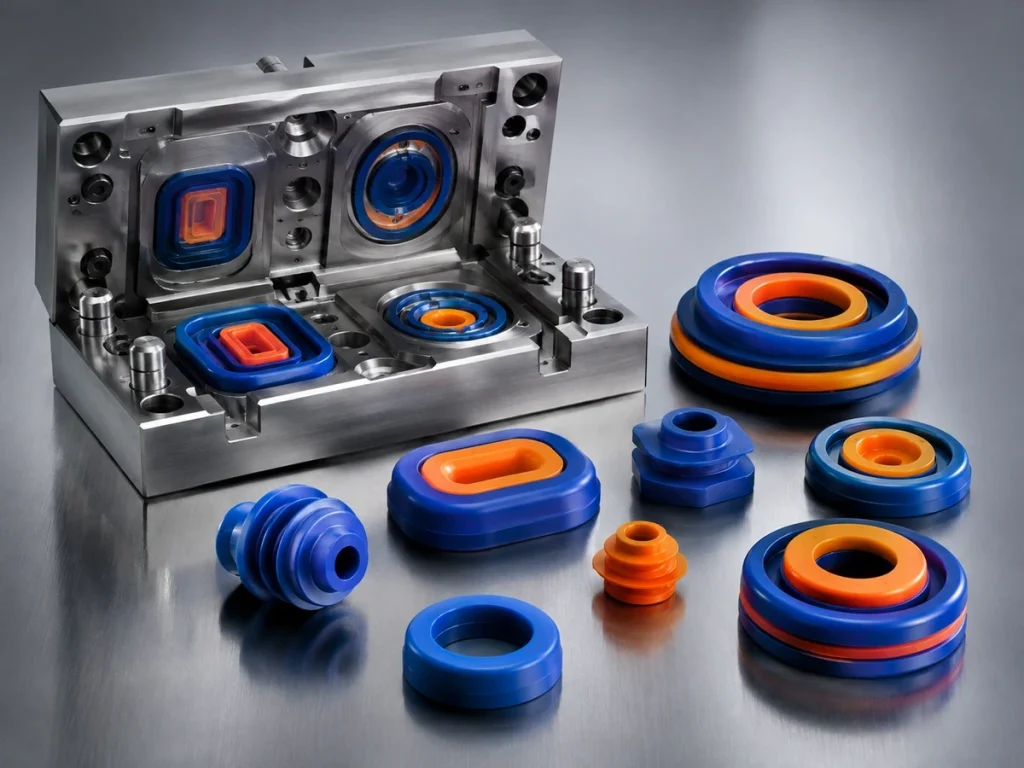
Short answer:In the one-piece molding of two-color silicone, it is essential to control the curing compatibility of the two materials, interfacial bonding, positioning, and the boundaries for secondary injection. Color is merely a surface-level result; material compatibility, mold precision, and the sequential molding window are what ultimately determine the risks of delamination and material overflow.
In what kinds of situations are these silicone parts suitable?
Clearly defining the actual application scenarios helps translate material, structural, and validation requirements into actionable technical specifications.
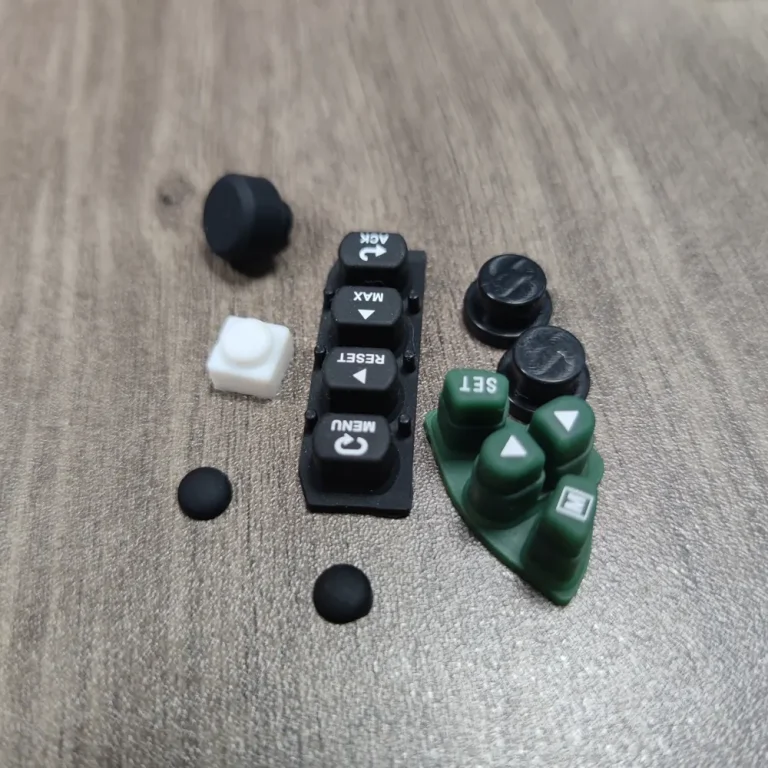
- Two-Tone Buttons, Labels, and Decorative Silicone Parts
- Functional Components with Different Hardness Combinations
- Products that require tactile feedback or recognition in specific areas
Parameters to Confirm Before Selecting a Model
We recommend providing the following information before requesting a quote or ordering a sample to minimize the need for repeated prototyping and misunderstandings regarding specifications.
- Hardness, Color, and Formulation Systems of the Two Materials
- Interface Location, Bond Strength, and Appearance Boundaries
- Output, Number of Cavities, and Automated Transfer Method
Key Points in Structural Design
Structural dimensions, assembly relationships, and material elasticity must be evaluated together; simply increasing a single parameter generally does not directly improve reliability.
- Add a reasonable mechanical locking mechanism to the interface
- Positioning features prevent offset and deformation of one-off parts
- Avoid critical appearance and moving surfaces at the edges of excess adhesive
Production and Quality Control
Consistency in mass production results from the combined control of material batches, mold condition, molding windows, and inspection methods.
- Controlling the Degree of Primary Vulcanization and the Interval Between Primary and Secondary Molding
- Mold Cleaning to Prevent Color and Material Cross-Contamination
- Check the mating surfaces, color differences, and dimensions on the first piece
Recommended Verification Items
Validation should be conducted using actual or equivalent operating conditions whenever possible, and functionality should be reconfirmed after aging or cycling.
- Conduct interface delamination and tensile tests
- Inspect for delamination and discoloration after heat-aging cleaning
- Verification of Boundary Stability in Multi-Hole Continuous Production
Frequently Asked Questions
Do both types of silicone bond together naturally?
Not necessarily; the formulation must be tested for compatibility with vulcanization.
Does a darker color make it easier to cover up glue overflow?
It cannot replace mold and process boundary control.
How do I provide information to suppliers?
Please provide 2D or 3D drawings, photos of samples, material and hardness specifications, operating environment, target quantity, acceptance criteria, and a list of compliance documents. Based on this information, Chengxin Silicone Rubber can evaluate the materials, molds, molding process, and validation plan.