Scope and common interpretation errors
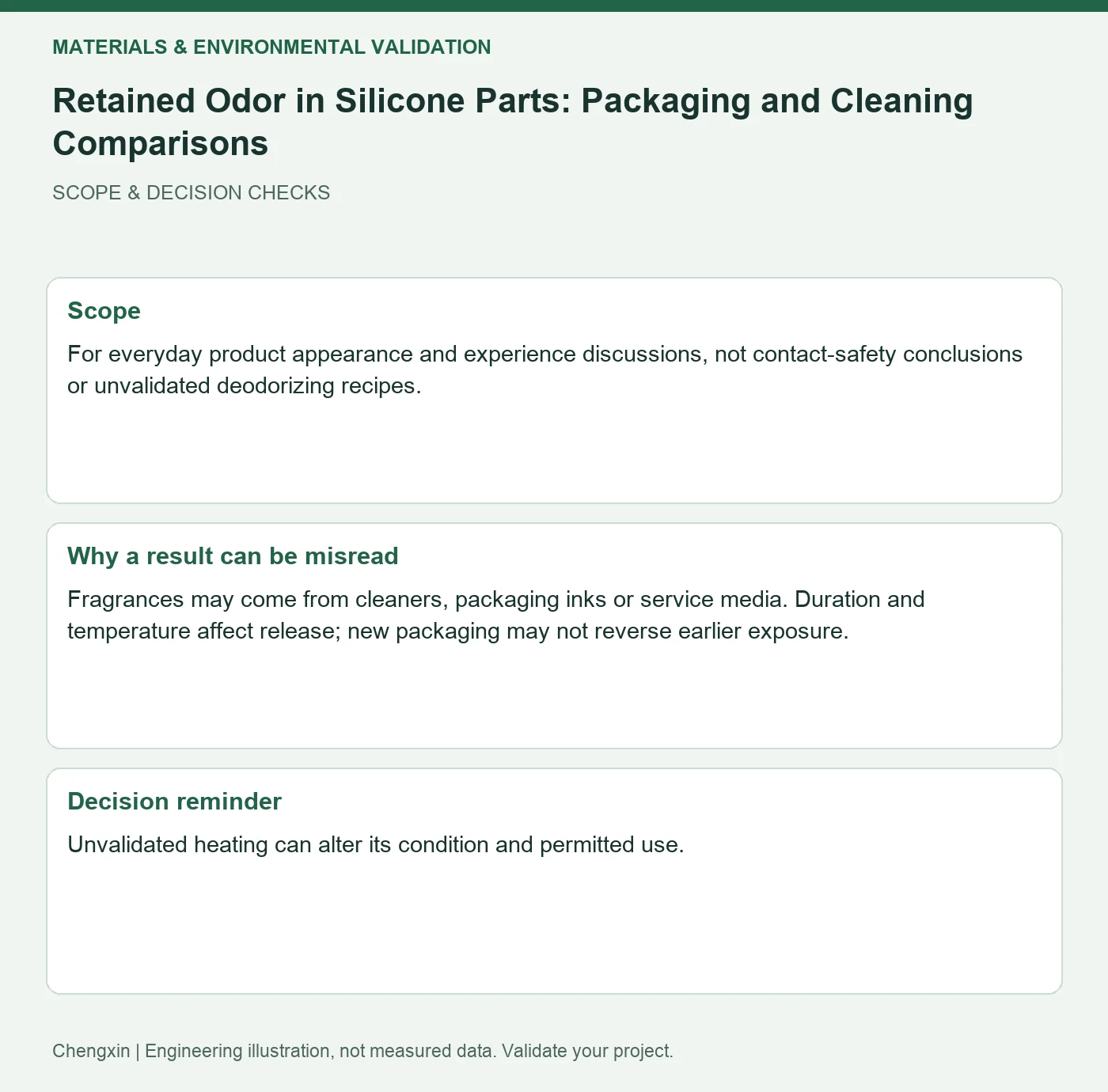
For everyday product appearance and experience discussions, not contact-safety conclusions or unvalidated deodorizing recipes.
Fragrances may come from cleaners, packaging inks or service media. Duration and temperature affect release; new packaging may not reverse earlier exposure.
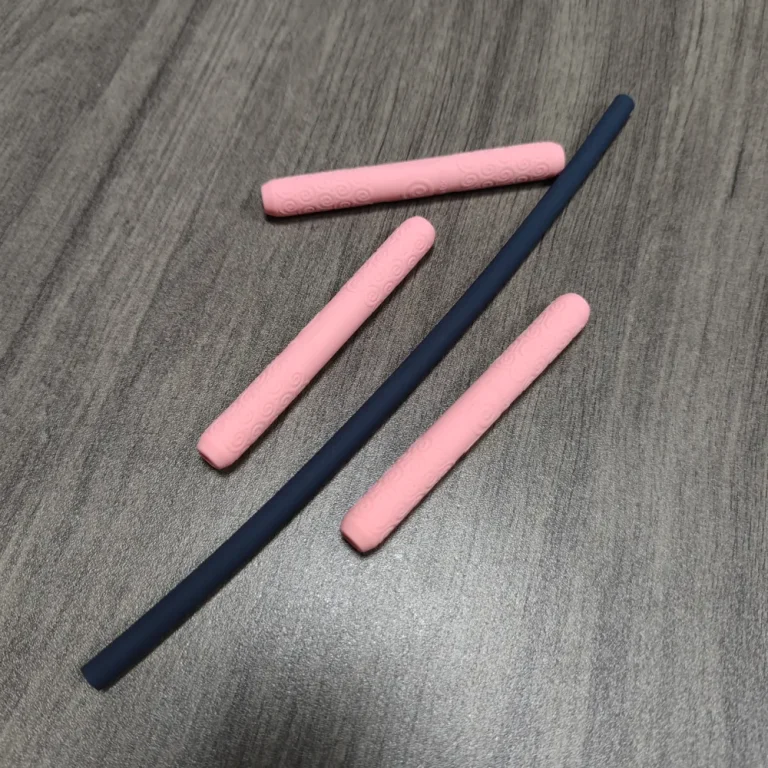
Turn the review into recorded checks
| Step | Action and evidence |
|---|---|
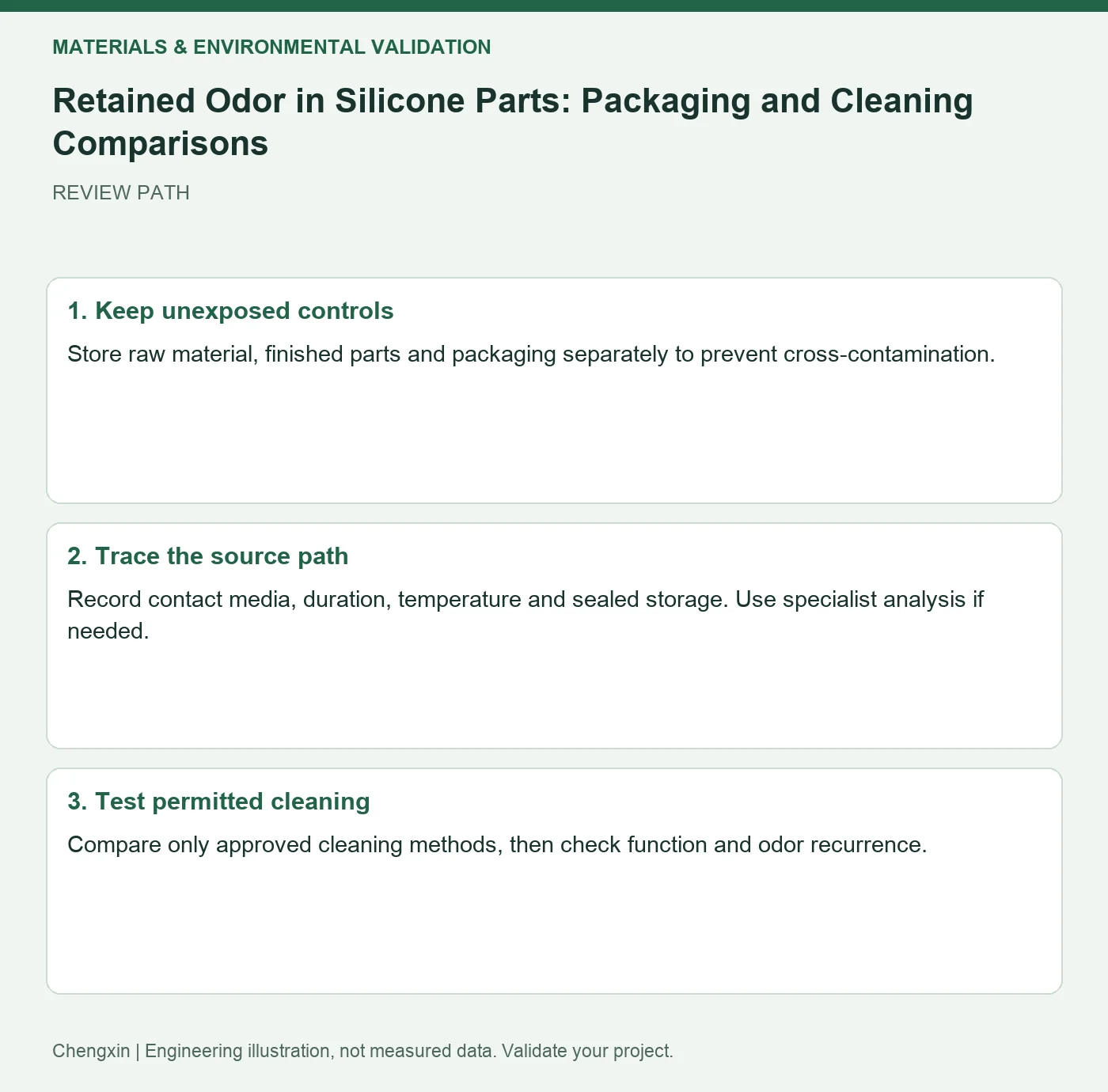
| 1 · Keep unexposed controls | Store raw material, finished parts and packaging separately to prevent cross-contamination. |
| 2 · Trace the source path | Record contact media, duration, temperature and sealed storage. Use specialist analysis if needed. |
| 3 · Test permitted cleaning | Compare only approved cleaning methods, then check function and odor recurrence. |
A comparison to avoid misinterpretation
A matching odor in empty packaging makes packaging an investigation subject, but similarity alone does not establish the migration source.
Frequently asked question
Can a heat-treated, deodorized part be shipped as new?
Unvalidated heating can alter its condition and permitted use.
Background and further reading
This note addresses one specific question. For broader concepts, see the related background guide.
Related question: Is Black Silicone Conductive? Color and Electrical Properties.
External references support the relevant concepts. The review steps and scenarios are independent engineering discussion guidance, not quotations from a standard or external organization. Use agreed methods, applicable document revisions and complete conditions.
Apply this to your custom part
Compare the structure with Custom Silicone Parts for Food-Contact Applications. Describe the application, geometry, operating conditions, quantity and problem to solve. Submit a custom-parts inquiry, or see how to send drawings and sample photographs by business email. Confirm material, dimensions, costs, testing and delivery requirements for the project.