Scope and common interpretation errors
For everyday equipment covers and shaped accessories, without a universal draft or opening ratio.
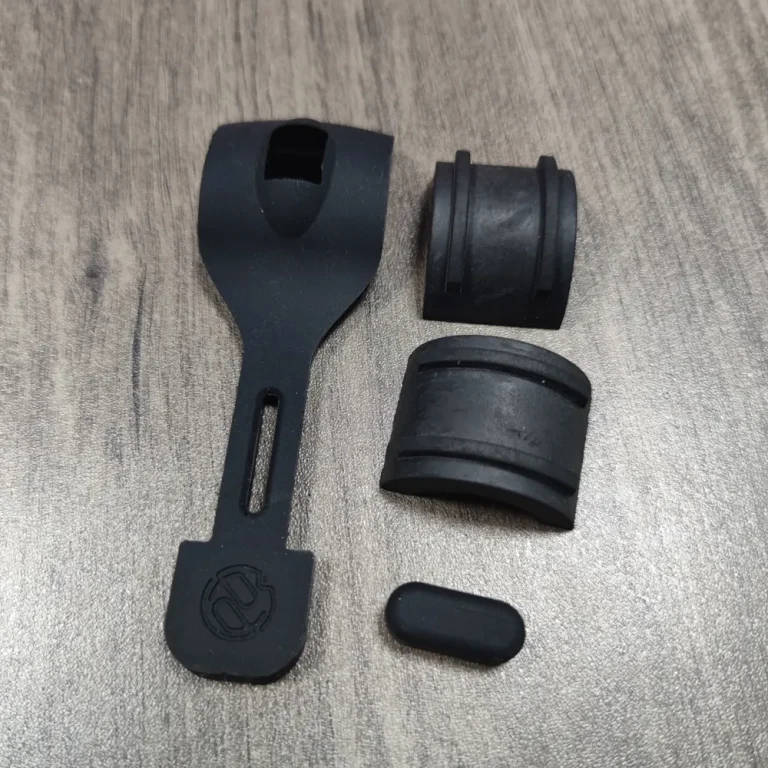
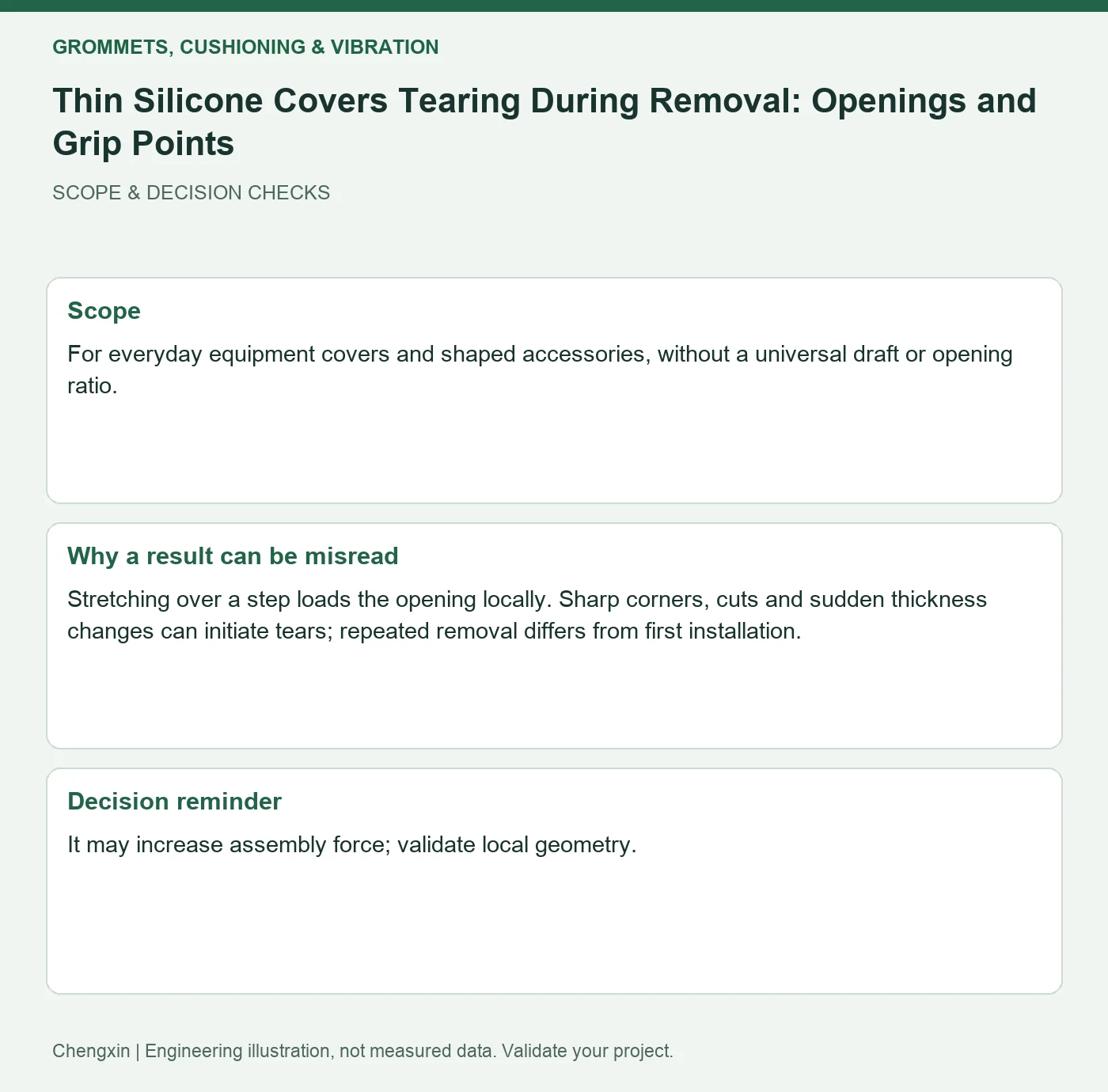
Stretching over a step loads the opening locally. Sharp corners, cuts and sudden thickness changes can initiate tears; repeated removal differs from first installation.
Turn the review into recorded checks
| Step | Action and evidence |
|---|---|
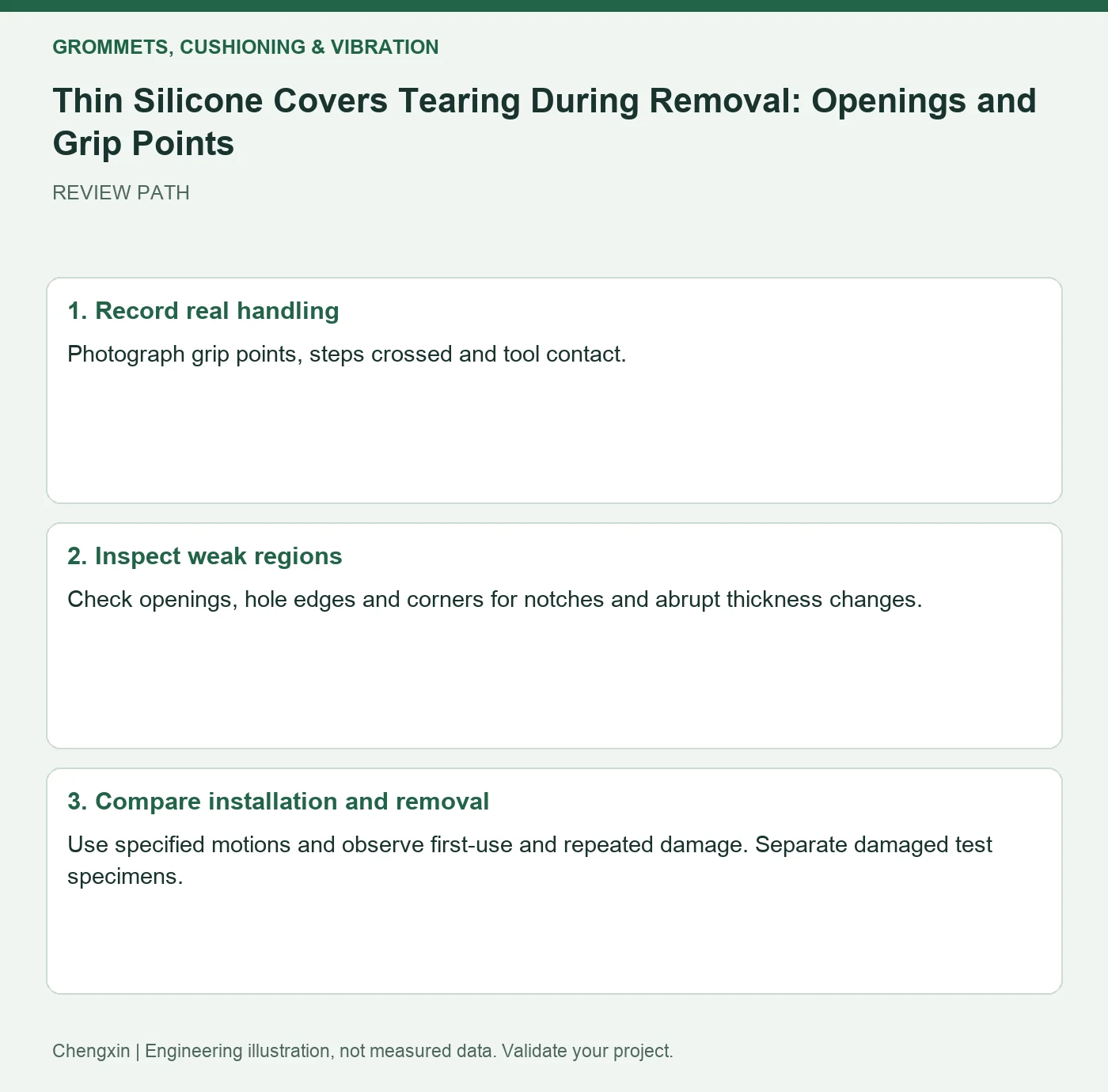
| 1 · Record real handling | Photograph grip points, steps crossed and tool contact. |
| 2 · Inspect weak regions | Check openings, hole edges and corners for notches and abrupt thickness changes. |
| 3 · Compare installation and removal | Use specified motions and observe first-use and repeated damage. Separate damaged test specimens. |
A comparison to avoid misinterpretation
Repeated cracks at the same user-gripped opening justify reviewing grip area or opening shape rather than only thickening the entire cover.
Frequently asked question
Does overall thickening solve every tear?
It may increase assembly force; validate local geometry.
Background and further reading
This note addresses one specific question. For broader concepts, see the related background guide.
Related question: Silicone Covers Causing False Button Inputs: Preload and Position.
External references support the relevant concepts. The review steps and scenarios are independent engineering discussion guidance, not quotations from a standard or external organization. Use agreed methods, applicable document revisions and complete conditions.
Apply this to your custom part
Compare the structure with Custom Shaped Silicone Parts. Describe the application, geometry, operating conditions, quantity and problem to solve. Submit a custom-parts inquiry, or see how to send drawings and sample photographs by business email. Confirm material, dimensions, costs, testing and delivery requirements for the project.