
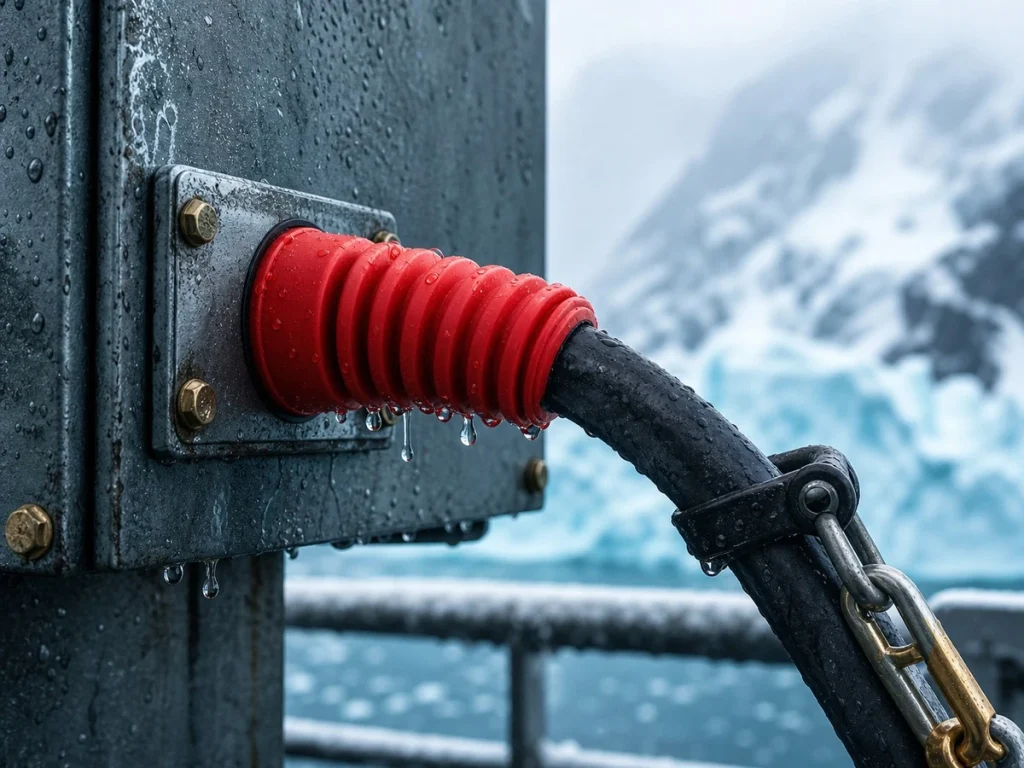
Cables in industrial equipment are common points of water ingress and breakage. Silicone sheaths should provide sealing, bend guidance, and tension absorption.
1. Cable Exit Port Dimensions
Fluctuations in the cable's outer diameter must be taken into account in the seal design.
- Confirm the wire gauge range
- Set the Interference Amount
- Avoid Scratches from Sharp Edges
2. Bend Protection
The length of the sleeve and the tapered transition reduce stress concentration.
- Add a buffer section
- Avoid sharp turns
- Verify Repeated Bending
3. Tension Damping
A sheath cannot replace a complete tension-retaining structure.
- Designing Clips or Fixtures
- Tensile Strength Test
- Check Seal Displacement
4. Environmental Validation
Verify water resistance and weather resistance based on the operating environment.
- Rain Test
- Temperature Cycling
- Check for Cracking and Rebound
FAQ
1. Does a tighter sheath make it more waterproof?
If the fit is too tight, it can cause assembly difficulties and cable damage; therefore, the interference should be kept within reasonable limits.
2. Is it possible to secure the cables using only glue?
This is not recommended; long-term tensile forces should be borne by the mechanical structure.