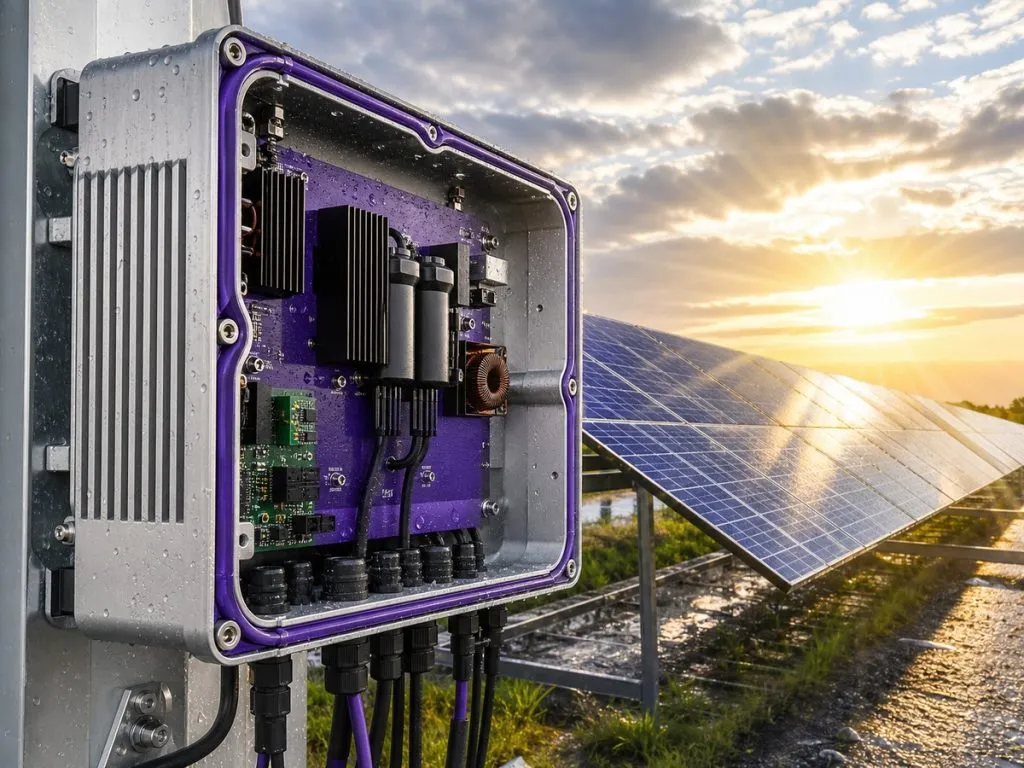
Since photovoltaic inverters are exposed to sunlight, temperature fluctuations, and moisture over long periods, silicone seals must provide weather resistance, facilitate heat dissipation from the enclosure, and allow for easy maintenance.
1. Outdoor Operating Conditions
Temperature fluctuations and UV exposure can exacerbate changes in the housing and seals.
- Confirm the duration of direct sun exposure
- Assessing the Day-Night Temperature Difference
- Identify Areas with Standing Water
2. Thermal Boundary
The seal must not interfere with the equipment's intended heat dissipation and exhaust design.
- The sealing path avoids the heat dissipation air duct
- Check the fit of the breathing valve
- Prevent Condensation from Accumulating
3. Material Selection
The material must retain its resilience even after aging.
- Appearance after UV curing
- Testing for Compression Set
- Verify Color Stability
4. System-Level Validation
Verify reliability under actual installation conditions.
- Rain Test
- Temperature Cycling
- Disassembly Inspection of Compression Marks
FAQ
1. Does the UV resistance of silicone mean it doesn’t need a coating?
Depending on appearance and service life requirements, the key factor remains the validation of the combination of materials and structure.
2. Should heat dissipation be considered when sealing an inverter?
It is necessary to evaluate the sealing paths, air ducts, and anti-condensation design simultaneously.