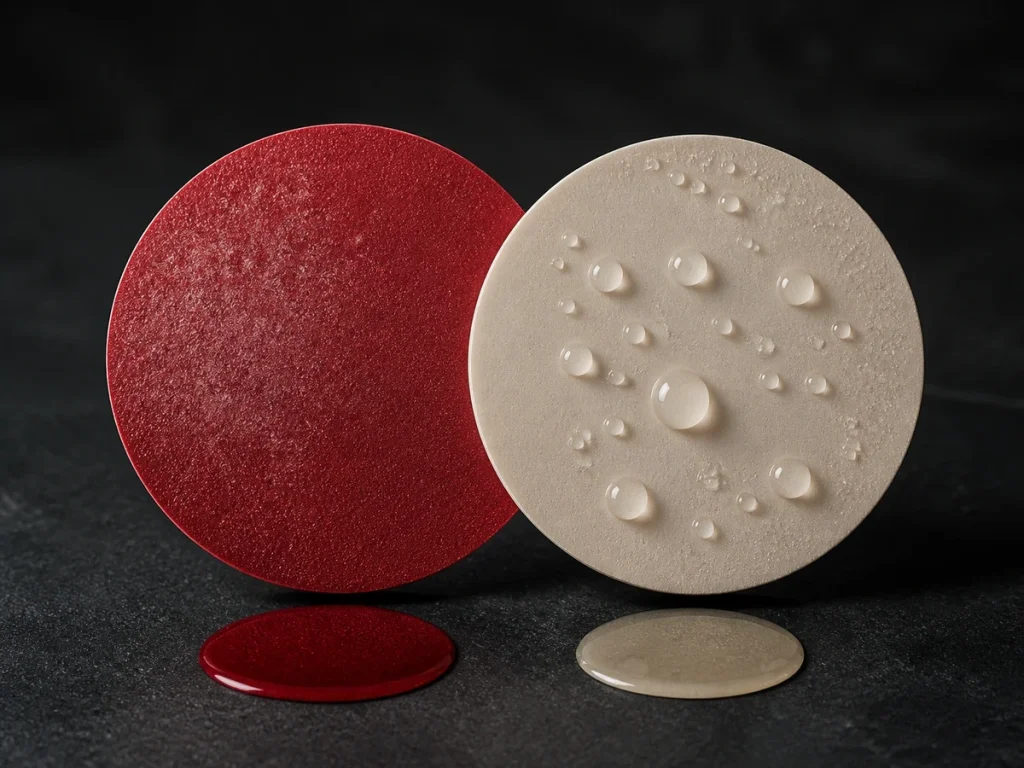
Short answer:If an oily film, white bloom, or powdery substance appears on the surface of silicone, it may be caused by low-molecular-weight substances, additive migration, release agent residue, insufficient curing, or storage conditions. First, identify the nature of the exudate, and then determine whether it affects adhesion, appearance, odor, or contact safety.
In what kinds of situations are these silicone parts suitable?
Clearly defining the actual application scenarios helps translate material, structural, and validation requirements into actionable technical specifications.
- After storage, the surface turns white or develops an oily film
- Reduced adhesion in bonding, printing, and spraying
- Abnormalities in Food, Medical, and Electronic Cleanroom Products
Parameters to Confirm Before Selecting a Model
We recommend providing the following information before requesting a quote or ordering a sample to minimize the need for repeated prototyping and misunderstandings regarding specifications.
- Time of occurrence, temperature and humidity, and packaging method
- Material Batch, Color, and Vulcanization Records
- Appearance, Erasability, and Odor of the Precipitate
Key Points in Structural Design
Structural dimensions, assembly relationships, and material elasticity must be evaluated together; simply increasing a single parameter generally does not directly improve reliability.
- Avoid packaging with a large surface area and packaging that is subjected to prolonged pressure
- Allow time for cleaning or treatment of contact surfaces
- Specified Residual Limits for Key Appearance and Bonding Surfaces
Production and Quality Control
Consistency in mass production results from the combined control of material batches, mold condition, molding windows, and inspection methods.
- Check Formulation Dosage and Additive Compatibility
- Verifying the Extent of Vulcanization and Secondary Vulcanization
- Control of Release Agents, Cleaning Agents, and Packaging Materials
Recommended Verification Items
Validation should be conducted using actual or equivalent operating conditions whenever possible, and functionality should be reconfirmed after aging or cycling.
- Identify precipitates using spectroscopic or chemical methods
- Comparison of Different Processes and Batches Through Accelerated Aging Tests
- Retest adhesion, odor, and safety parameters after cleaning
Frequently Asked Questions
Is the white frost on the surface always a sign of silicone aging?
Not necessarily; it could also be due to the migration of additives or environmental substances.
Can I keep using it after wiping it clean?
It is necessary to confirm whether precipitation occurs again and what impact it has on function.
How do I provide information to suppliers?
Please provide 2D or 3D drawings, photos of samples, material and hardness specifications, operating environment, target quantity, acceptance criteria, and a list of compliance documents. Based on this information, Chengxin Silicone Rubber can evaluate the materials, molds, molding process, and validation plan.
Related Custom Products
Bring your application questions, communication materials, and process proposals
Please provide the product's intended use, 2D/3D drawings or samples, key dimensions, material requirements, and estimated quantity. Drawings may be sent as email attachments.
Send Your Inquiry Send the drawings via email
Materials, minimum order quantities, tooling costs, and lead times must be evaluated based on the specific drawings and quantities.