Scope and common interpretation errors
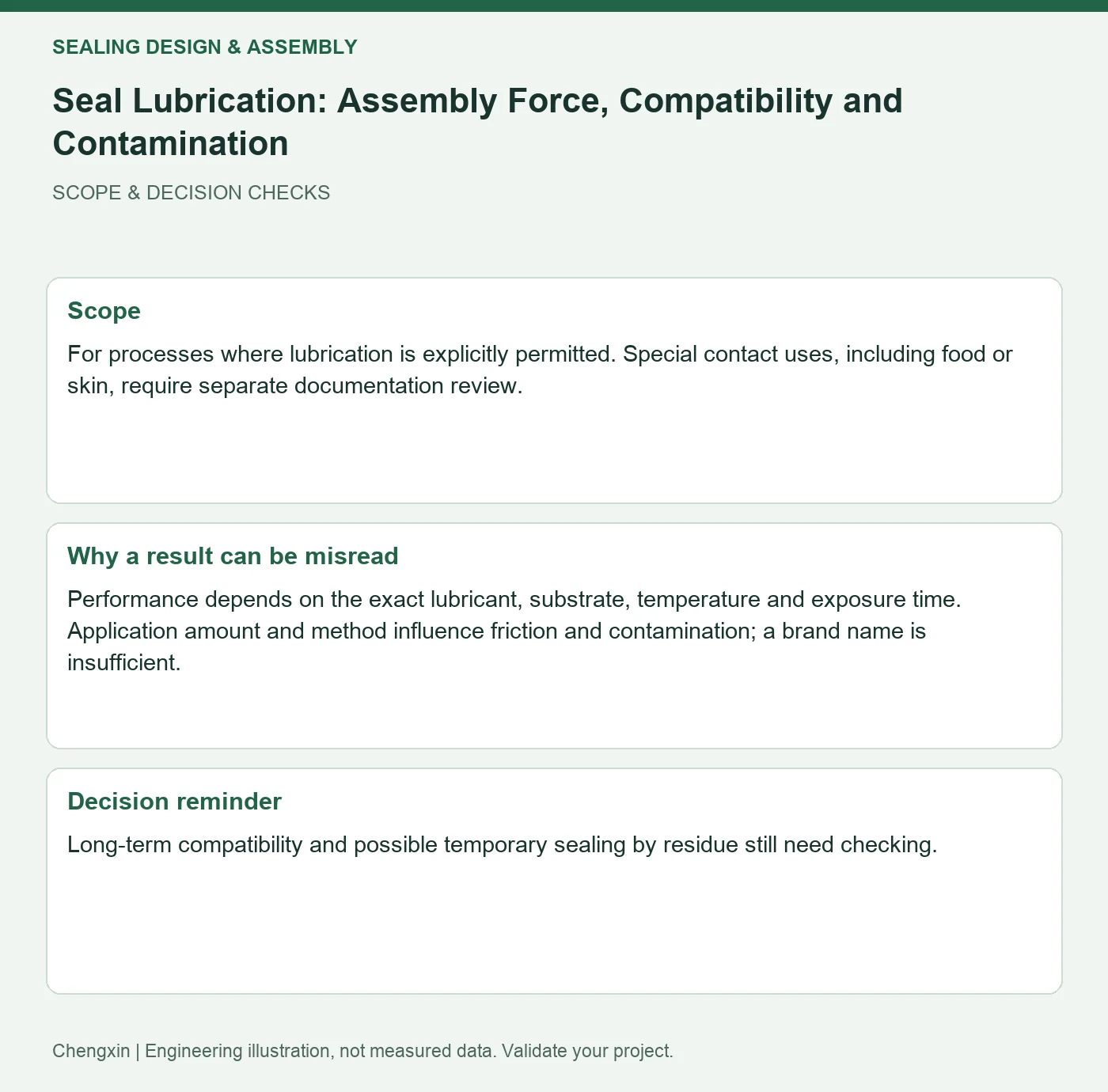
For processes where lubrication is explicitly permitted. Special contact uses, including food or skin, require separate documentation review.
Performance depends on the exact lubricant, substrate, temperature and exposure time. Application amount and method influence friction and contamination; a brand name is insufficient.
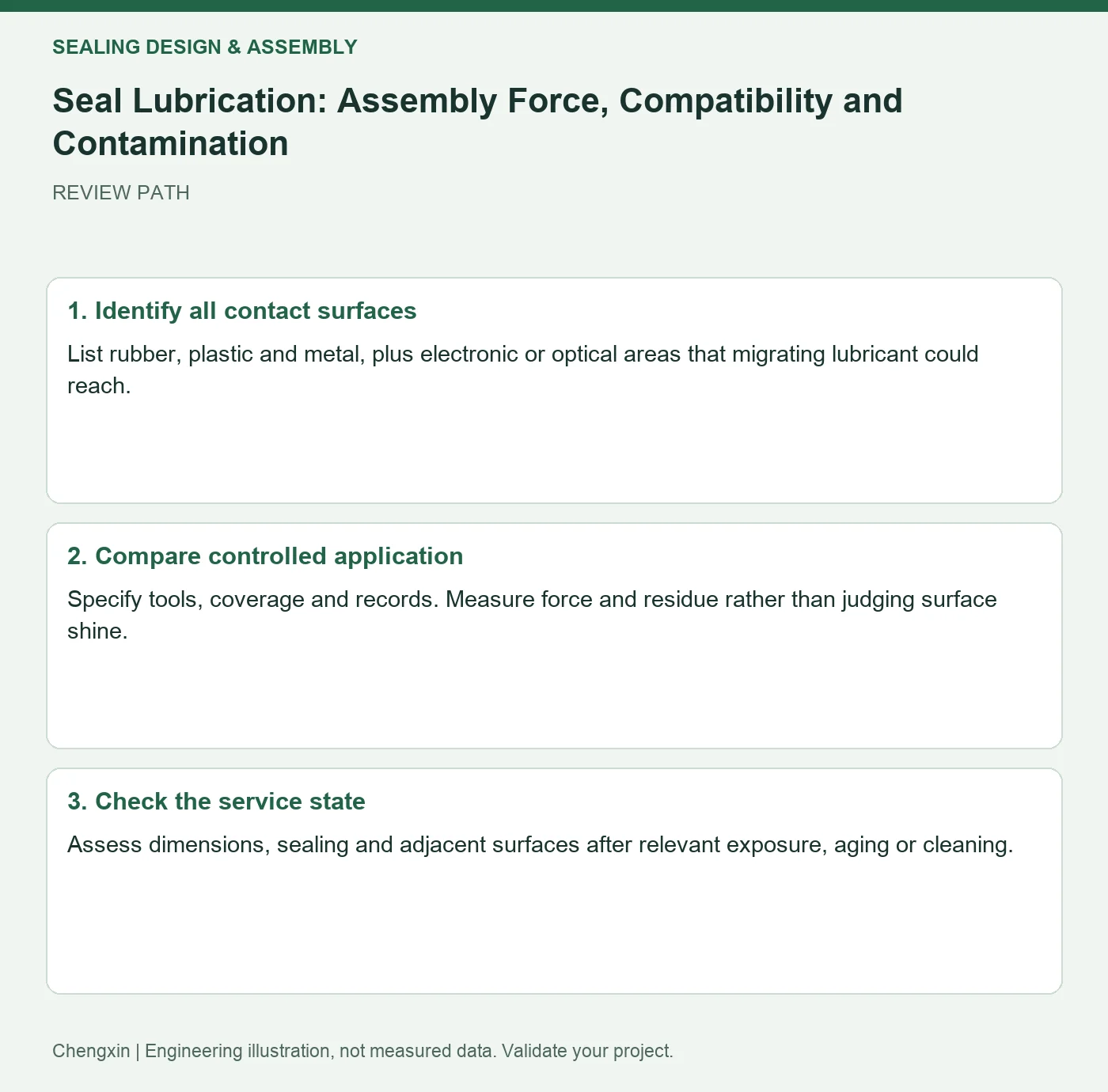
Turn the review into recorded checks
| Step | Action and evidence |
|---|---|
| 1 · Identify all contact surfaces | List rubber, plastic and metal, plus electronic or optical areas that migrating lubricant could reach. |
| 2 · Compare controlled application | Specify tools, coverage and records. Measure force and residue rather than judging surface shine. |
| 3 · Check the service state | Assess dimensions, sealing and adjacent surfaces after relevant exposure, aging or cleaning. |
A comparison to avoid misinterpretation
Dedicated unlubricated, controlled-film and excess-lubricant specimens can reveal assembly-force and migration differences. The comparison does not authorize all three production conditions.
Frequently asked question
Can improved air-leak results justify immediate release?
Long-term compatibility and possible temporary sealing by residue still need checking.
Background and further reading
This note addresses one specific question. For broader concepts, see the related background guide.
Related question: Pressure Hold Versus Pressure Cycling for Static Seals.
External references support the relevant concepts. The review steps and scenarios are independent engineering discussion guidance, not quotations from a standard or external organization. Use agreed methods, applicable document revisions and complete conditions.
Apply this to your custom part
Compare the structure with Precision Silicone O-Rings for Watches. Describe the application, geometry, operating conditions, quantity and problem to solve. Submit a custom-parts inquiry, or see how to send drawings and sample photographs by business email. Confirm material, dimensions, costs, testing and delivery requirements for the project.