Scope and common interpretation errors
For addition-cure silicone contamination investigations under supplier and site procedures.
Fixture residue, gloves, tape or cleaning can transfer substances to the interface. A clean appearance is insufficient; changing insert and fixture together obscures cause.
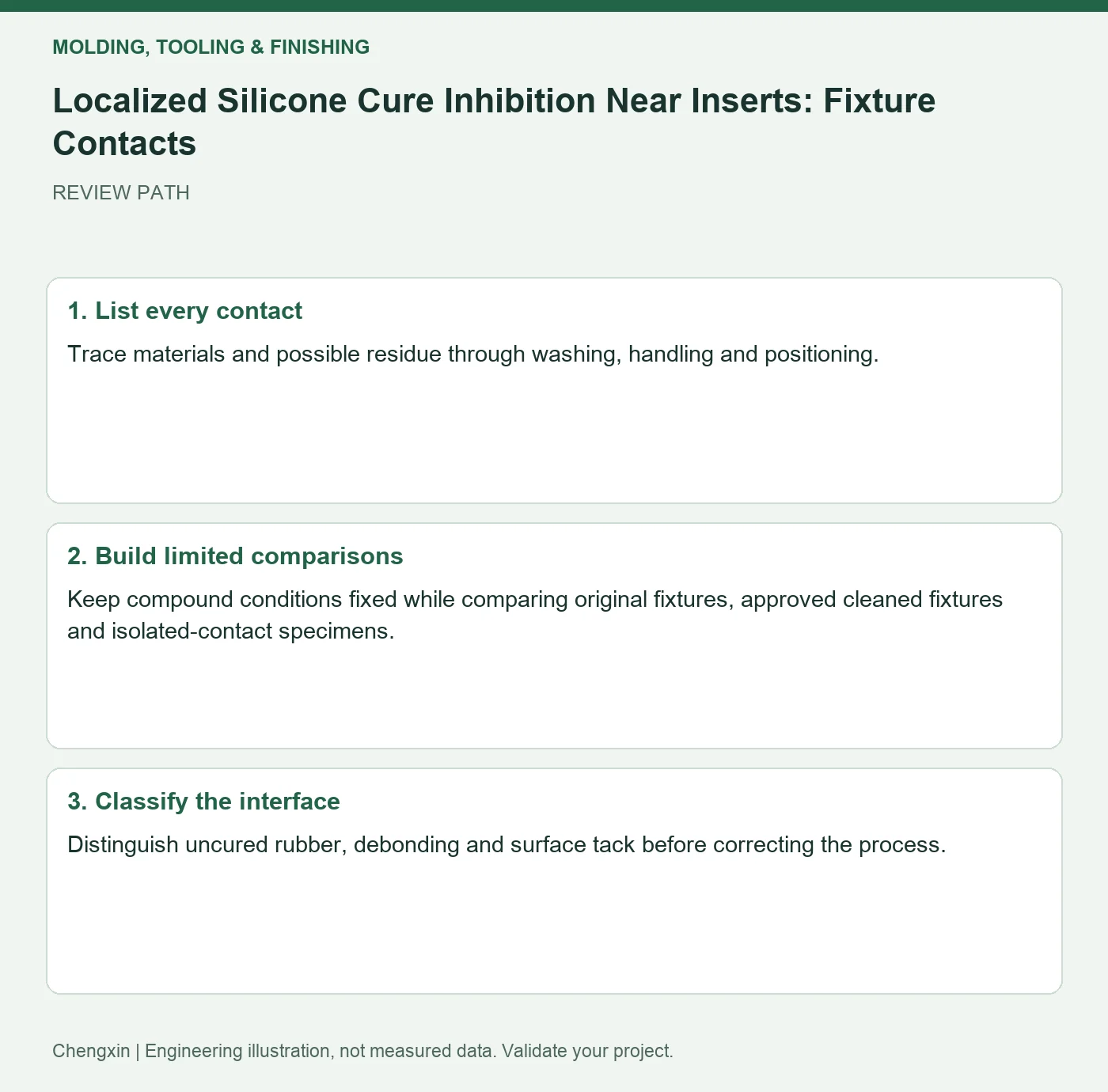
Turn the review into recorded checks
| Step | Action and evidence |
|---|---|
| 1 · List every contact | Trace materials and possible residue through washing, handling and positioning. |
| 2 · Build limited comparisons | Keep compound conditions fixed while comparing original fixtures, approved cleaned fixtures and isolated-contact specimens. |
| 3 · Classify the interface | Distinguish uncured rubber, debonding and surface tack before correcting the process. |
A comparison to avoid misinterpretation
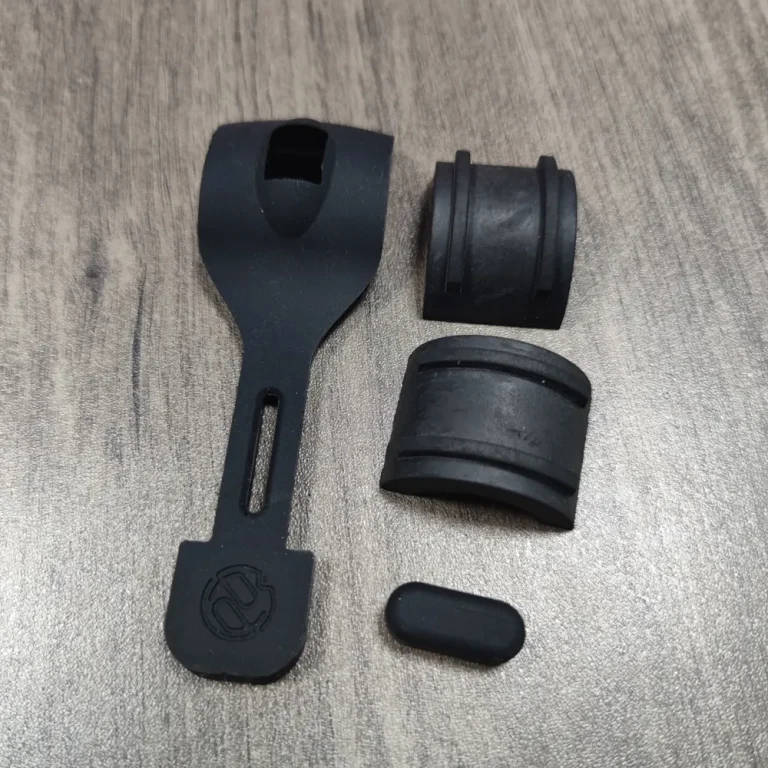
An abnormal area only where a locating pad touches justifies investigating that pad and cleaning before changing all compound.
Frequently asked question
Are metal fixtures free of contamination risk?
No. Their surface residues still require review.
Background and further reading
This note addresses one specific question. For broader concepts, see the related background guide.
Related question: Silicone Post-Curing: Tray Loading and Air Circulation.
External references support the relevant concepts. The review steps and scenarios are independent engineering discussion guidance, not quotations from a standard or external organization. Use agreed methods, applicable document revisions and complete conditions.
Apply this to your custom part
Compare the structure with Custom Shaped Silicone Parts. Describe the application, geometry, operating conditions, quantity and problem to solve. Submit a custom-parts inquiry, or see how to send drawings and sample photographs by business email. Confirm material, dimensions, costs, testing and delivery requirements for the project.