Scope and common interpretation errors
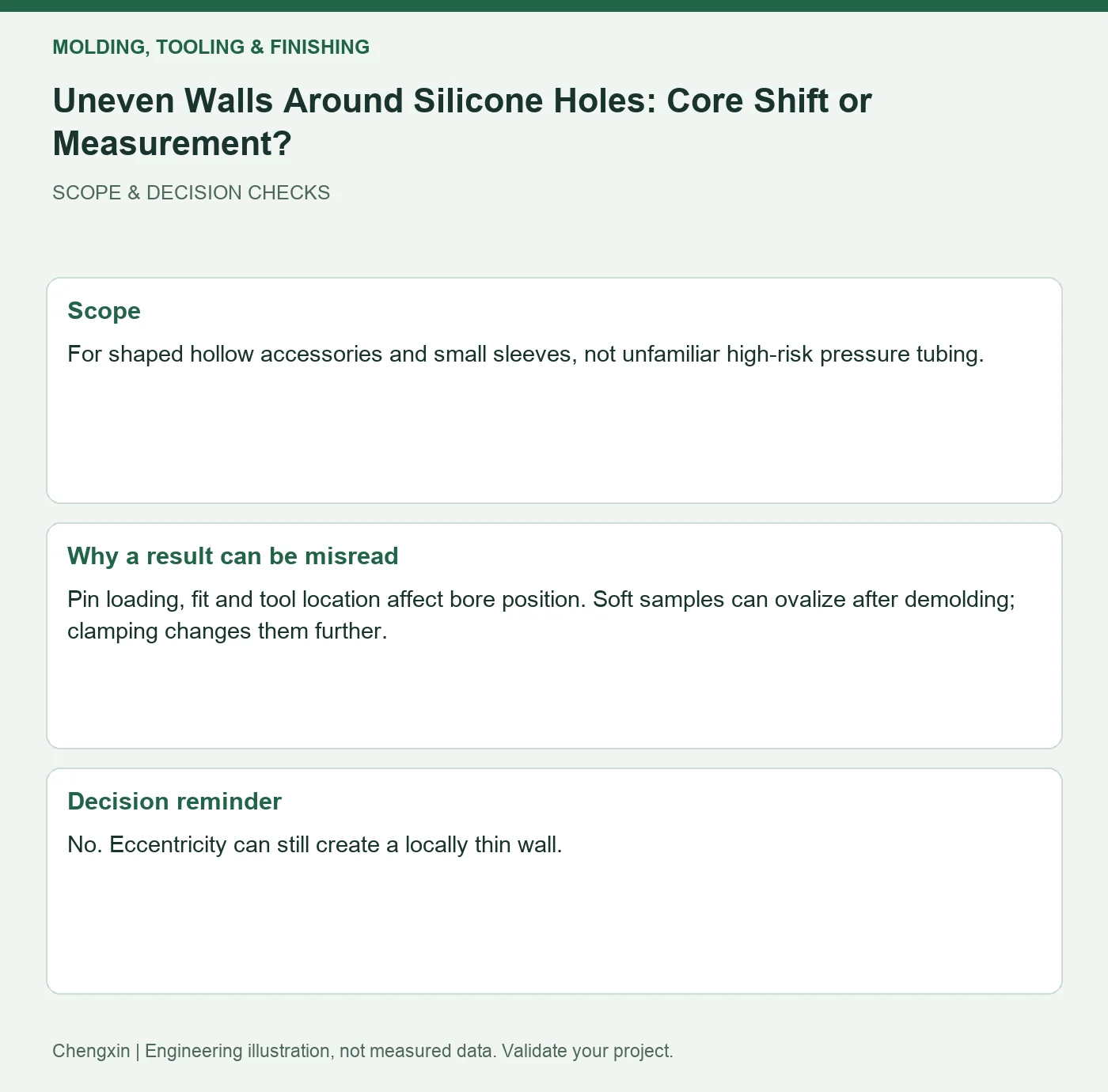
For shaped hollow accessories and small sleeves, not unfamiliar high-risk pressure tubing.
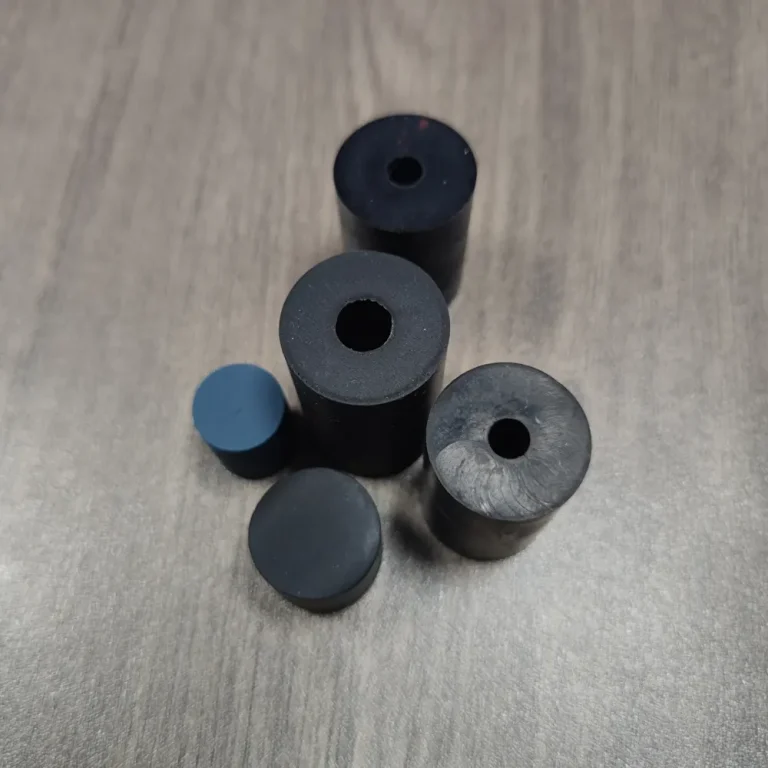
Pin loading, fit and tool location affect bore position. Soft samples can ovalize after demolding; clamping changes them further.
Turn the review into recorded checks
| Step | Action and evidence |
|---|---|
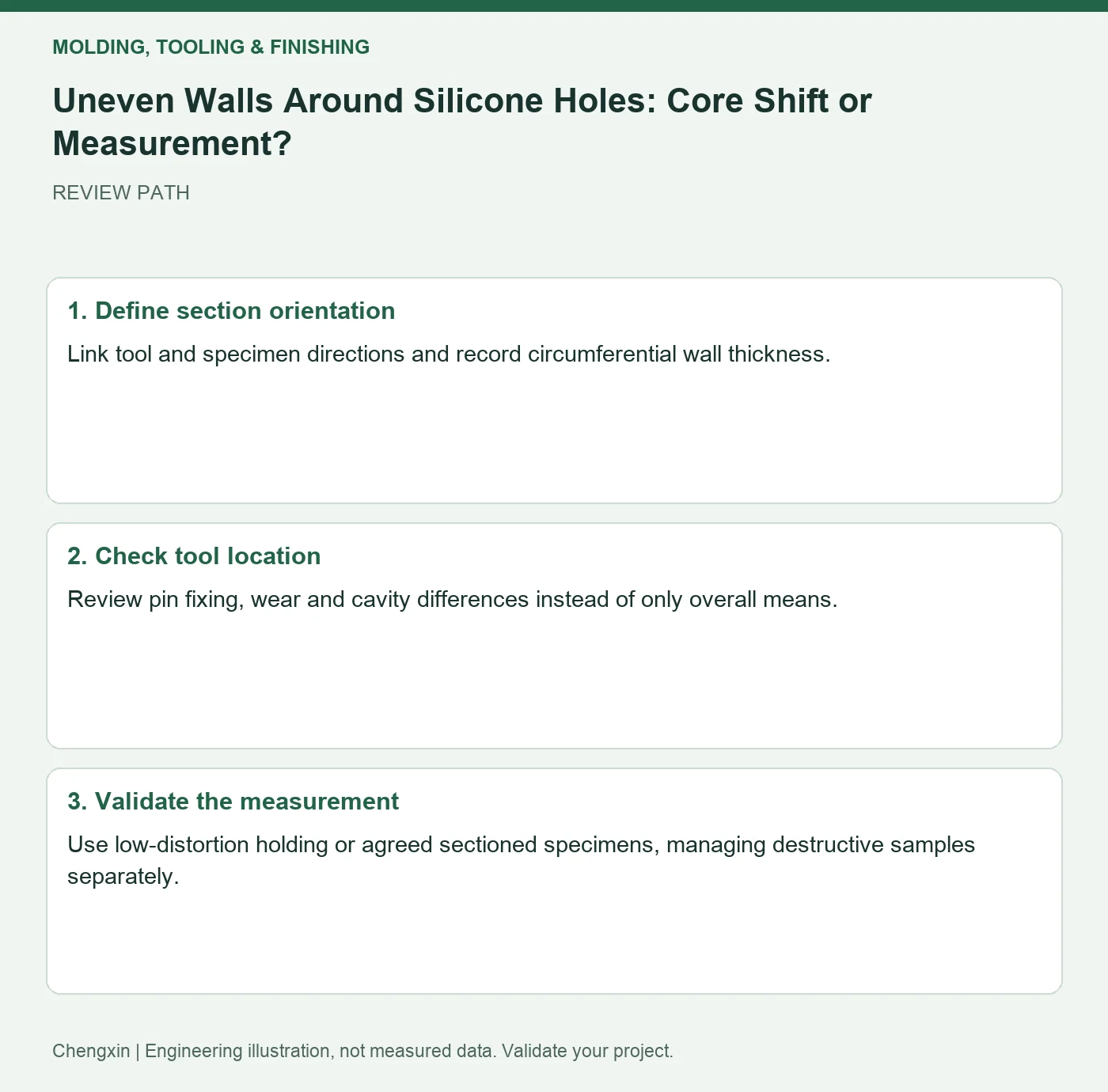
| 1 · Define section orientation | Link tool and specimen directions and record circumferential wall thickness. |
| 2 · Check tool location | Review pin fixing, wear and cavity differences instead of only overall means. |
| 3 · Validate the measurement | Use low-distortion holding or agreed sectioned specimens, managing destructive samples separately. |
A comparison to avoid misinterpretation
A repeatably thin side in one cavity suggests relating pin position and fill direction. Random orientation calls for further demolding and measurement checks.
Frequently asked question
Do passing bore and outside diameters prove acceptable walls?
No. Eccentricity can still create a locally thin wall.
Background and further reading
This note addresses one specific question. For broader concepts, see the related background guide.
Related question: Localized Silicone Cure Inhibition Near Inserts: Fixture Contacts.
External references support the relevant concepts. The review steps and scenarios are independent engineering discussion guidance, not quotations from a standard or external organization. Use agreed methods, applicable document revisions and complete conditions.
Apply this to your custom part
Compare the structure with Custom Shaped Silicone Parts. Describe the application, geometry, operating conditions, quantity and problem to solve. Submit a custom-parts inquiry, or see how to send drawings and sample photographs by business email. Confirm material, dimensions, costs, testing and delivery requirements for the project.