Scope and common interpretation errors
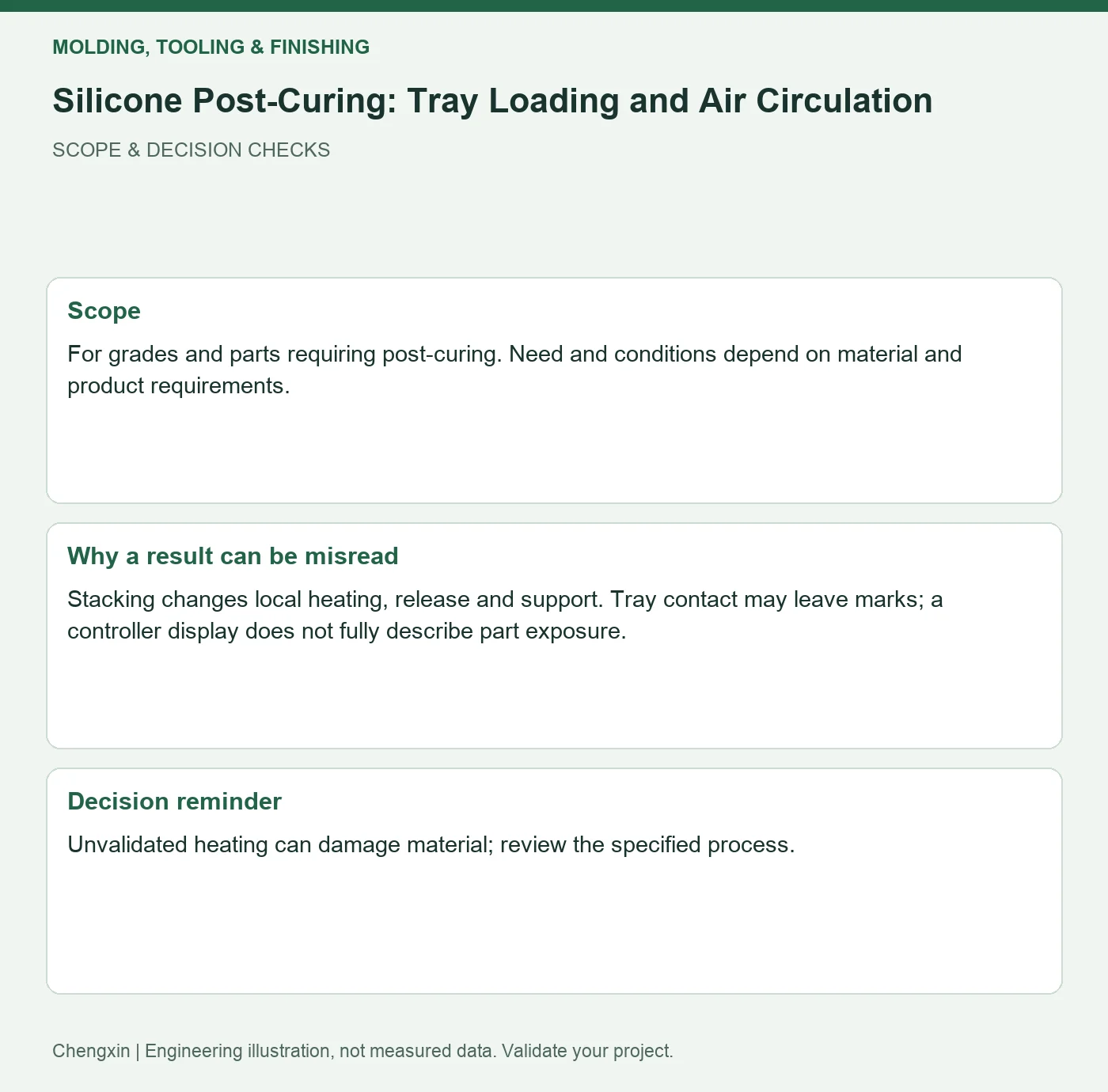
For grades and parts requiring post-curing. Need and conditions depend on material and product requirements.
Stacking changes local heating, release and support. Tray contact may leave marks; a controller display does not fully describe part exposure.
Turn the review into recorded checks
| Step | Action and evidence |
|---|---|
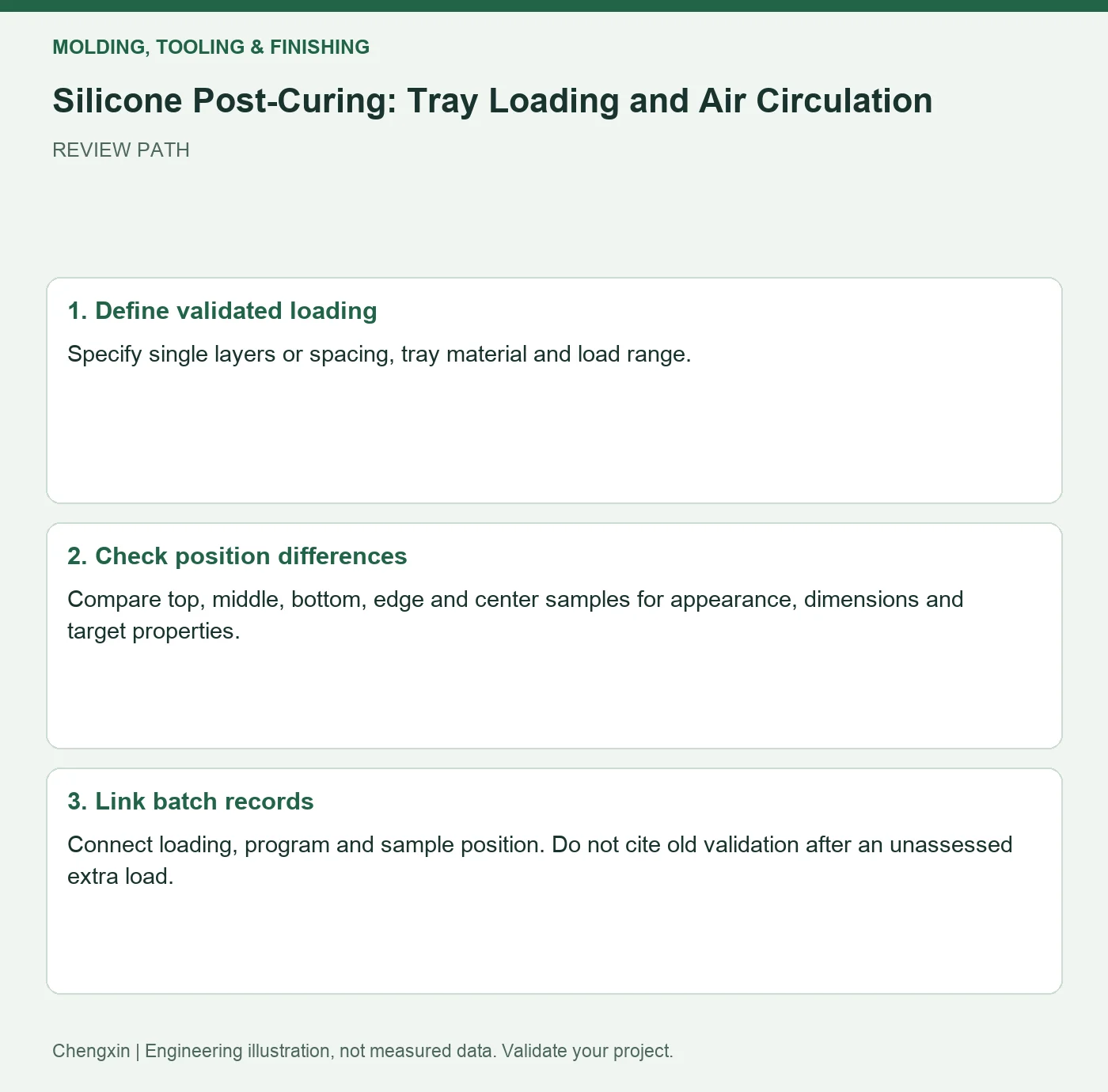
| 1 · Define validated loading | Specify single layers or spacing, tray material and load range. |
| 2 · Check position differences | Compare top, middle, bottom, edge and center samples for appearance, dimensions and target properties. |
| 3 · Link batch records | Connect loading, program and sample position. Do not cite old validation after an unassessed extra load. |
A comparison to avoid misinterpretation
Greater odor in a stack center than at the edge calls for checking loading and consistency before simply extending every batch's time.
Frequently asked question
Can higher temperature compensate for dense stacking?
Unvalidated heating can damage material; review the specified process.
Background and further reading
This note addresses one specific question. For broader concepts, see the related background guide.
Related question: Same Mold Setpoint, Different Silicone Parts: Actual Surface Temperature.
External references support the relevant concepts. The review steps and scenarios are independent engineering discussion guidance, not quotations from a standard or external organization. Use agreed methods, applicable document revisions and complete conditions.
Apply this to your custom part
Compare the structure with Custom Shaped Silicone Parts. Describe the application, geometry, operating conditions, quantity and problem to solve. Submit a custom-parts inquiry, or see how to send drawings and sample photographs by business email. Confirm material, dimensions, costs, testing and delivery requirements for the project.