

How to Choose a Silicone Duckbill Valve? Opening Pressure, Backflow Control, and Service Life Design
简要答案:硅胶鸭嘴阀的选型核心不是外形大小,而是介质、开启压力、反向压差、流量和循环寿命。设计时应同时控制唇口 […]
Even after leaving the factory, silicone parts may still undergo changes in appearance or performance due to temperature, light exposure, compression, and contact with other materials. Proper packaging and first-in, first-out (FIFO) management are key to ensuring assembly quality.
Silicone is an elastic material, and dimensional results are affected by shrinkage, demolding, curing time, and measurement methods. Appropriate tolerances should be established based on functional dimensions, rather than setting tolerances for all dimensions.
A sticky surface on silicone parts can affect their feel, assembly, and appearance. Troubleshooting should address material migration, the curing state, surface treatment, and storage conditions, rather than relying solely on wiping.
The thickness of a silicone seal determines the initial compression and assembly tolerance. When selecting the thickness, a comprehensive evaluation should be made based on the housing clearance, tolerances, screw preload, and long-term rebound. 1.
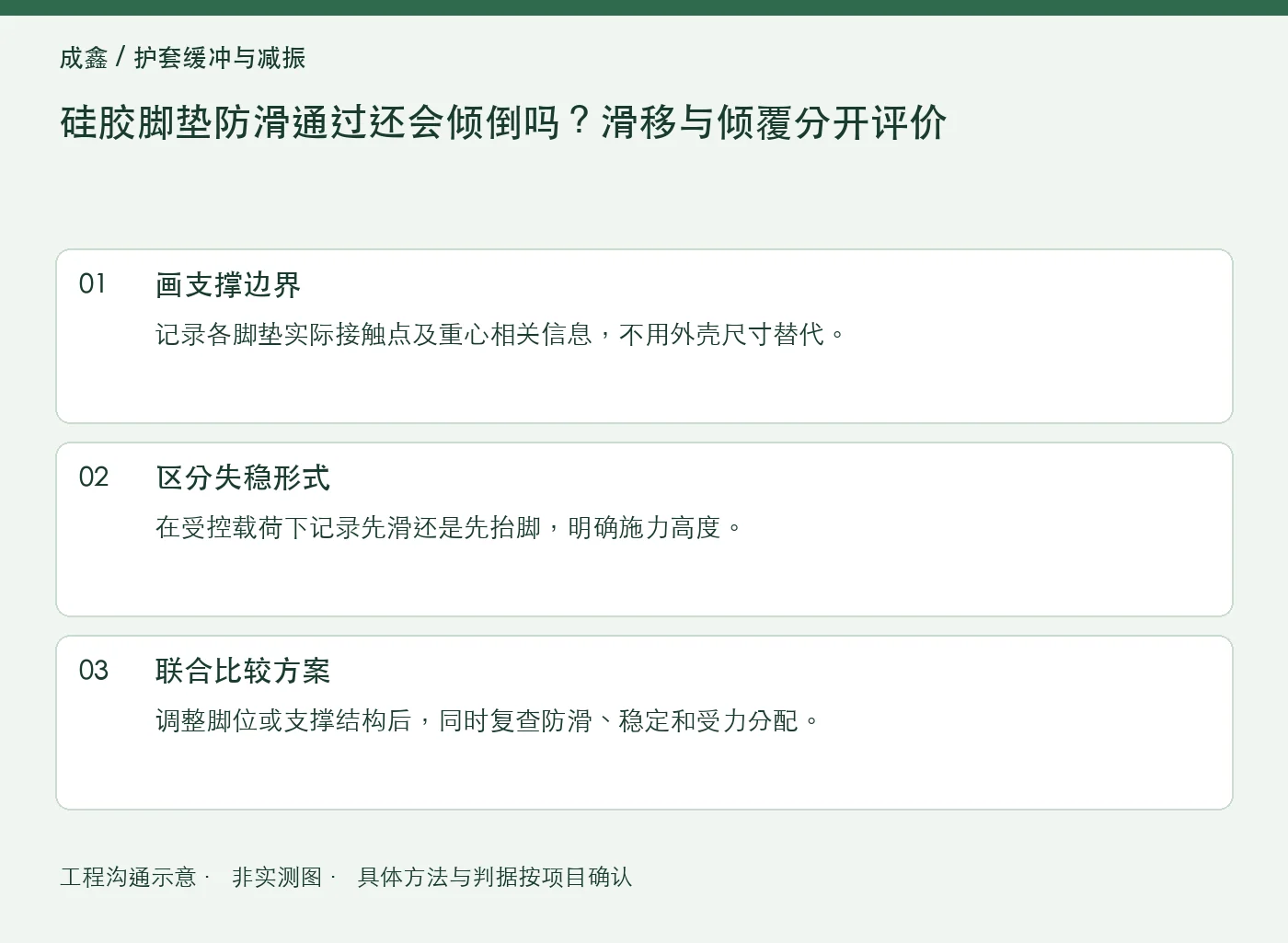
Silicone footpads are commonly used for anti-slip protection, cushioning, and noise reduction in equipment. Their effectiveness is determined by a combination of hardness, contact area, texture, load, and long-term compression. 1. Determine the primary function of the footpad
Smart door locks, control panels, and sensor devices place simultaneous demands on silicone components in terms of appearance, tactile feel, water resistance, and durability. During the initial design phase, the user-contact surfaces and internal sealing surfaces should be clearly defined.
Seals in electrical connectors must maintain their waterproof performance during mating and unmating, under vibration, and through temperature fluctuations. The key factors are not only the O-ring itself, but also the pin holes, the housing, the tolerance chain, and the assembly alignment.
Both silicone and EPDM are commonly used in sealing strips, but their applicable ranges differ. Material selection depends on temperature, outdoor exposure, the medium, flame-retardant requirements, and cost objectives, rather than
Compression set reflects the ability of silicone rubber to return to its original shape after prolonged exposure to pressure and temperature. It is not an isolated material property, but rather a result of the combined effects of the material, structure, temperature, and assembly.
Permanent Set in Silicone Rubber: Understanding the Metric and Mitigating Seal Failure Learn more "