
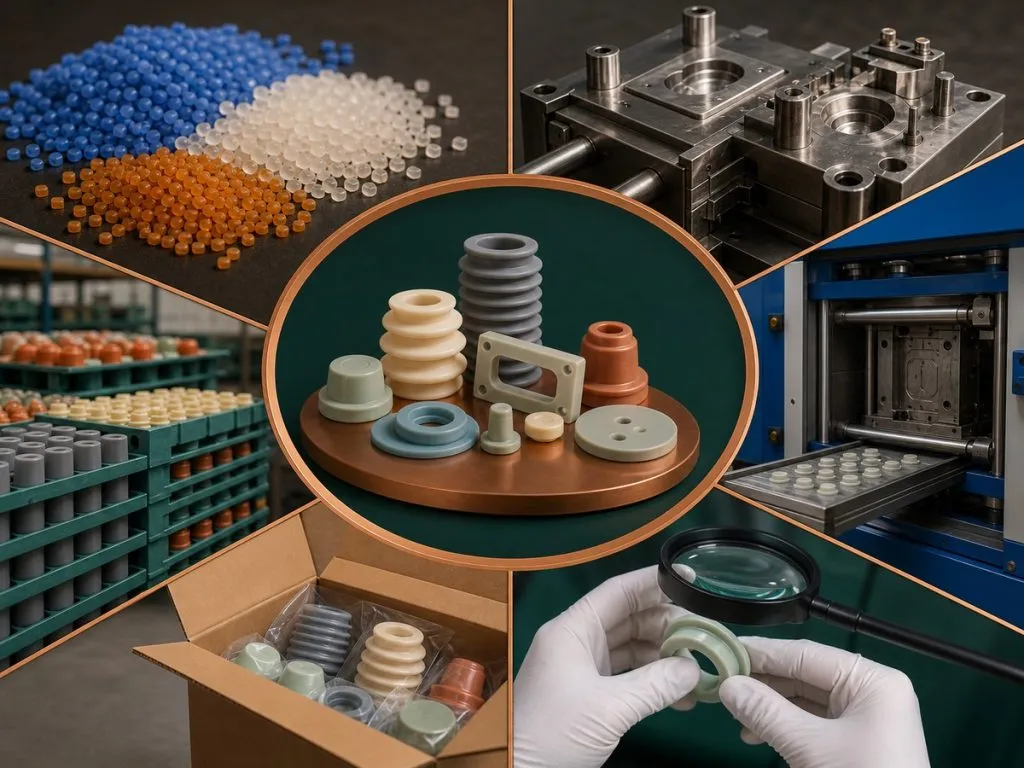
First of all, the conclusion: silicone products offer = material + mold + process + inspection + packaging + delivery risk
Many customers ask "how much does a silicone ring cost", but the quotation of silicone products is not only based on the size. A more reliable approach is: to break down the factors affecting the price, so that the demand can be quantified, the offer will be stable.
8 Key Factors Affecting Price
1) Material type and formulation requirements
Different materials vary greatly in cost and processing difficulty:
- General silicone, high temperature silicone, high tear-resistant formulations
- Oil/chemical resistant materials (e.g. FKM, etc.)
- Need for food/medical exposure related requirements (project dependent)
2) Hardness (Shore A) and performance indicators
Hardness affects: molding window, mold release difficulty, yield and service life.
If you also require: tear resistance, rebound, low compression set, etc., this will also affect the formulation and cost.
3) Dimensions, structural complexity and tolerances
- greater the volumeThe more material is used
- The more complex the structure(deep cavities, thin edges, sharp corners), higher process difficulty and failure rate
- the tighter the tolerancesThe higher the requirements for mold and process control, the higher the inspection costs will be.
4) Mold cost and number of cavities
Two pieces are common in quotes:
- mold opening fee: One-time input
- price of item: Varies with output and process
The higher the number of cavities, the higher the efficiency, but the cost of the mold will also be higher. It needs to be selected in combination with the expected usage.
5) Molding process selection (compression molding/injection/extrusion, etc.)
- Injection is usually efficient and consistent, but the mold investment is higher
- Wide range of applications for compression molding and relatively controllable inputs
- Extrusion of products suitable for continuous cross-section
6) Appearance and secondary process
For example: oil spraying, hand feeling oil, printing, laser engraving, wrapping and so on.
The secondary process brings: increased process, fluctuating yields, and higher testing and packaging requirements.
(7) Inspection standards and reporting requirements
If you ask:
- Increased percentage of full/sampling inspection of critical dimensions
- Size report, lot traceability required
- Requires aging/compression set/media resistance verification
All of this adds to the cost and cycle time, but can be traded for more consistent delivery.
8) Packing method and delivery time (expedited)
- Special packaging (anti-friction, anti-dust, segregated packaging, labeling requirements) can increase man-hours.
- Expedited lead times usually mean order insertion and higher production risk costs.
The three items that are most likely to lead to a "late price increase/price change": temporary changes in tolerances, improved appearance standards, and a sudden rush in delivery.
Minimum set of information you are advised to prepare before quoting (for clients/purchasing)
- Drawings: 2D/3D (or samples)
- Material: Silicone/rubber/FKM etc., whether oil/temperature/compliance is required
- Hardness range
- Critical dimensions and tolerances (labeled CTQ)
- Appearance standards (burrs, parting lines, color tolerance)
- Estimated usage and delivery time
- What tests and reports are required
FAQ
Q1: Why is there a big difference between sample price and mass production price?
Samples often include costs such as proofing losses, process debugging, and small batch inefficiencies; mass production prices vary with mold cavities, tempo, and yield.
Q2: Can you give me a "reference price" first?
Yes, but it is recommended to provide at least: size range, material type, hardness, expected usage with or without secondary processes. Otherwise the reference price will deviate considerably.
Q3: What can I do to save money and be stable?
Spending costs where it counts:
- Critical dimensions and inspection methods are clearly defined
- Do a small batch first to verify the locking parameters
- Reduce unnecessary cosmetic processes