Clarify first: what are you trying to solve, "what is resistant"?
Make the working conditions clear before selecting the material:
- Maximum/minimum temperature, hot/cold cycle or not
- Exposure: oil, fuel, alcohol, solvents, acids, alkalis, vapors
- Outdoor or not: UV, ozone, rainwater
- Whether food/medical contact compliance is required
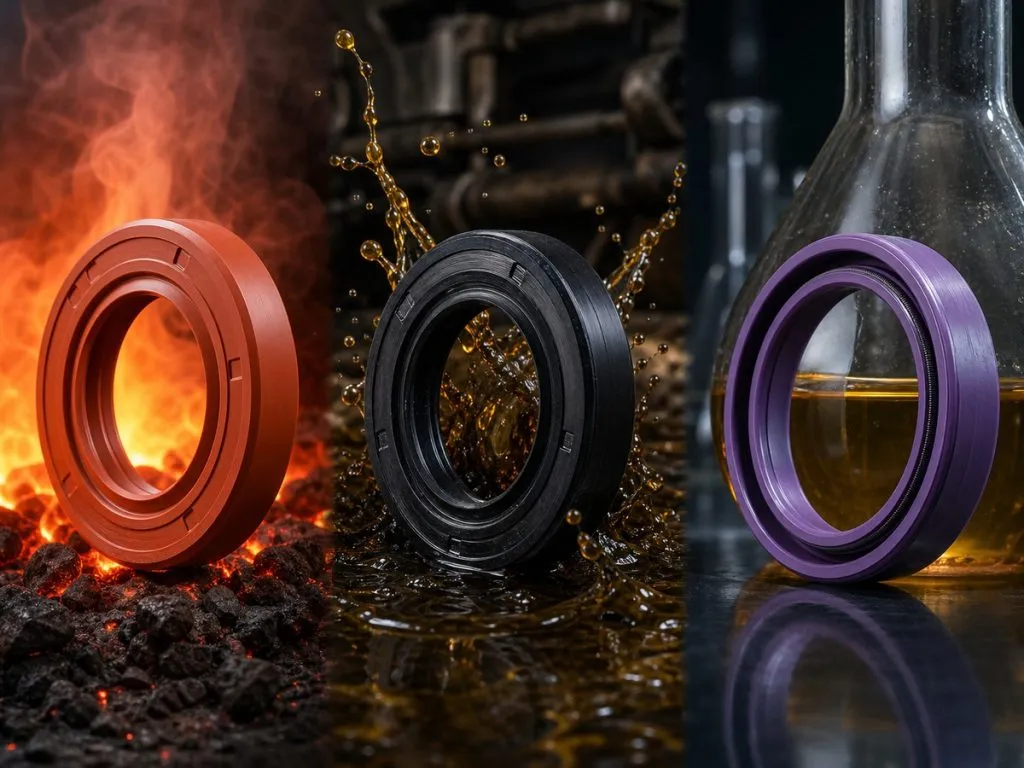
Visual differences between the three types of materials
1) Silicone (Silicone)
Better at: temperature resistance, weather resistance, soft touch, color appearance
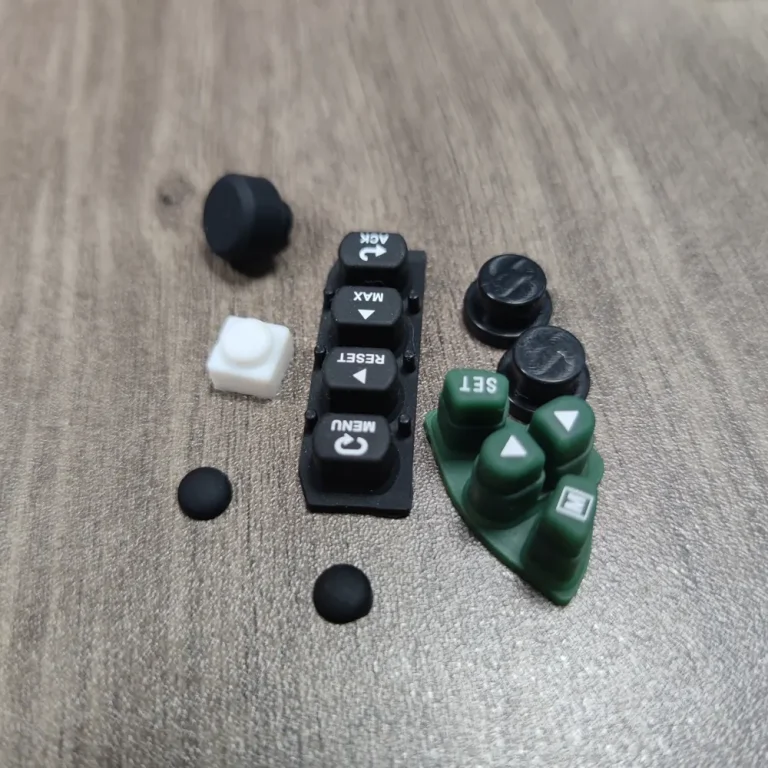
Common applications: consumer electronics waterproofing, home appliance parts, mother and baby silicone, keys, gaskets
Note: Different formulations vary greatly in tear strength and media resistance.
2) General-purpose rubber (e.g. NBR/EPDM, etc., depending on the type)
Better at what they do: certain rubbers are better at resisting oil, abrasion or cost
Common applications: industrial seals, general machinery
Note: The temperature and media resistance of different rubber types varies greatly, so you can't generalize with "rubber".
3) Fluorine rubber FKM (Viton system)
Better at: oil, fuel, chemical resistance and higher temperatures
Common applications: automotive, energy, chemical-related seals
Note: more costly, also has boundary conditions for low temperature elasticity and certain media
Selection recommendations (simple method for engineering decisions)
- Media screening first: Is there any oil/fuel/solvent?
- Re-screening with temperature: Are the maximum and minimum temperatures outside the material comfort zone?
- Look again at the mechanical requirements: Does it need to be abrasion, extrusion and tear resistant?
- Final Look at Compliance and Appearance: food/medical contact, color, odor
The correct goal of "material selection" is not to choose the most expensive, but to choose the solution that best matches the working conditions and the most stable mass production.
This is the recommended way to write requirements when communicating with procurement/engineering
- Medium: e.g., "prolonged exposure to oil", "intermittent alcohol wiping".
- Temperature: e.g. "-20°C to 120°C, hot/cold cycle 2 times per day".
- Service life: e.g. "3 years without leakage" or "500 assemblies without breakage".
- Inspection: size, hardness, compression permanent deformation, resistance to medium immersion, etc.
Common Misconceptions
- Just say "high temperature resistant", not medium and time
- Only material change without changing the groove and fitment
- Samples passed, but mass production without small batch validation