
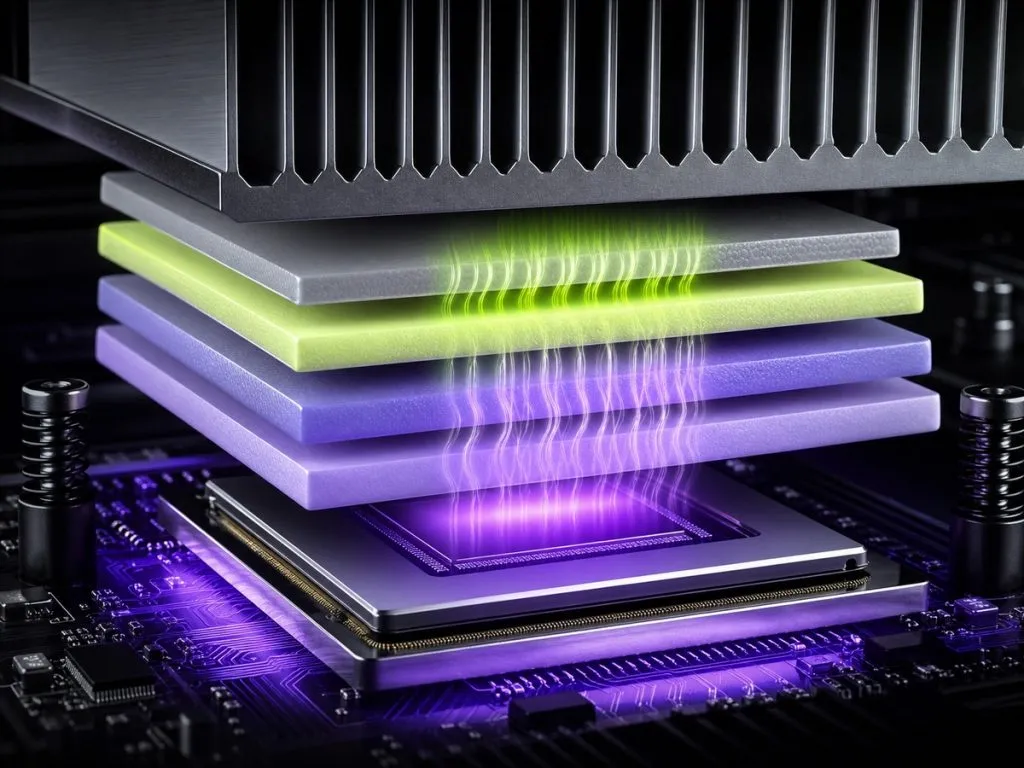
The selection of thermally conductive silicone gaskets is not the better the higher the thermal conductivity.
What's really critical is the balance of heat paths, assembly tolerances, and compression versus long-term reliability.
1. Application first: heat sources, heat sinks and assembly clearances
- Heat source power consumption and allowable temperature rise
- Radiator material and surface flatness
- Assembly Clearance and Tolerance: Determining Gasket Thickness and Compression Window
2. How key parameters are understood
- Thermal conductivity: reflects the material's intrinsic ability, but the actual thermal resistance is also affected by the thickness and contact.
- Thickness: the thicker it is, the greater the thermal resistance, but it compensates for the larger assembly gaps.
- Compression ratio: affects contact thermal resistance and assembly stresses
- Insulation requirements: voltage withstand and risk of breakdown (especially for power supply applications)
3. Selection steps (recommended)
- Define the gap range and target compression ratio
- Select thickness and hardness to ensure assemblability
- Comparison of thermal conductivity and insulation ratings among candidate materials
- Do thermal testing and reliability verification (retesting after cycling/aging)
4. Common failures and countermeasures
- Pump-out: Thermal cycling leads to material migration, material system and compression control need to be evaluated.
- Surface contamination leads to increased contact thermal resistance: packaging and assembly cleanliness control
- Structural deformation due to overcompression: limiting assembly forces and adding limit designs
5. Suggested validation checklist
- Initial thermal resistance/temperature rise test
- Re-testing after high and low temperature cycling
- Re-test after vibration/drop (depending on product)
- Insulation withstand voltage test (as per standard)
FAQ
- Why doesn't the temperature rise drop with high thermal conductivity?
It could be that the contact thermal resistance is dominant (uneven surface/insufficient compression), or that the thickness is too large causing the thermal resistance to rise.
- Is the softer the gasket the better?
Not necessarily. Excessive softness may result in unstable thickness after pump-out or assembly, and needs to be evaluated on a combination of construction and reliability.