
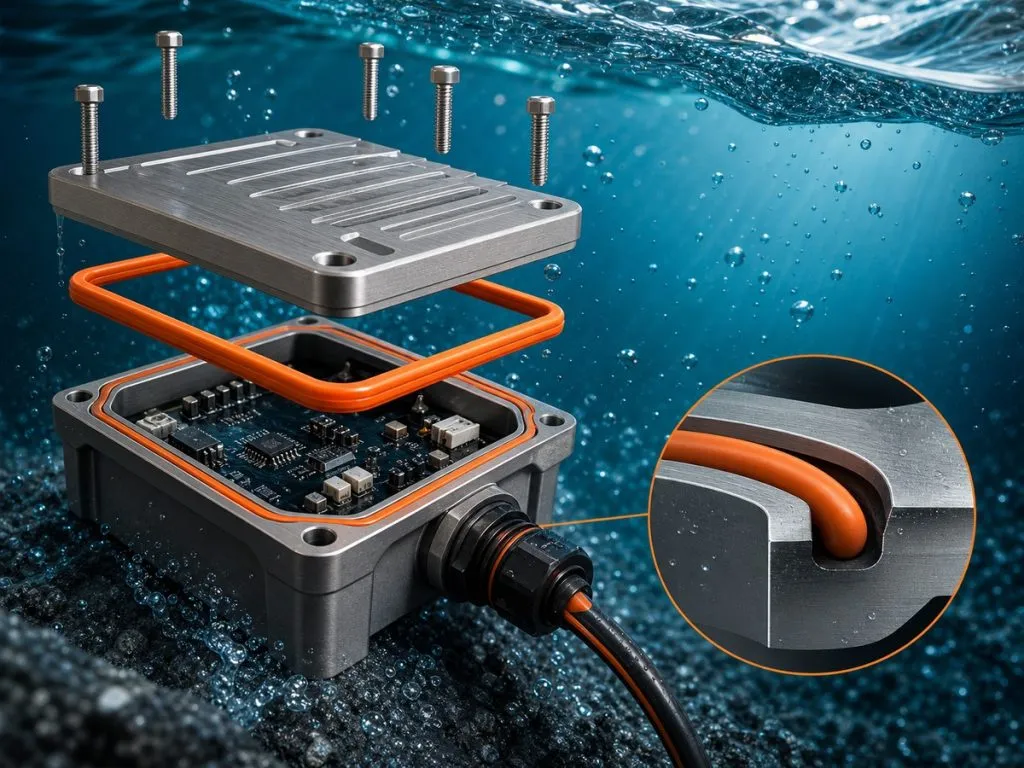
IP68 is not something that can be achieved by "changing the seal to a more expensive one".
It is essentially a set of systems engineering around structure, materials, process and assembly consistency.
This article compiles key points that can be used directly in product reviews and project validation.
1. The key to IP68 is "continuous immersion + differential pressure".
- Target water depth, time and temperature differences change the true differential pressure and infiltration paths
- Simultaneous evaluation of the overall solution if there is a breather valve / air guide structure
2. Three determining parameters
2.1 Compression
- Too small: insufficient contact stress, microchannel leakage
- Too large: assembly difficulties, material fatigue, extrusion risks
It is recommended to find the stabilization window by test fitting measurements with leakage curves.
2.2 Groove chamfer and sealing surface roughness
- Chamfered/rounded corners significantly reduce assembly scratches
- Excessive roughness tends to form capillary seepage channels
2.3 Assembly consistency (torque/positioning/tooling)
- Uneven torque can cause localized under-preloading
- Tooling positioning reduces eccentricity and seal distortion
3. Material recommendations
- Priority is given to CS (compression set) and springback retention after aging.
- Consider LSR injection for precision parts to improve consistency.
4. Validation recommendations: from "pass once" to "batch stabilization"
- Leakage/immersion: with tightening conditions (temperature difference, cycling)
- Re-testing after drop/vibration: simulating real use
- Batch sampling: establishment of process control and factory sampling programs
5. Review of common causes of failure
- Out-of-control compression due to deviation in groove depth
- Seal cut or assembly twisted
- Surface contamination / burrs entering the sealing line
FAQ
- What are the structural implications of the IP67/68 difference?
Small defects are magnified when immersed in water deeper and longer, requiring more consistent compression and assembly consistency.
- Is it necessary to use a double seal?
Not necessarily. Double sealing improves redundancy, but also introduces assembly and cost increases, which need to be assessed in conjunction with risk.