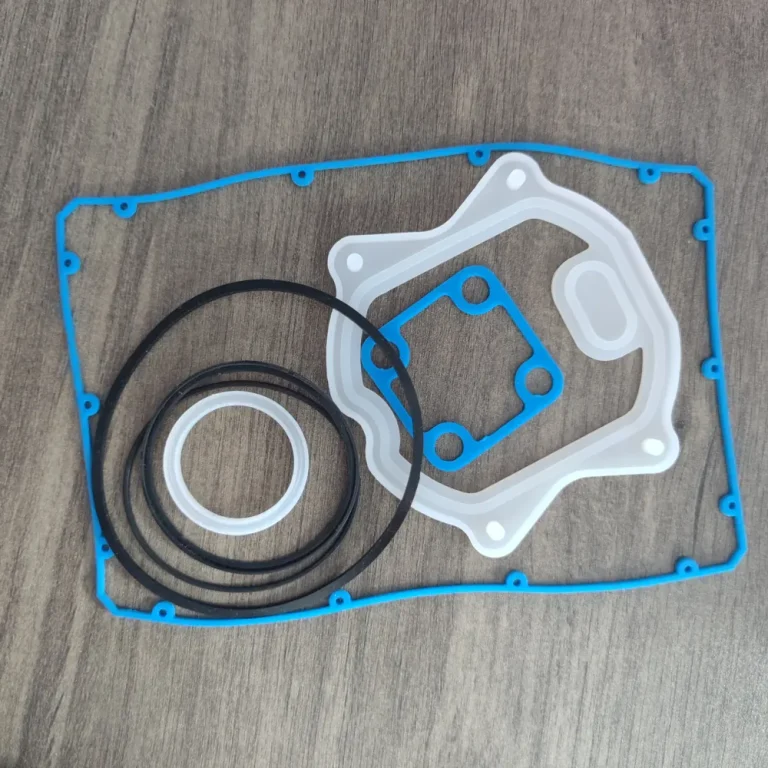
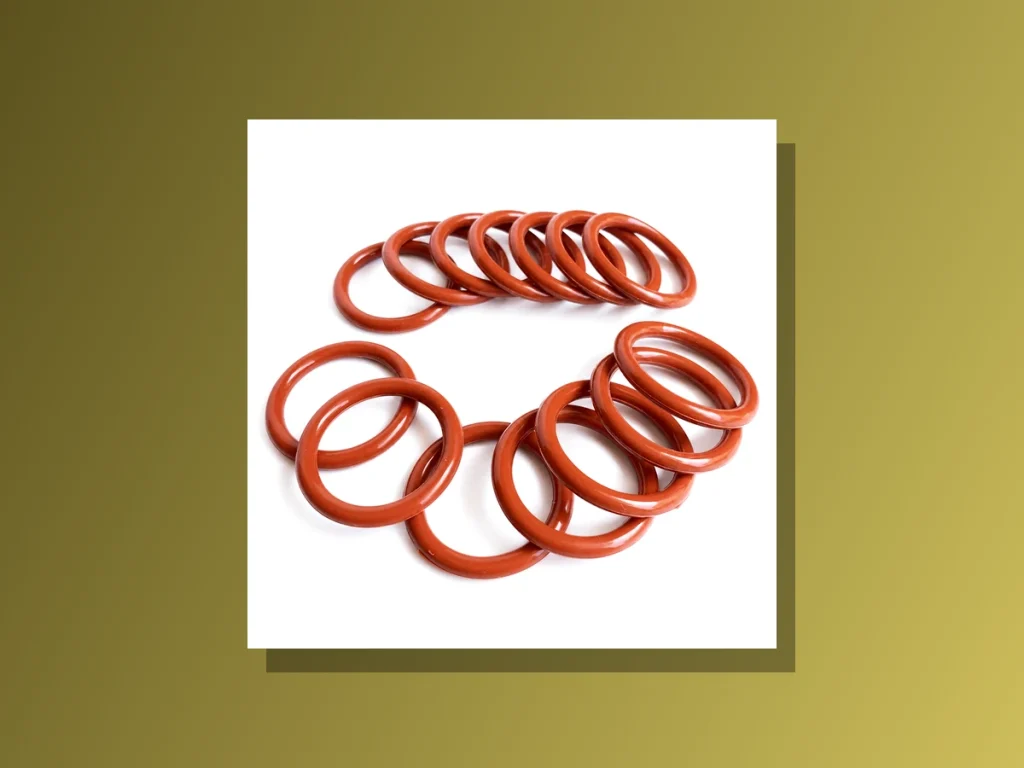
Short answer:Irregularly shaped silicone O-rings are suitable for irregularly shaped housings and continuous peripheral seals. Key design considerations include uniform cross-sectional compression, corner stress, anti-misalignment features, and mold parting lines; particular attention must be paid to preventing localized thinning caused by installation with the long edge stretched.
In what kinds of situations are these silicone parts suitable?
Clearly defining the actual application scenarios helps translate material, structural, and validation requirements into actionable technical specifications.
- Around displays, windows, door frames, and complex enclosures
- Sealing of Automotive Lights, Battery Boxes, and Controllers
- Irregular Flanges, Cover Plates, and Multi-Hole Assemblies
Parameters to Confirm Before Selecting a Model
We recommend providing the following information before requesting a quote or ordering a sample to minimize the need for repeated prototyping and misunderstandings regarding specifications.
- Provides complete 3D path, cross-section, and shell tolerances
- Specify the sealing grade, assembly method, and maintenance frequency
- Confirm requirements for color, hardness, weather resistance, and flame retardancy
Key Points in Structural Design
Structural dimensions, assembly relationships, and material elasticity must be evaluated together; simply increasing a single parameter generally does not directly improve reliability.
- Use appropriate fillets at corners and avoid abrupt changes in cross-section
- Set positioning points, snap-fit features, or local error-proofing features
- Evaluation of Elongation During Installation and Retraction for Long-Perimeter Products
Production and Quality Control
Consistency in mass production results from the combined control of material batches, mold condition, molding windows, and inspection methods.
- The mold must balance venting, demolding, and multi-point gate balancing.
- The dimensions of the long sides and corners should be listed as key inspection items.
- Transportation fixtures should be protected against twisting, stretching, and folding.
Recommended Verification Items
Validation should be conducted using actual or equivalent operating conditions whenever possible, and functionality should be reconfirmed after aging or cycling.
- Inspect the free-state profile and the compression marks after assembly
- Conduct airtightness, rain exposure, or immersion tests on the entire unit
- Temperature Cycling and Re-testing of Alignment and Sealing After Disassembly and Reassembly
Frequently Asked Questions
Can non-standard O-rings be replaced by spliced O-rings?
This can be evaluated in some low-demand scenarios, but joints and corners are typically risk points.
Why is it easy to install an irregularly shaped ring crookedly?
Common causes include a lack of alignment, mismatched perimeter tolerances, or stretching during installation.
How do I provide information to suppliers?
Please provide 2D or 3D drawings, photos of samples, material and hardness specifications, operating environment, target quantity, acceptance criteria, and a list of compliance documents. Based on this information, Chengxin Silicone Rubber can evaluate the materials, molds, molding process, and validation plan.