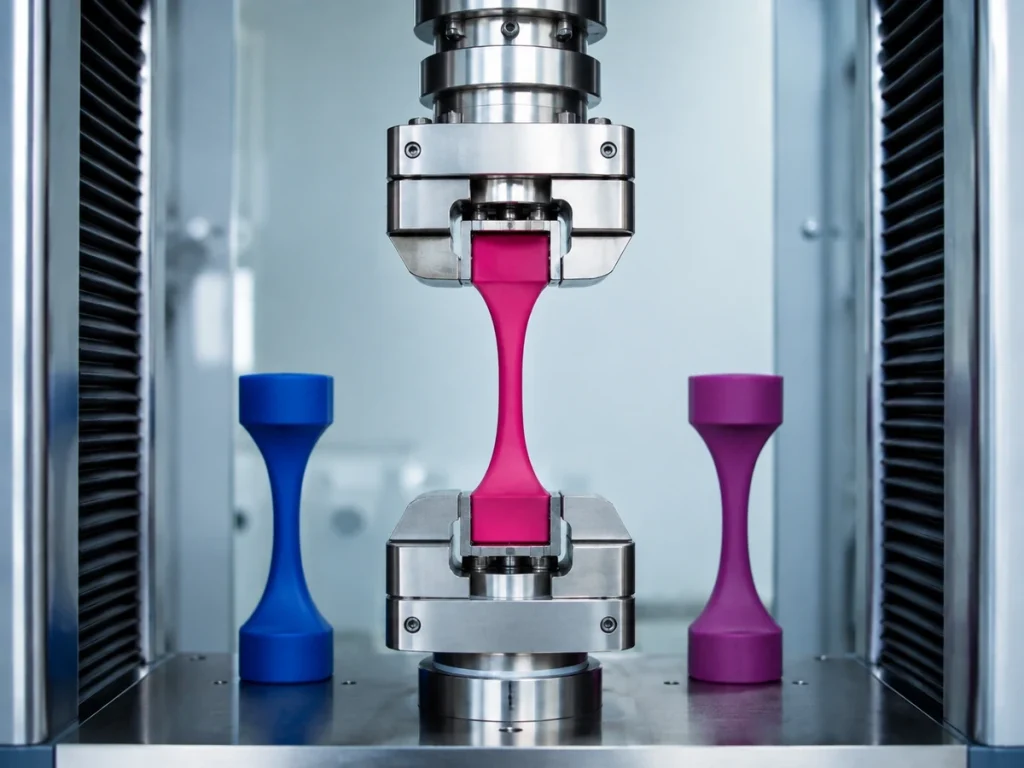
Short answer:Tensile strength refers to the maximum stress a specimen can withstand before breaking, while elongation refers to the change in length at the point of fracture. High elongation does not necessarily mean the product is more durable; in practice, it must be considered in conjunction with modulus of elasticity, tear strength, fatigue resistance, temperature, and structural stress.
In what kinds of situations are these silicone parts suitable?
Clearly defining the actual application scenarios helps translate material, structural, and validation requirements into actionable technical specifications.
- Seals that need to be expanded during assembly
- Flexible Connectors, Ties, and Flexible Sleeves
- Silicone parts subject to repeated bending or tension
Parameters to Confirm Before Selecting a Model
We recommend providing the following information before requesting a quote or ordering a sample to minimize the need for repeated prototyping and misunderstandings regarding specifications.
- Maximum assembly stretch and hold time
- Operating Temperature, Medium, and Number of Cycles
- Material Modulus, Strength, Elongation, and Tear Resistance Properties
Key Points in Structural Design
Structural dimensions, assembly relationships, and material elasticity must be evaluated together; simply increasing a single parameter generally does not directly improve reliability.
- Keep working strain within safe limits
- Enlarge the load-bearing cross-section at the hole edges and corners
- Avoid local stress concentrations caused by sudden changes in thickness
Production and Quality Control
Consistency in mass production results from the combined control of material batches, mold condition, molding windows, and inspection methods.
- Test specimens and finished products are vulcanized under the same conditions.
- Control the sampling direction, thickness, and test speed
- Monitor trends in material batches
Recommended Verification Items
Validation should be conducted using actual or equivalent operating conditions whenever possible, and functionality should be reconfirmed after aging or cycling.
- Measure strength and elongation at break according to the standard
- Final Product Assembly and Endurance Testing
- Performance Retention Rate After Aging Retest
Frequently Asked Questions
Does a higher elongation rate mean the material is better?
Excessive elongation may be accompanied by changes in modulus or strength.
If the material test specimens pass, does that mean the finished product will definitely pass?
Structural defects and the machining condition will still affect the finished product.
How do I provide information to suppliers?
Please provide 2D or 3D drawings, photos of samples, material and hardness specifications, operating environment, target quantity, acceptance criteria, and a list of compliance documents. Based on this information, Chengxin Silicone Rubber can evaluate the materials, molds, molding process, and validation plan.