Short answer:Calendered silicone sheets are suitable for continuous sheets and subsequent die-cutting, while molded silicone sheets are better suited for specific dimensions, textures, or localized structures. Both have their limitations in terms of thickness tolerances, surface finish, material utilization, mold investment, and batch costs.
In what kinds of situations are these silicone parts suitable?
Clearly defining the actual application scenarios helps translate material, structural, and validation requirements into actionable technical specifications.
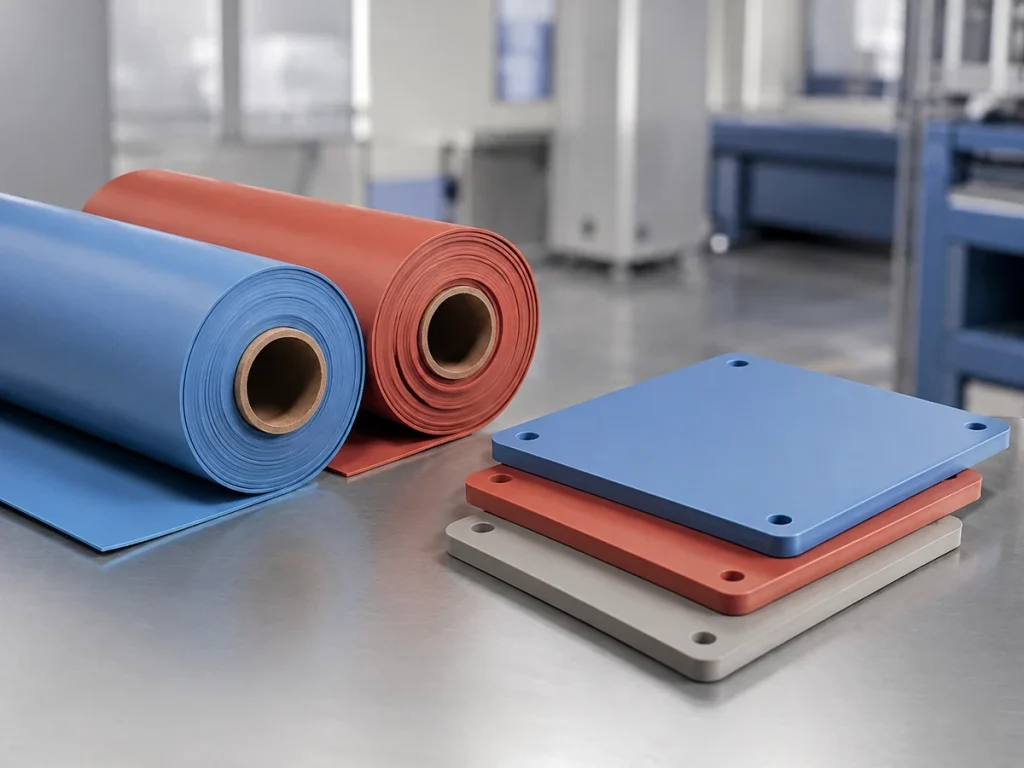
- Flat Sealing Gaskets and Insulating Buffers
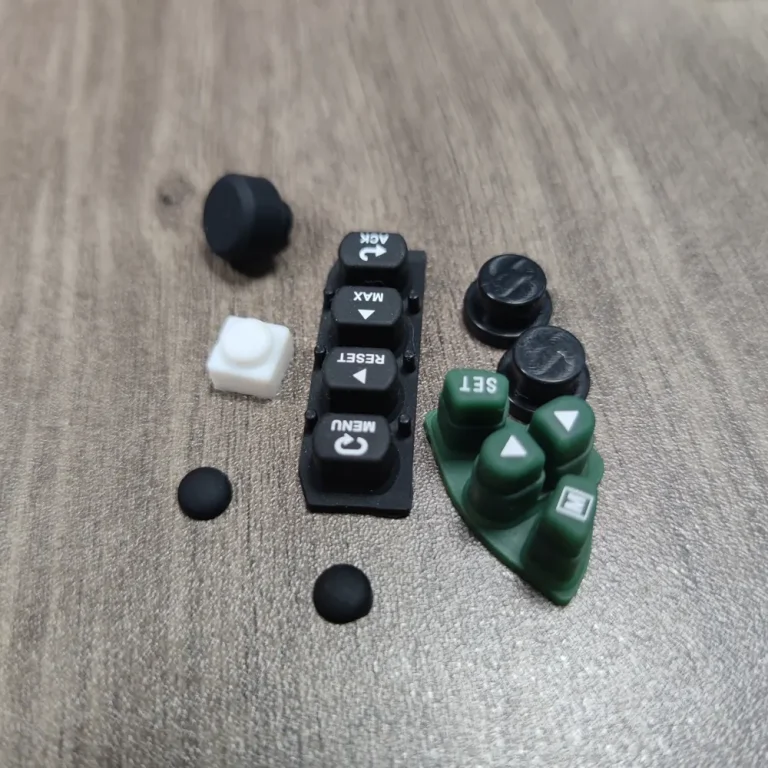
- Parts that require textures, steps, or localized protrusions
- Die-cutting of Rolls and Small-Batch Custom Sheets
Parameters to Confirm Before Selecting a Model
We recommend providing the following information before requesting a quote or ordering a sample to minimize the need for repeated prototyping and misunderstandings regarding specifications.
- Length, Width, Thickness, and Tolerance Requirements
- Surface Texture, Color, and Cleanliness Grade
- Batch Size, Material Utilization, and Mold Budget
Key Points in Structural Design
Structural dimensions, assembly relationships, and material elasticity must be evaluated together; simply increasing a single parameter generally does not directly improve reliability.
- Prioritize evaluating the feasibility of die-cutting sheet materials for flat parts
- Three-dimensional features and precise contours are taken into account in the molding process
- Critical sealing surfaces avoid errors caused by the accumulation of sheet thicknesses
Production and Quality Control
Consistency in mass production results from the combined control of material batches, mold condition, molding windows, and inspection methods.
- Monitoring Thickness and Surface Grain Size During the Calendering Process
- Molding Control of Venting, Flatness, and Flash
- Cutting and Packaging to Prevent Creases and Surface Contamination
Recommended Verification Items
Validation should be conducted using actual or equivalent operating conditions whenever possible, and functionality should be reconfirmed after aging or cycling.
- Multi-point measurement of thickness, flatness, and surface
- Comparison and Validation of Assembly, Compression, and Sealing Functions
- Evaluating Material Utilization and Stability in Mass Production
Frequently Asked Questions
Is the thickness of a calendered sheet definitely more uniform?
It depends on the equipment, web width, and process control capabilities.
Are molded tablets necessarily more expensive?
Batch size, material utilization, and structural complexity can affect the results.
How do I provide information to suppliers?
Please provide 2D or 3D drawings, photos of samples, material and hardness specifications, operating environment, target quantity, acceptance criteria, and a list of compliance documents. Based on this information, Chengxin Silicone Rubber can evaluate the materials, molds, molding process, and validation plan.