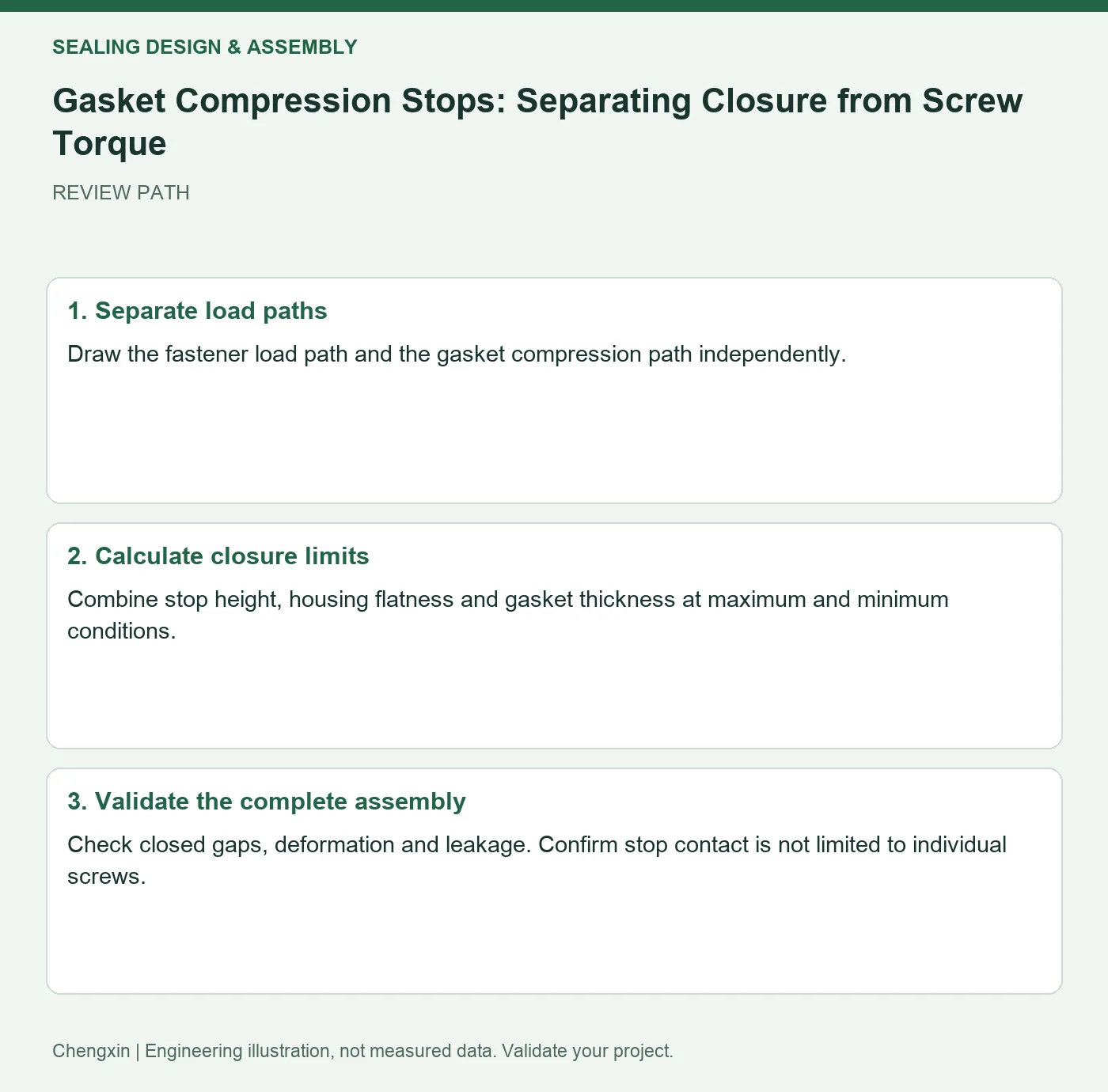
Scope and common interpretation errors
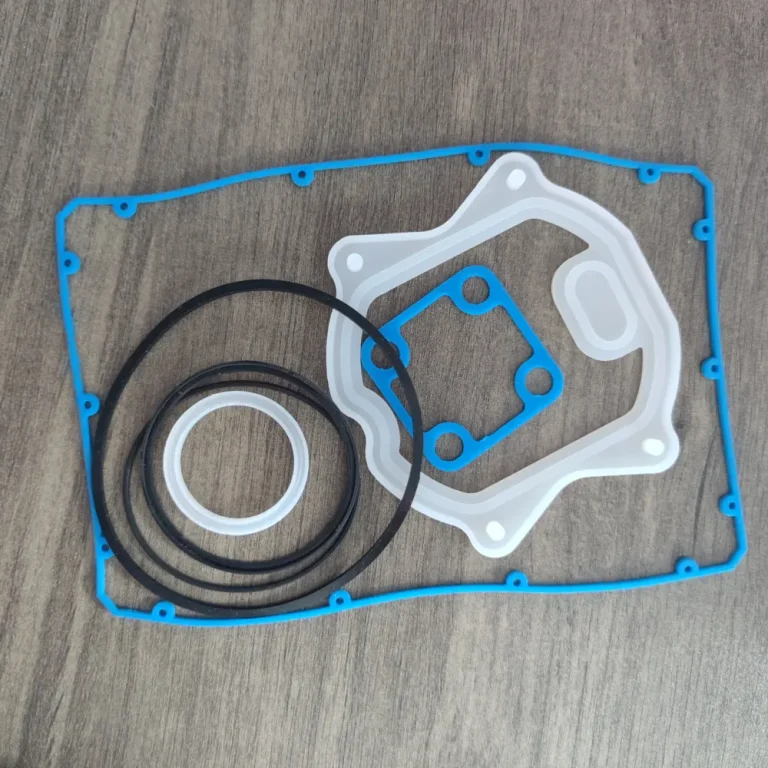
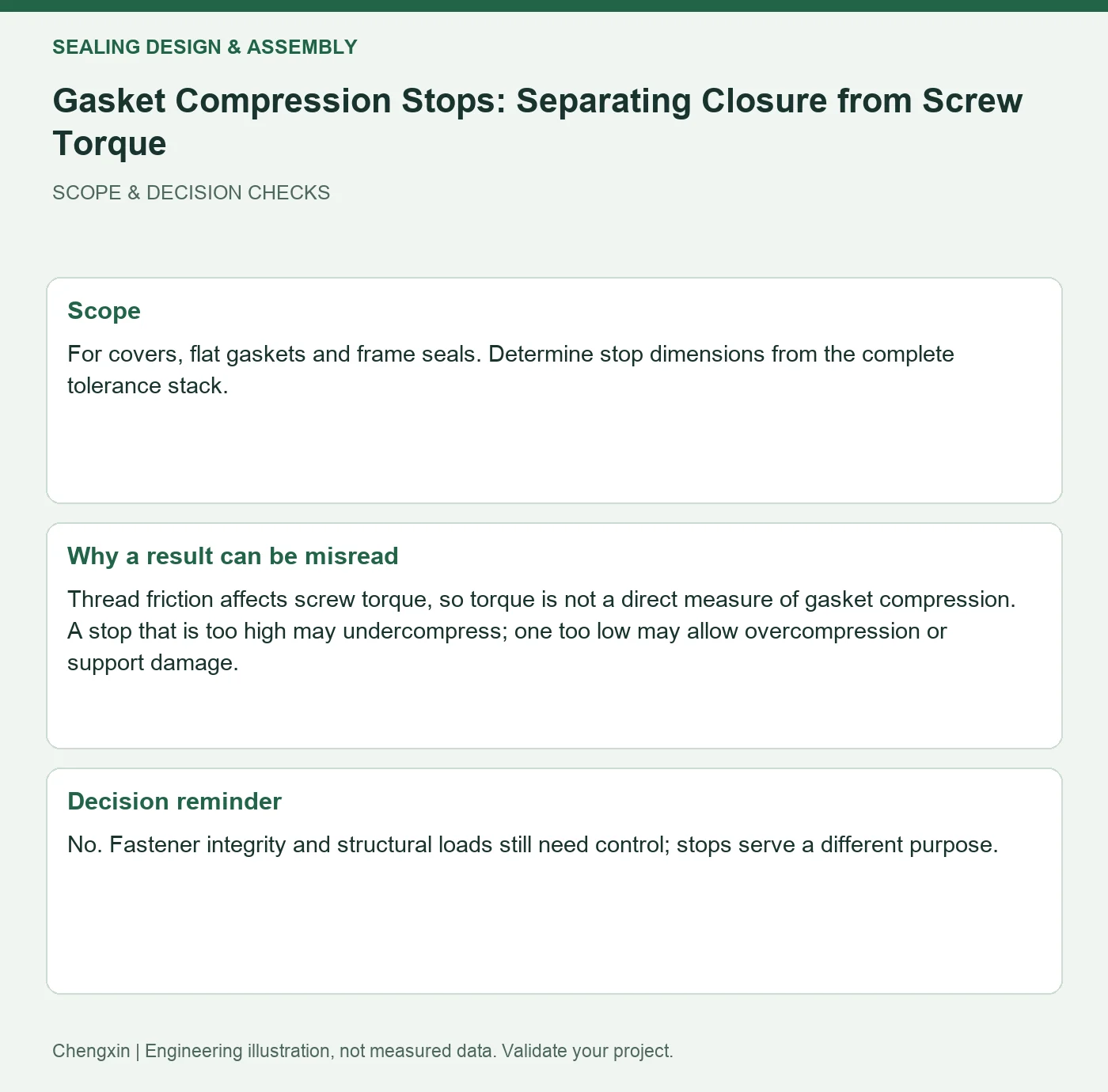
For covers, flat gaskets and frame seals. Determine stop dimensions from the complete tolerance stack.
Thread friction affects screw torque, so torque is not a direct measure of gasket compression. A stop that is too high may undercompress; one too low may allow overcompression or support damage.
Turn the review into recorded checks
| Step | Action and evidence |
|---|---|
| 1 · Separate load paths | Draw the fastener load path and the gasket compression path independently. |
| 2 · Calculate closure limits | Combine stop height, housing flatness and gasket thickness at maximum and minimum conditions. |
| 3 · Validate the complete assembly | Check closed gaps, deformation and leakage. Confirm stop contact is not limited to individual screws. |
A comparison to avoid misinterpretation
At identical torque, assemblies with and without locating stops may show different compression marks. Review closure distribution before changing hardness.
Frequently asked question
Can torque control be omitted once stops are fitted?
No. Fastener integrity and structural loads still need control; stops serve a different purpose.
Background and further reading
This note addresses one specific question. For broader concepts, see the related background guide.
Related question: Leaks Between Cover Screws: Checking Span and Deflection.
External references support the relevant concepts. The review steps and scenarios are independent engineering discussion guidance, not quotations from a standard or external organization. Use agreed methods, applicable document revisions and complete conditions.
Apply this to your custom part
Compare the structure with Shaped Silicone Housing Gaskets for Wearable Devices. Describe the application, geometry, operating conditions, quantity and problem to solve. Submit a custom-parts inquiry, or see how to send drawings and sample photographs by business email. Confirm material, dimensions, costs, testing and delivery requirements for the project.