Scope and common interpretation errors
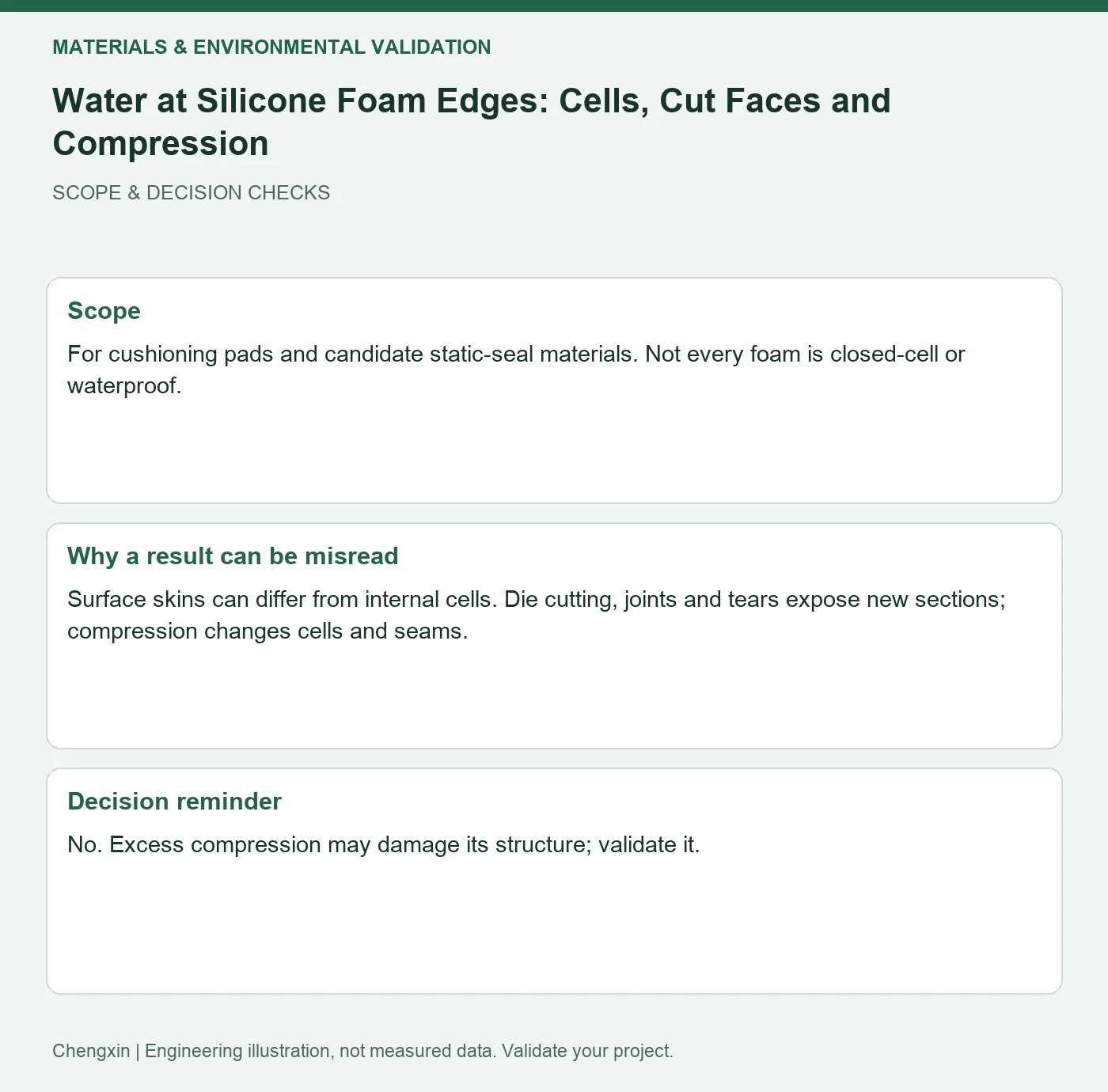
For cushioning pads and candidate static-seal materials. Not every foam is closed-cell or waterproof.
Surface skins can differ from internal cells. Die cutting, joints and tears expose new sections; compression changes cells and seams.
Turn the review into recorded checks
| Step | Action and evidence |
|---|---|
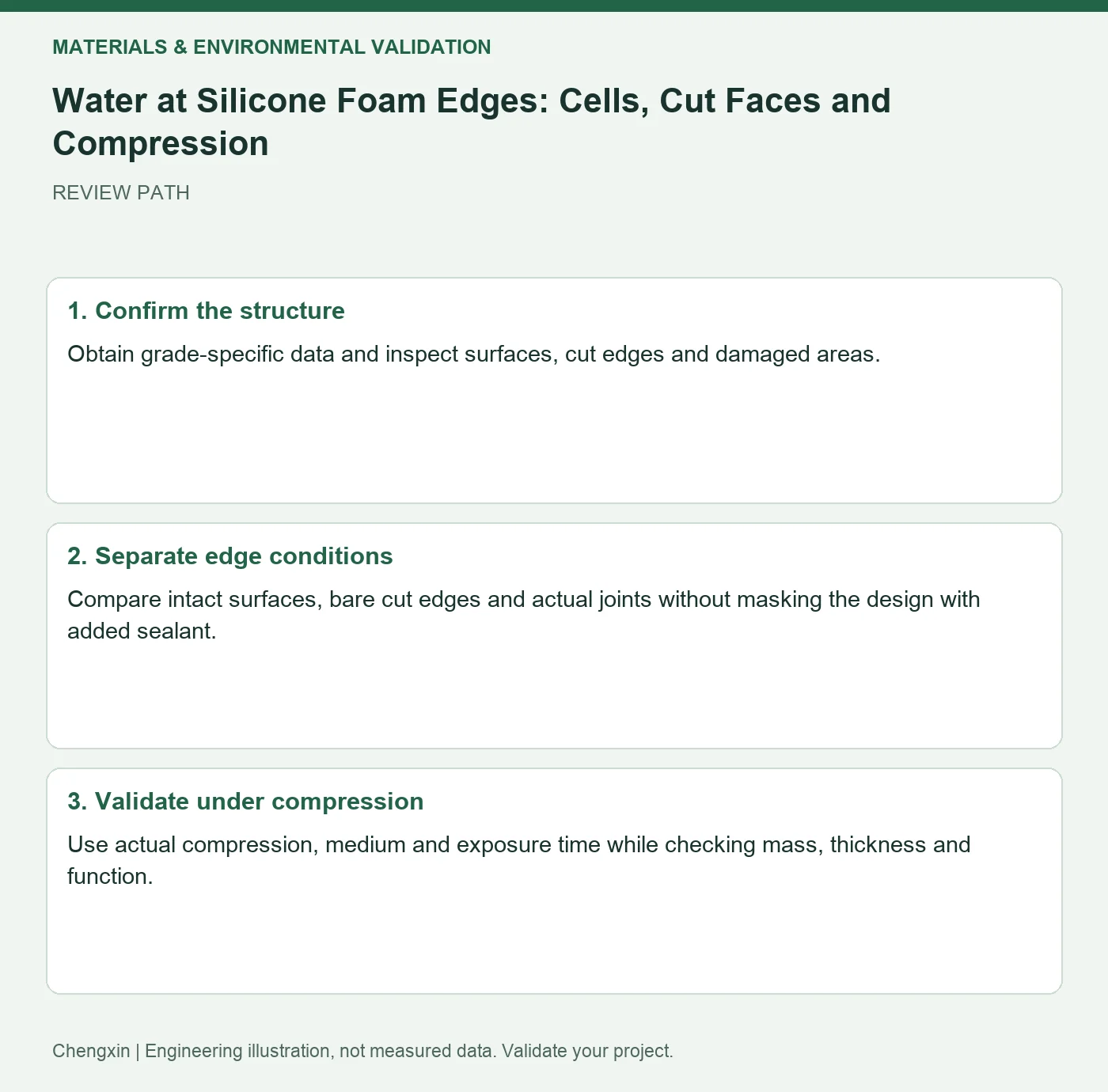
| 1 · Confirm the structure | Obtain grade-specific data and inspect surfaces, cut edges and damaged areas. |
| 2 · Separate edge conditions | Compare intact surfaces, bare cut edges and actual joints without masking the design with added sealant. |
| 3 · Validate under compression | Use actual compression, medium and exposure time while checking mass, thickness and function. |
A comparison to avoid misinterpretation
If an intact face resists water but a cut edge absorbs it, treat the edge as a design boundary rather than relying only on a sheet-material description.
Frequently asked question
Does compressing foam more tightly always improve waterproofing?
No. Excess compression may damage its structure; validate it.
Background and further reading
This note addresses one specific question. For broader concepts, see the related background guide.
Related question: Packing Silicone and Rubber Parts Together: Transfer and Mix-Up Risks.
External references support the relevant concepts. The review steps and scenarios are independent engineering discussion guidance, not quotations from a standard or external organization. Use agreed methods, applicable document revisions and complete conditions.
Apply this to your custom part
Compare the structure with Silicone Vibration-Isolation Feet for Small Equipment. Describe the application, geometry, operating conditions, quantity and problem to solve. Submit a custom-parts inquiry, or see how to send drawings and sample photographs by business email. Confirm material, dimensions, costs, testing and delivery requirements for the project.