Scope and common interpretation errors
For storage and packaging reviews, not a universal compatibility statement between formulations.
Surface additives, residues and packaging conditions can interact. Sorting by appearance after unpacking does not establish that earlier contact caused no transfer.
Turn the review into recorded checks
| Step | Action and evidence |
|---|---|
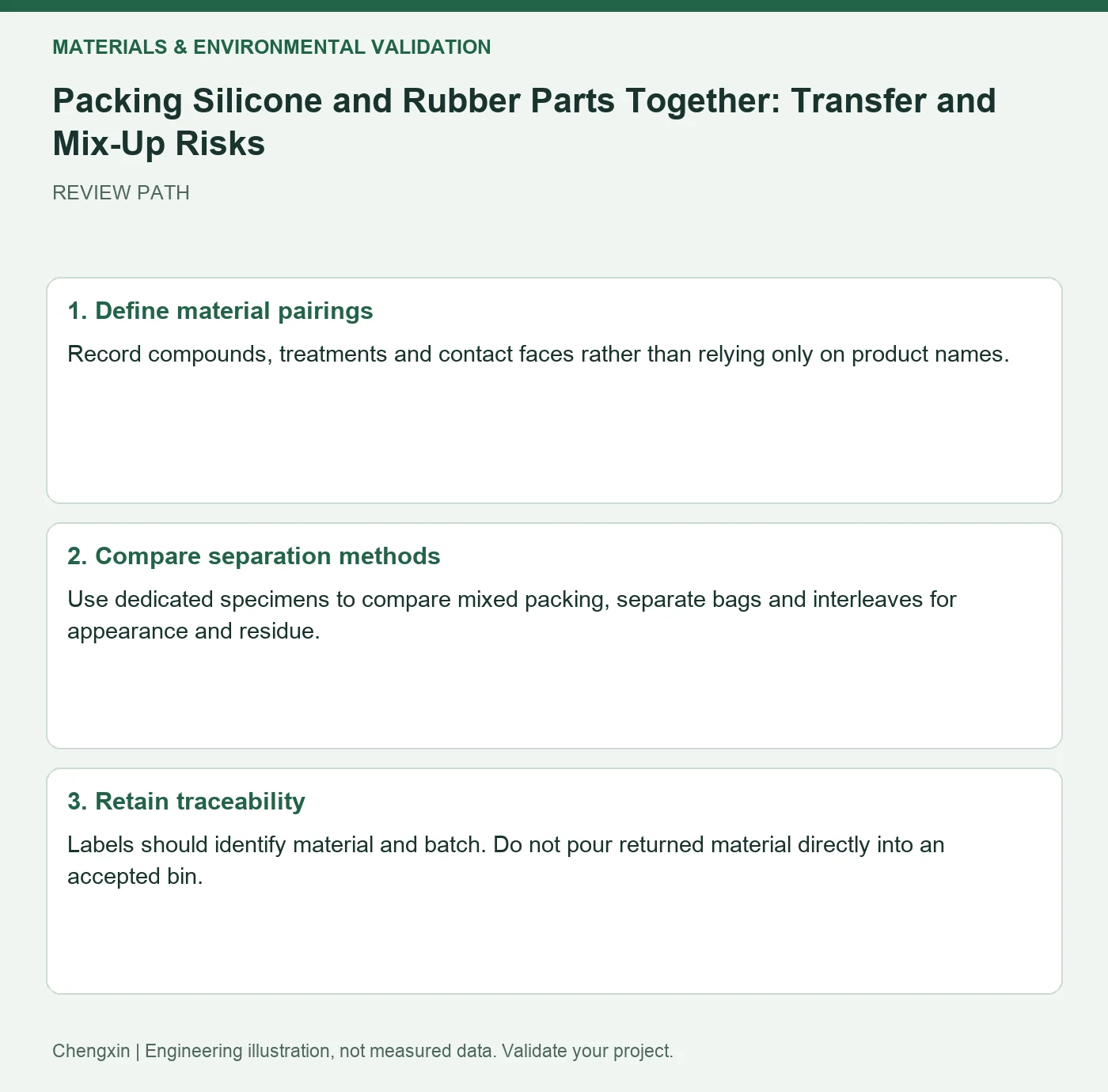
| 1 · Define material pairings | Record compounds, treatments and contact faces rather than relying only on product names. |
| 2 · Compare separation methods | Use dedicated specimens to compare mixed packing, separate bags and interleaves for appearance and residue. |
| 3 · Retain traceability | Labels should identify material and batch. Do not pour returned material directly into an accepted bin. |
A comparison to avoid misinterpretation
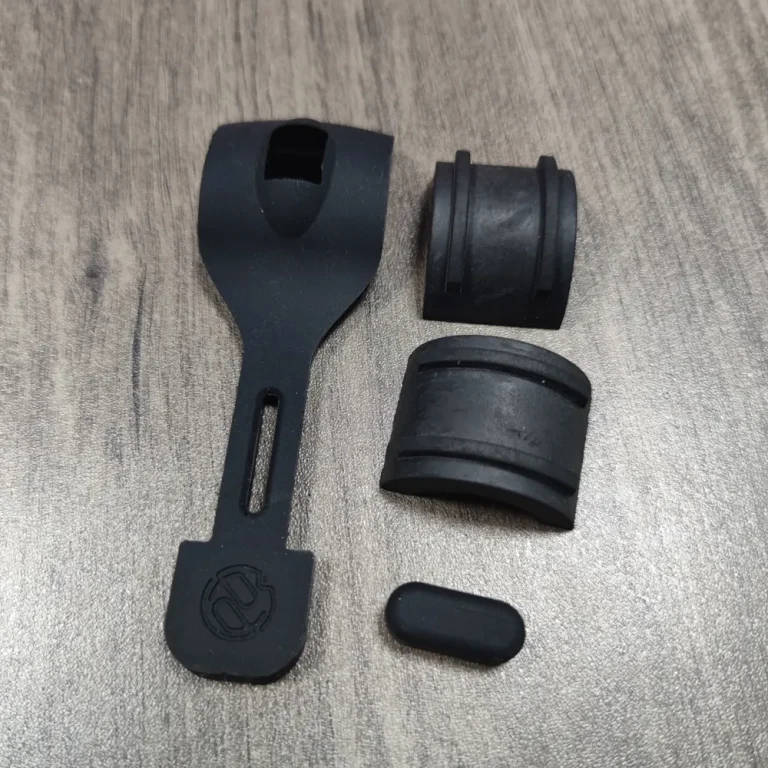
Separate labeled bags prevent confusion between similar-sized parts with different uses. No observed migration does not justify removing identification controls.
Frequently asked question
Can all silicone parts share one bag?
Grades, colors and surface conditions can still differ.
Background and further reading
This note addresses one specific question. For broader concepts, see the related background guide.
Related question: Silicone TDS Temperature Ranges Versus Continuous Service.
External references support the relevant concepts. The review steps and scenarios are independent engineering discussion guidance, not quotations from a standard or external organization. Use agreed methods, applicable document revisions and complete conditions.
Apply this to your custom part
Compare the structure with Custom Shaped Silicone Parts. Describe the application, geometry, operating conditions, quantity and problem to solve. Submit a custom-parts inquiry, or see how to send drawings and sample photographs by business email. Confirm material, dimensions, costs, testing and delivery requirements for the project.