Scope and common interpretation errors
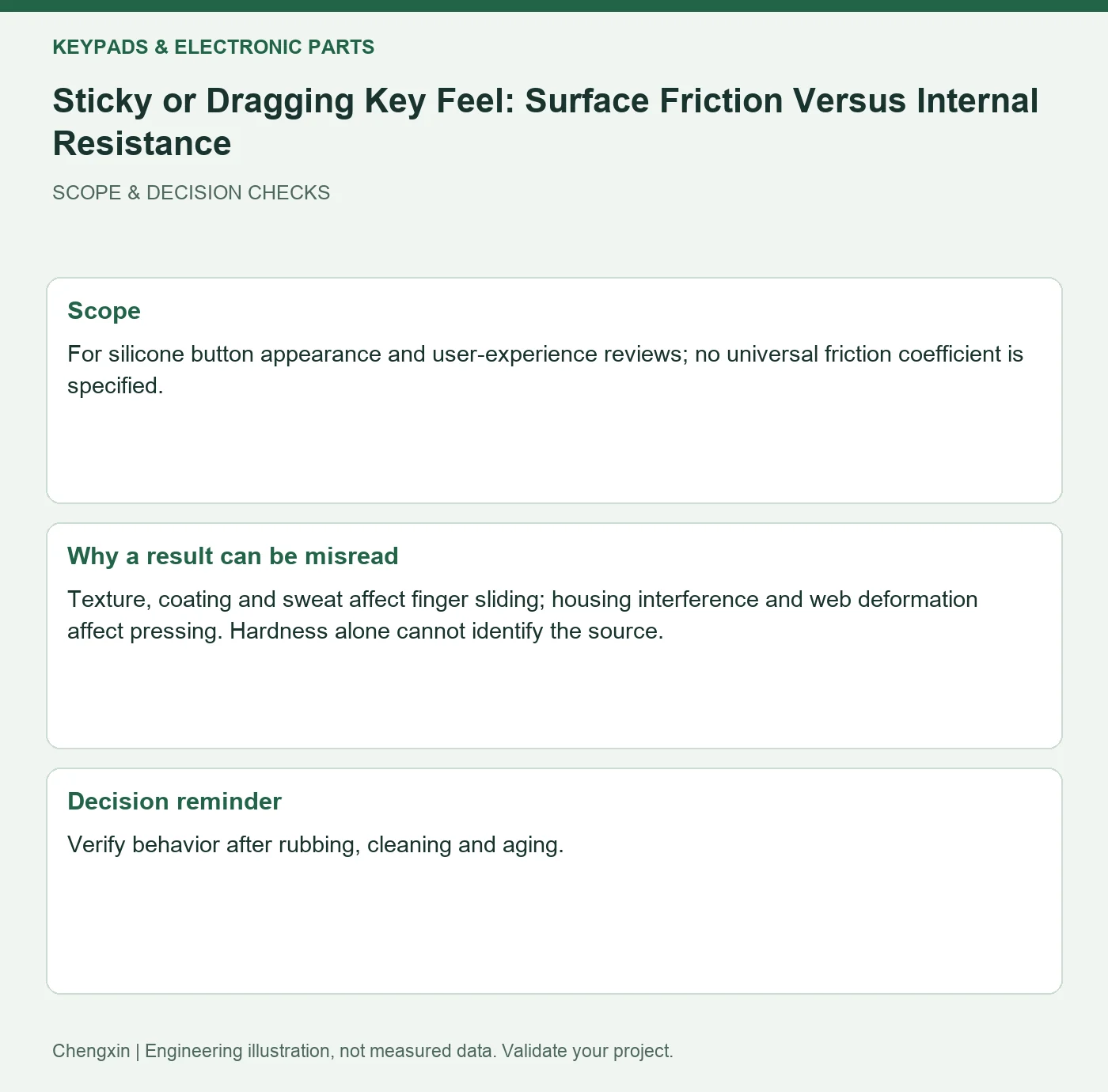
For silicone button appearance and user-experience reviews; no universal friction coefficient is specified.
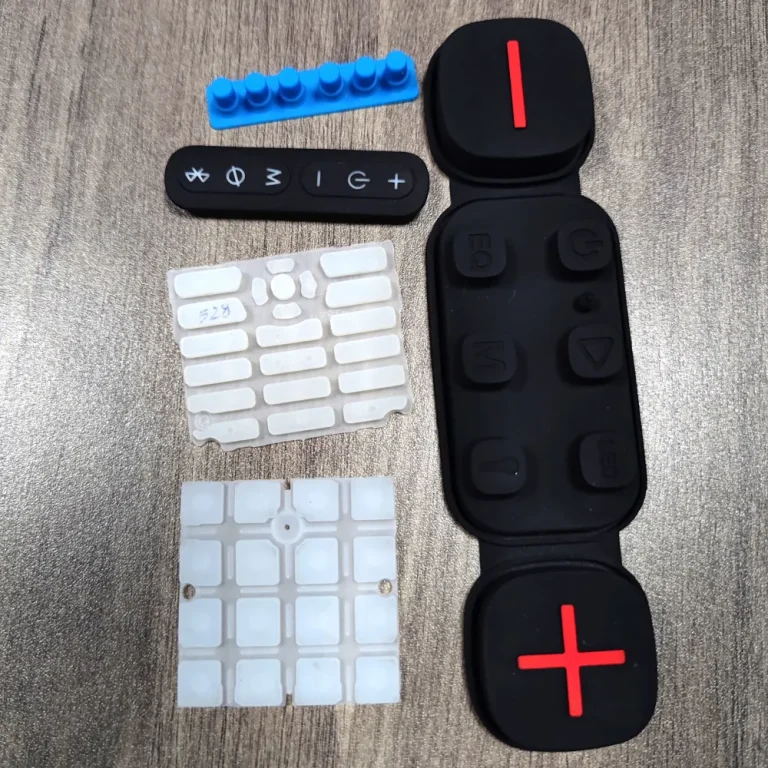
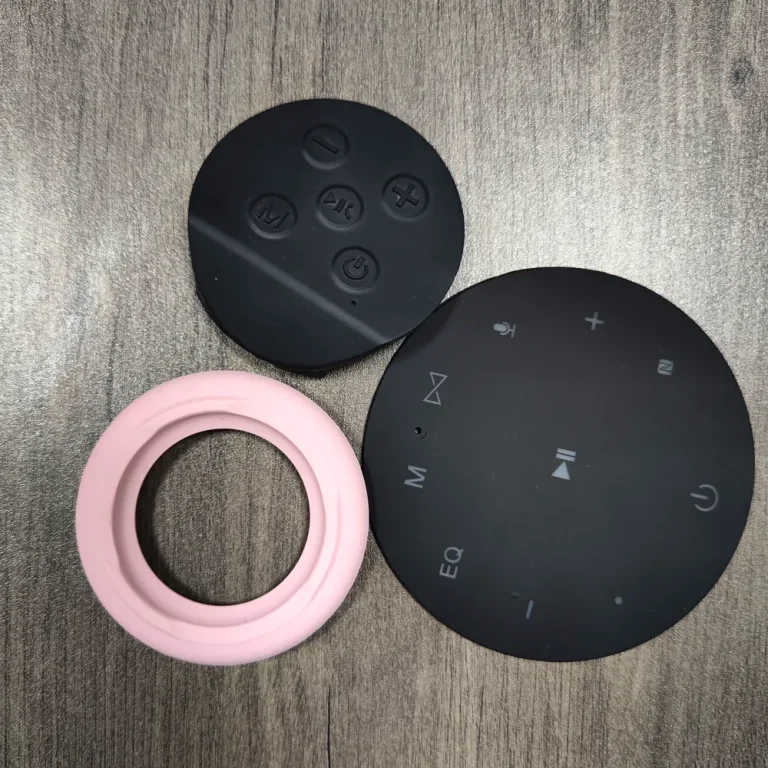
Texture, coating and sweat affect finger sliding; housing interference and web deformation affect pressing. Hardness alone cannot identify the source.
Turn the review into recorded checks
| Step | Action and evidence |
|---|---|
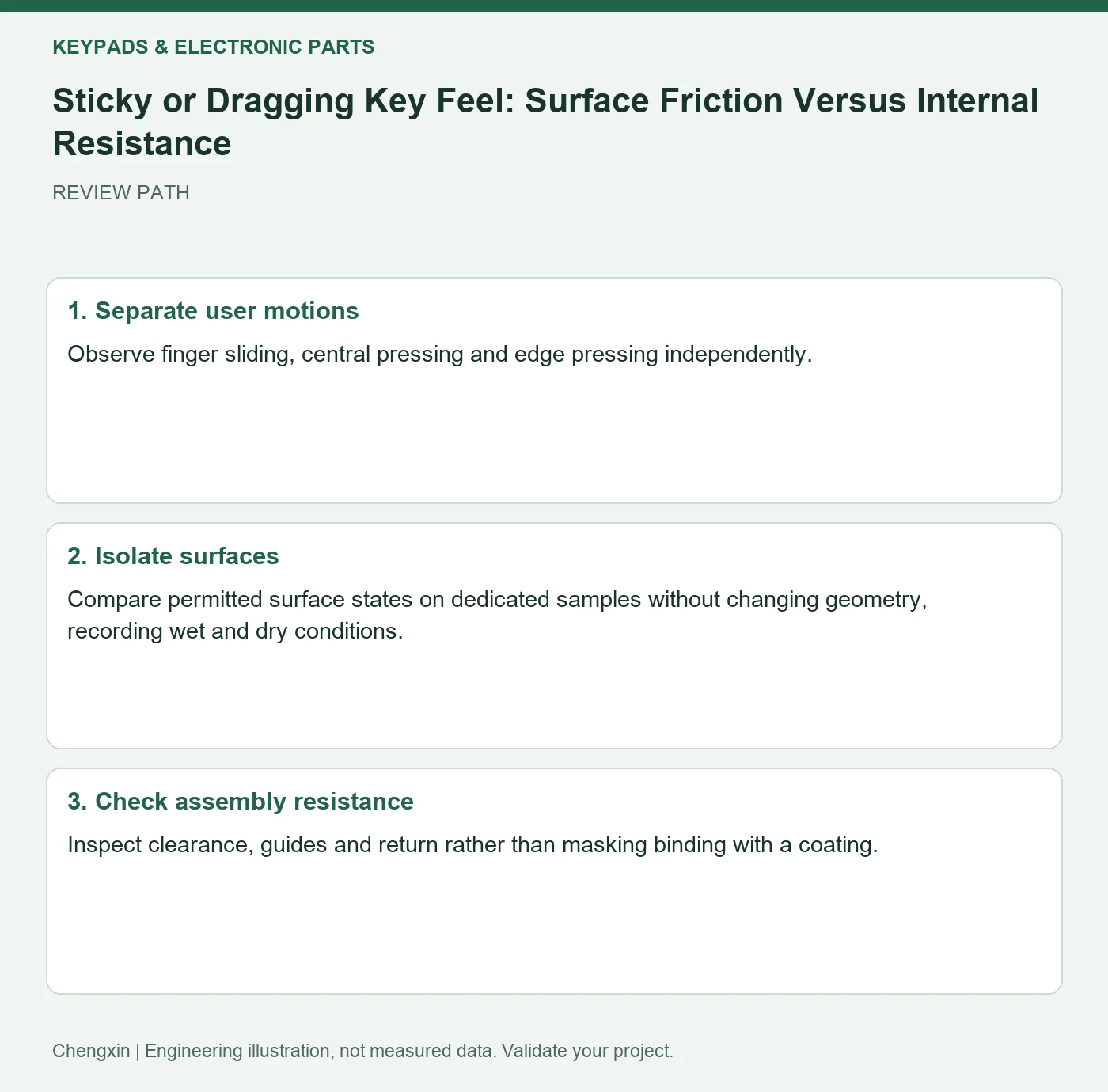
| 1 · Separate user motions | Observe finger sliding, central pressing and edge pressing independently. |
| 2 · Isolate surfaces | Compare permitted surface states on dedicated samples without changing geometry, recording wet and dry conditions. |
| 3 · Check assembly resistance | Inspect clearance, guides and return rather than masking binding with a coating. |
A comparison to avoid misinterpretation
A stable flat-probe curve with high finger drag points toward surface investigation. A stuck return calls for continued interference checks.
Frequently asked question
Does a feel coating guarantee lasting smoothness?
Verify behavior after rubbing, cleaning and aging.
Background and further reading
This note addresses one specific question. For broader concepts, see the related background guide.
Related question: Silicone Keypad Force–Travel Curves: Comparable Test Conditions.
External references support the relevant concepts. The review steps and scenarios are independent engineering discussion guidance, not quotations from a standard or external organization. Use agreed methods, applicable document revisions and complete conditions.
Apply this to your custom part
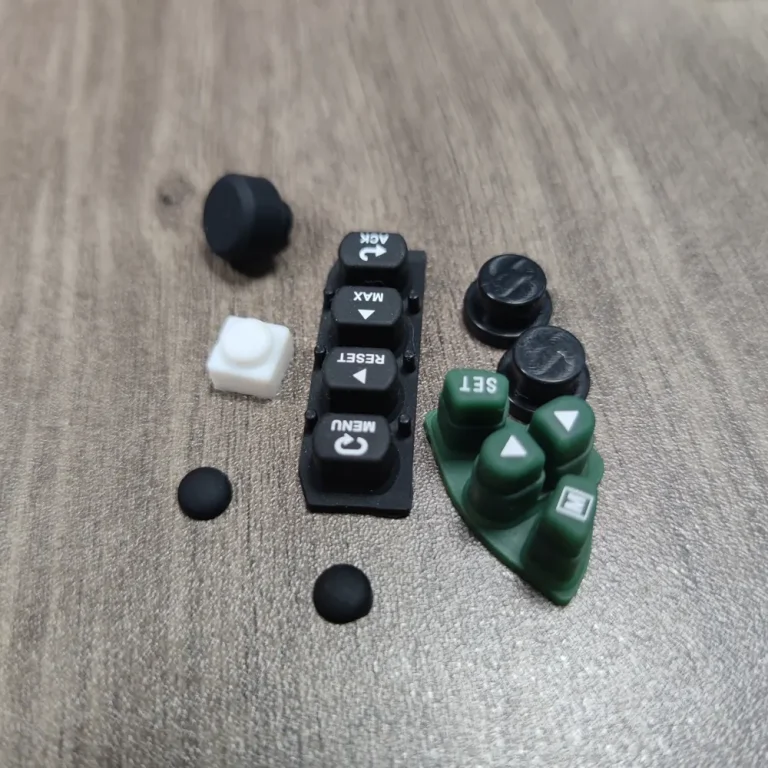
Compare the structure with Custom Silicone Single-Key Button Caps. Describe the application, geometry, operating conditions, quantity and problem to solve. Submit a custom-parts inquiry, or see how to send drawings and sample photographs by business email. Confirm material, dimensions, costs, testing and delivery requirements for the project.