Scope and common interpretation errors
For removable dust caps and ordinary plugs; pressure retention and sealing require separate tests.
Contact length, residue and interference change friction. Side pulling may lift an edge first; a grip that flattens the handle also changes loading.
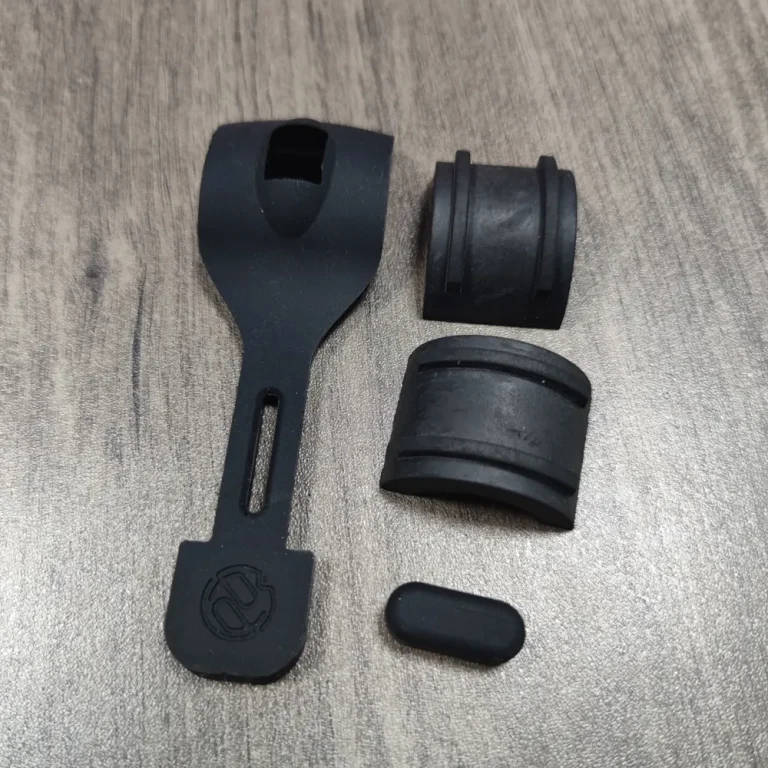
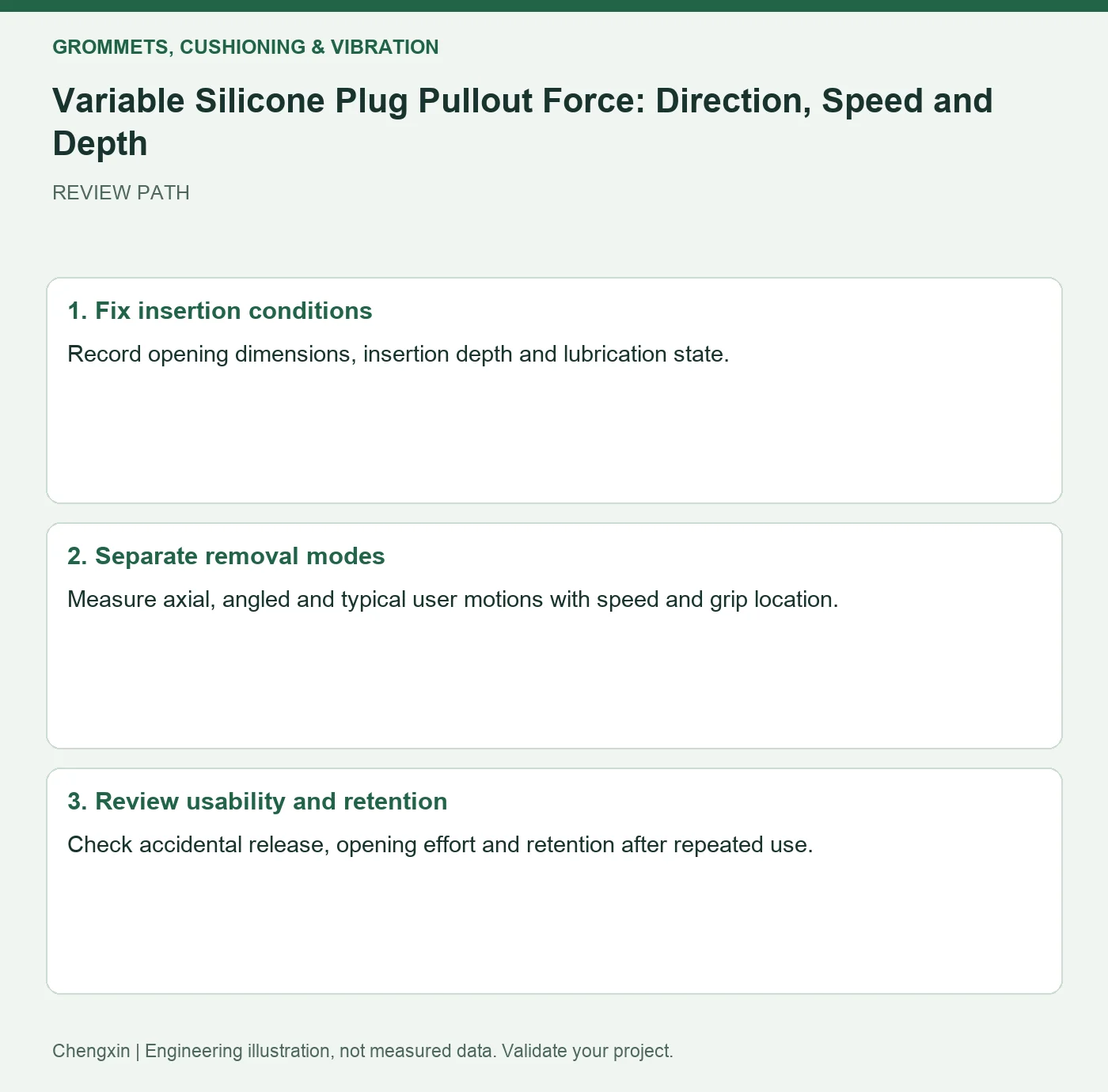
Turn the review into recorded checks
| Step | Action and evidence |
|---|---|
| 1 · Fix insertion conditions | Record opening dimensions, insertion depth and lubrication state. |
| 2 · Separate removal modes | Measure axial, angled and typical user motions with speed and grip location. |
| 3 · Review usability and retention | Check accidental release, opening effort and retention after repeated use. |
A comparison to avoid misinterpretation
A plug tight in axial pulling but easy to lift from an edge may suit an opening design, provided the method is explicit; do not advertise only the axial value.
Frequently asked question
Does higher pullout force prove better sealing?
Retention and sealing are related but distinct decisions.
Background and further reading
This note addresses one specific question. For broader concepts, see the related background guide.
Related question: Friction Noise from Silicone Bumpers: Slip, Surface and Preload.
External references support the relevant concepts. The review steps and scenarios are independent engineering discussion guidance, not quotations from a standard or external organization. Use agreed methods, applicable document revisions and complete conditions.
Apply this to your custom part
Compare the structure with Custom Shaped Silicone Parts. Describe the application, geometry, operating conditions, quantity and problem to solve. Submit a custom-parts inquiry, or see how to send drawings and sample photographs by business email. Confirm material, dimensions, costs, testing and delivery requirements for the project.