Scope and common interpretation errors
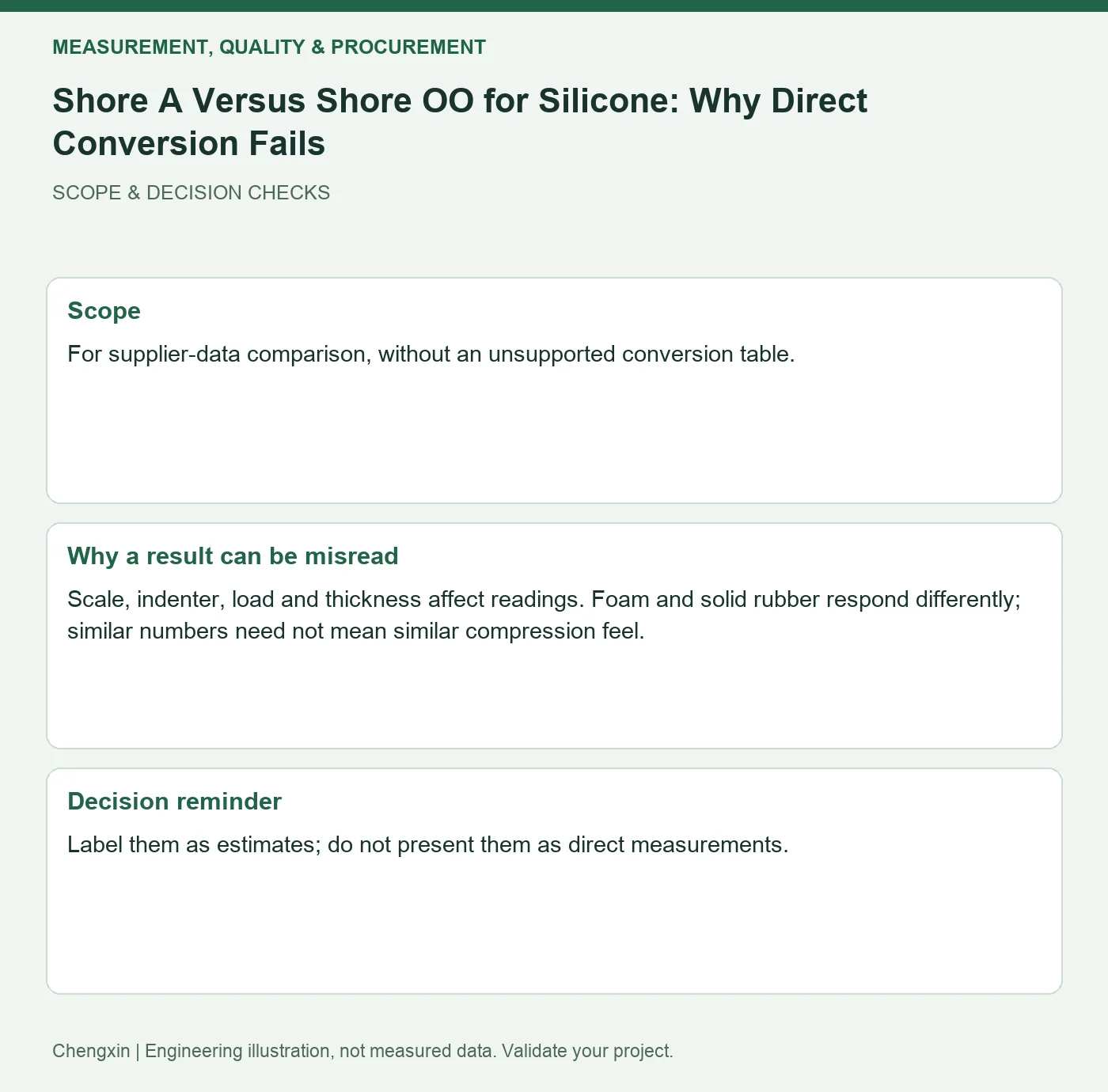
For supplier-data comparison, without an unsupported conversion table.
Scale, indenter, load and thickness affect readings. Foam and solid rubber respond differently; similar numbers need not mean similar compression feel.
Turn the review into recorded checks
| Step | Action and evidence |
|---|---|
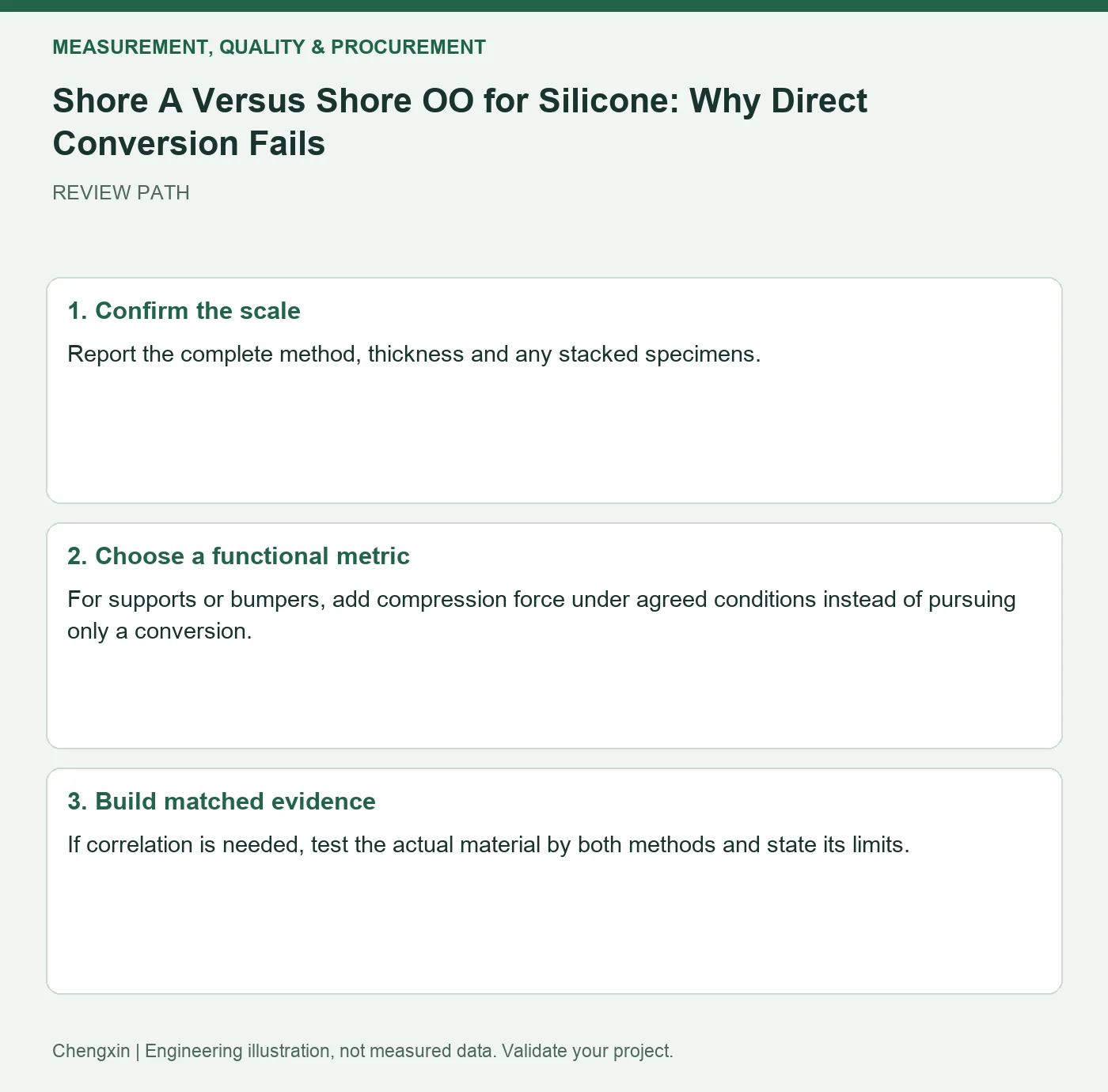
| 1 · Confirm the scale | Report the complete method, thickness and any stacked specimens. |
| 2 · Choose a functional metric | For supports or bumpers, add compression force under agreed conditions instead of pursuing only a conversion. |
| 3 · Build matched evidence | If correlation is needed, test the actual material by both methods and state its limits. |
A comparison to avoid misinterpretation
Quotations listing Shore A and Shore OO need aligned specimen information before comparison. Numeric magnitude alone does not rank softness.
Frequently asked question
Can software conversions appear as test results?
Label them as estimates; do not present them as direct measurements.
Background and further reading
This note addresses one specific question. For broader concepts, see the related background guide.
Related question: Color Measurement of Translucent Silicone: Background and Thickness.
External references support the relevant concepts. The review steps and scenarios are independent engineering discussion guidance, not quotations from a standard or external organization. Use agreed methods, applicable document revisions and complete conditions.
Apply this to your custom part
Compare the structure with Silicone Vibration-Isolation Feet for Small Equipment. Describe the application, geometry, operating conditions, quantity and problem to solve. Submit a custom-parts inquiry, or see how to send drawings and sample photographs by business email. Confirm material, dimensions, costs, testing and delivery requirements for the project.