Scope and common interpretation errors
For dimensional, hardness and mechanical-test preparation; no universal condition suits every method.
Freshly molded, washed or cold-transferred specimens can keep changing. Unequal histories can make preparation differences look like material differences.
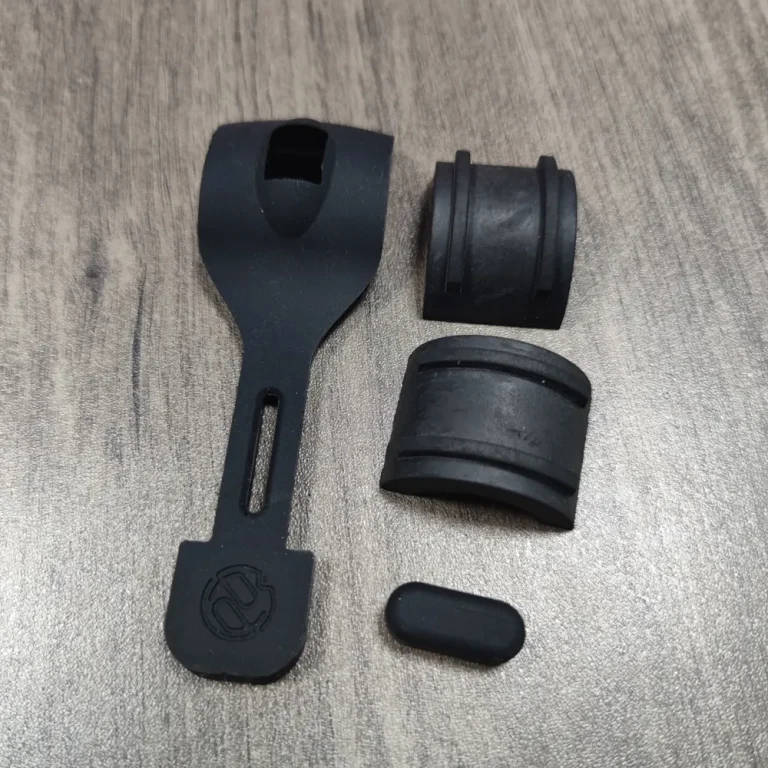
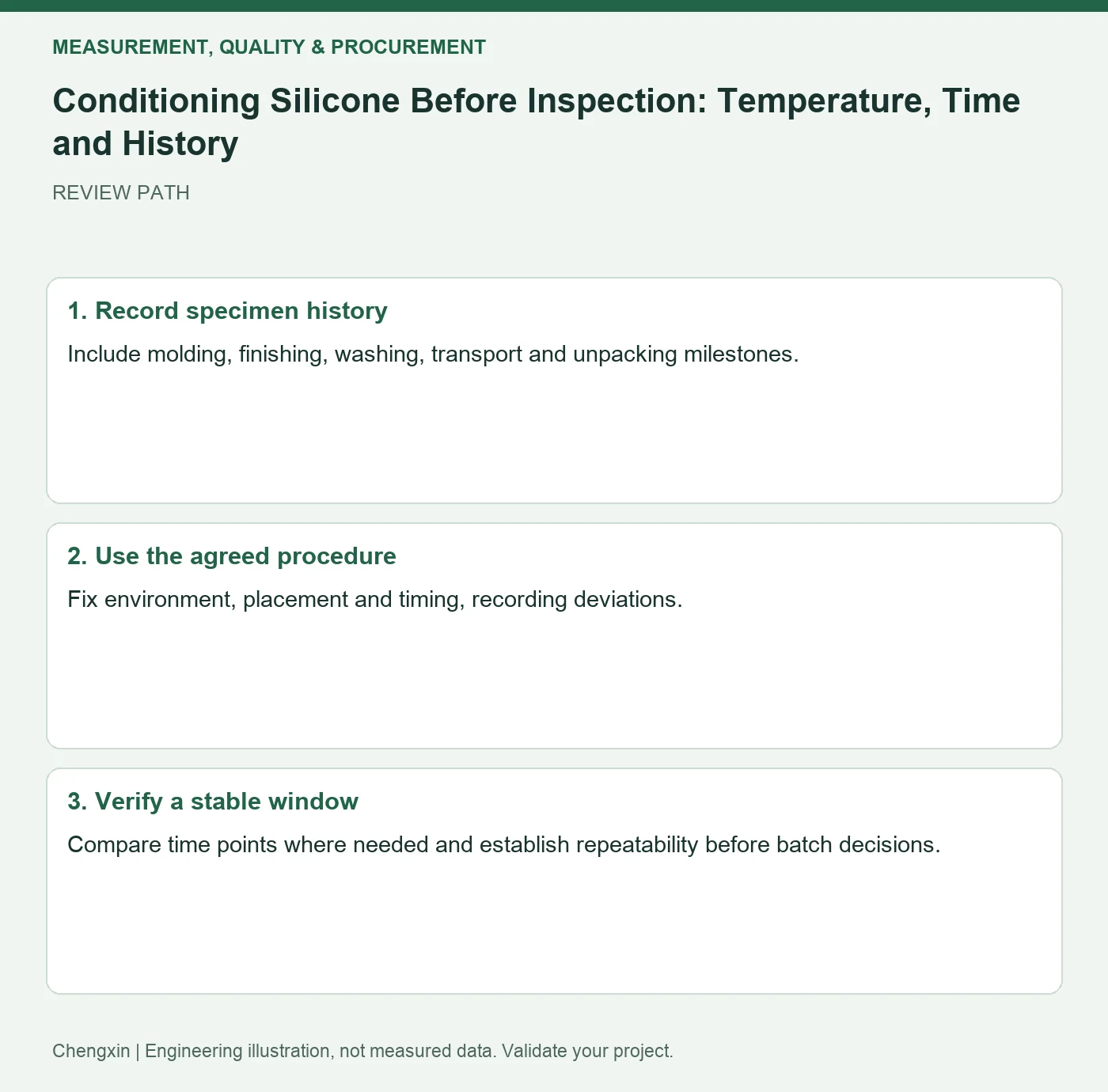
Turn the review into recorded checks
| Step | Action and evidence |
|---|---|
| 1 · Record specimen history | Include molding, finishing, washing, transport and unpacking milestones. |
| 2 · Use the agreed procedure | Fix environment, placement and timing, recording deviations. |
| 3 · Verify a stable window | Compare time points where needed and establish repeatability before batch decisions. |
A comparison to avoid misinterpretation
Different results from immediate-arrival and rested specimens call for state review before assuming a material-grade change.
Frequently asked question
Does longer conditioning always improve reliability?
No. Arbitrary delays can lose relevance to the method and use objective.
Background and further reading
This note addresses one specific question. For broader concepts, see the related background guide.
Related question: Shore A Versus Shore OO for Silicone: Why Direct Conversion Fails.
External references support the relevant concepts. The review steps and scenarios are independent engineering discussion guidance, not quotations from a standard or external organization. Use agreed methods, applicable document revisions and complete conditions.
Apply this to your custom part
Compare the structure with Custom Shaped Silicone Parts. Describe the application, geometry, operating conditions, quantity and problem to solve. Submit a custom-parts inquiry, or see how to send drawings and sample photographs by business email. Confirm material, dimensions, costs, testing and delivery requirements for the project.