Scope and common interpretation errors
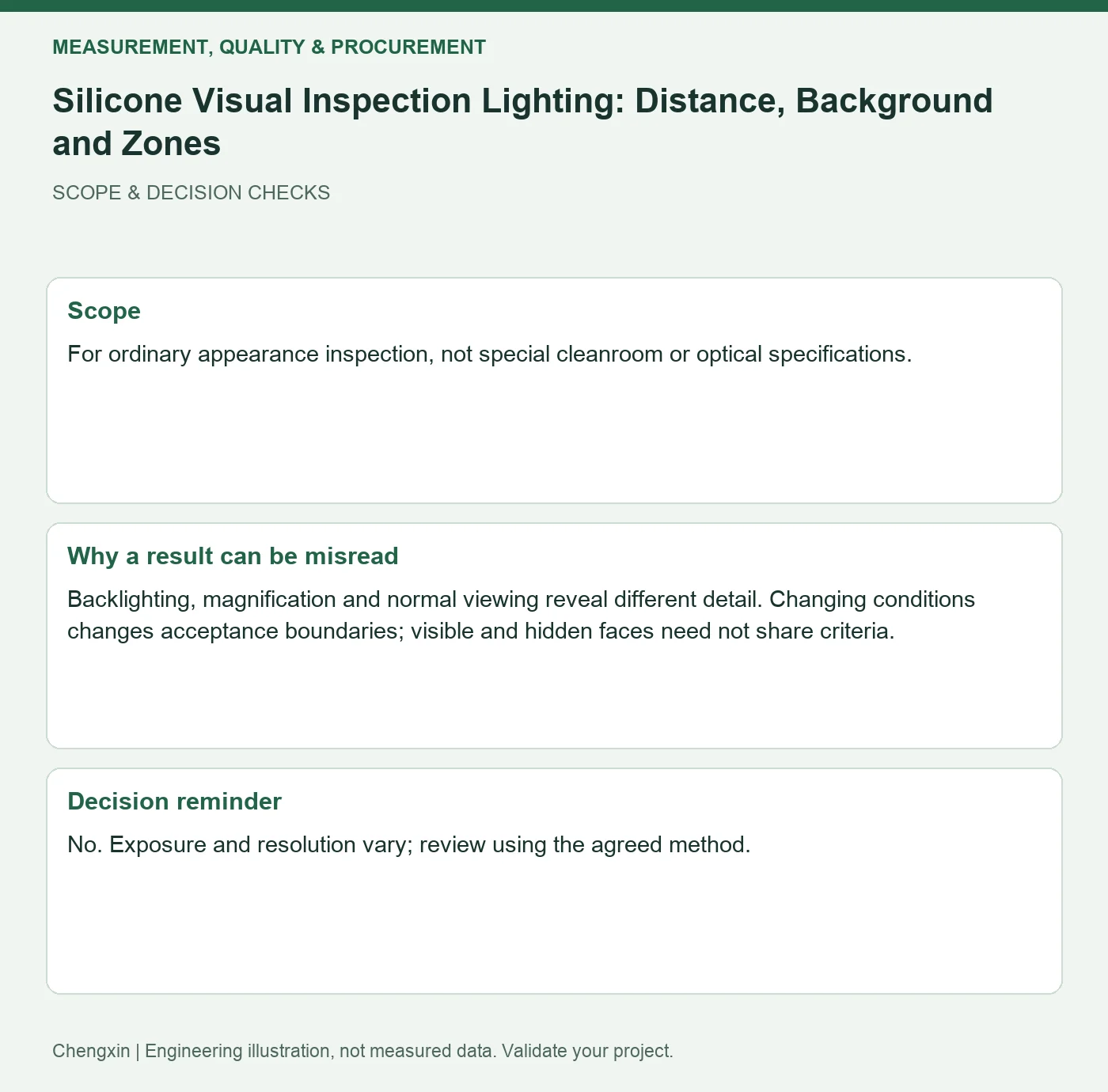
For ordinary appearance inspection, not special cleanroom or optical specifications.
Backlighting, magnification and normal viewing reveal different detail. Changing conditions changes acceptance boundaries; visible and hidden faces need not share criteria.
Turn the review into recorded checks
| Step | Action and evidence |
|---|---|
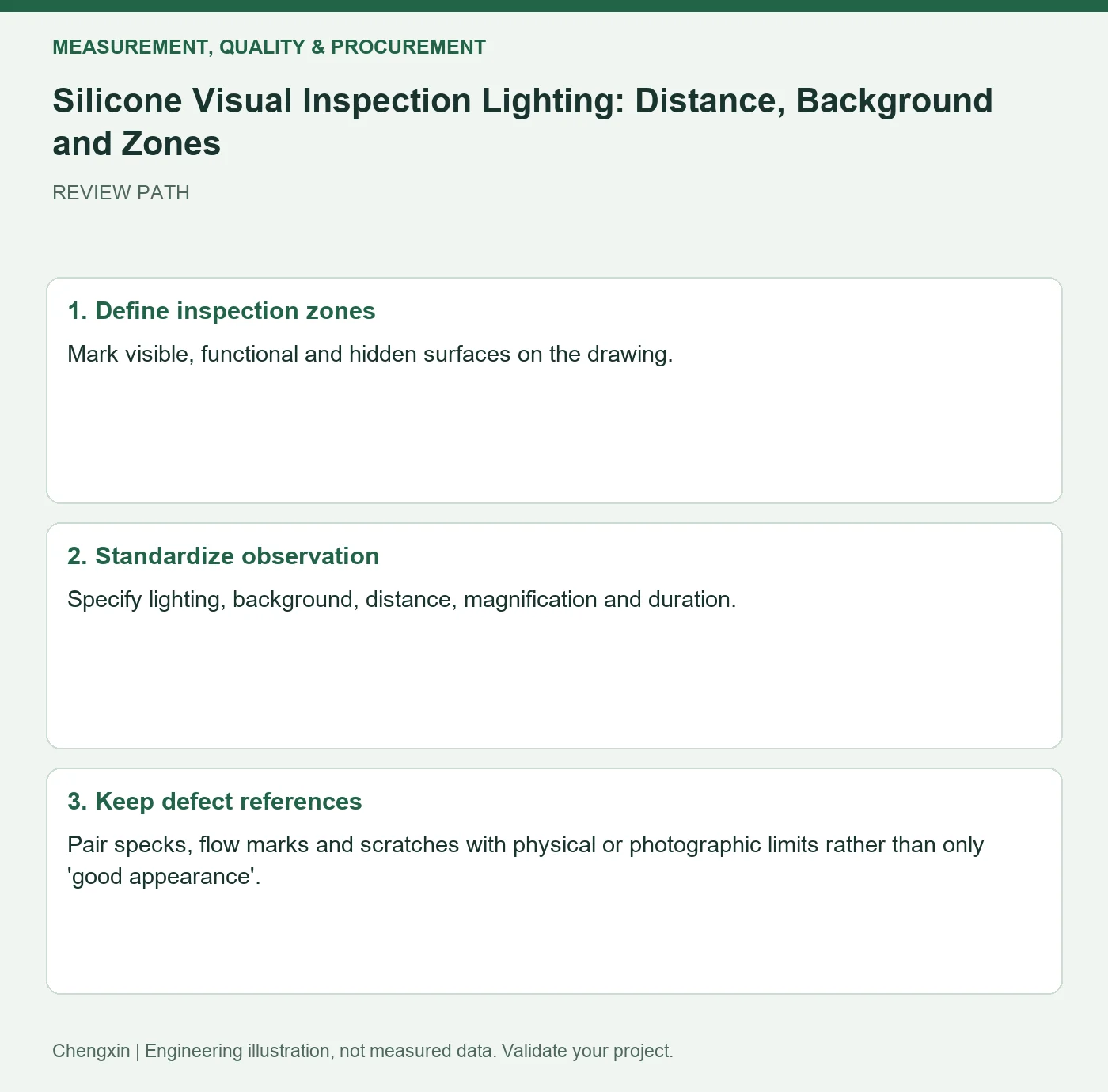
| 1 · Define inspection zones | Mark visible, functional and hidden surfaces on the drawing. |
| 2 · Standardize observation | Specify lighting, background, distance, magnification and duration. |
| 3 · Keep defect references | Pair specks, flow marks and scratches with physical or photographic limits rather than only 'good appearance'. |
A comparison to avoid misinterpretation
A tiny hidden-face mark found under strong backlight should be judged by the existing standard, without retroactively adding requirements or ignoring functional risk.
Frequently asked question
Does a photograph hiding a defect prove it absent?
No. Exposure and resolution vary; review using the agreed method.
Background and further reading
This note addresses one specific question. For broader concepts, see the related background guide.
Related question: Drawing Revisions and Old Silicone Samples: Scope of Reference.
External references support the relevant concepts. The review steps and scenarios are independent engineering discussion guidance, not quotations from a standard or external organization. Use agreed methods, applicable document revisions and complete conditions.
Apply this to your custom part
Compare the structure with Custom Shaped Silicone Parts. Describe the application, geometry, operating conditions, quantity and problem to solve. Submit a custom-parts inquiry, or see how to send drawings and sample photographs by business email. Confirm material, dimensions, costs, testing and delivery requirements for the project.