Scope and common interpretation errors
For quality-incident communication. Authorized personnel determine final release.
Repacking, mixed boxes and returns can separate physical box numbers from production lots. Tracking only discovery location may miss related parts in other processes.
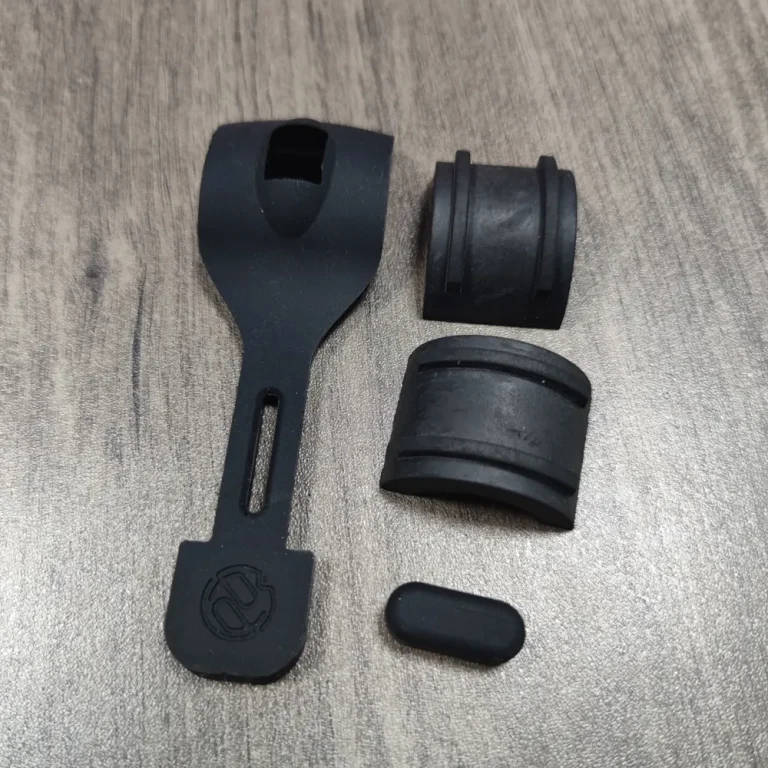
Turn the review into recorded checks
| Step | Action and evidence |
|---|---|
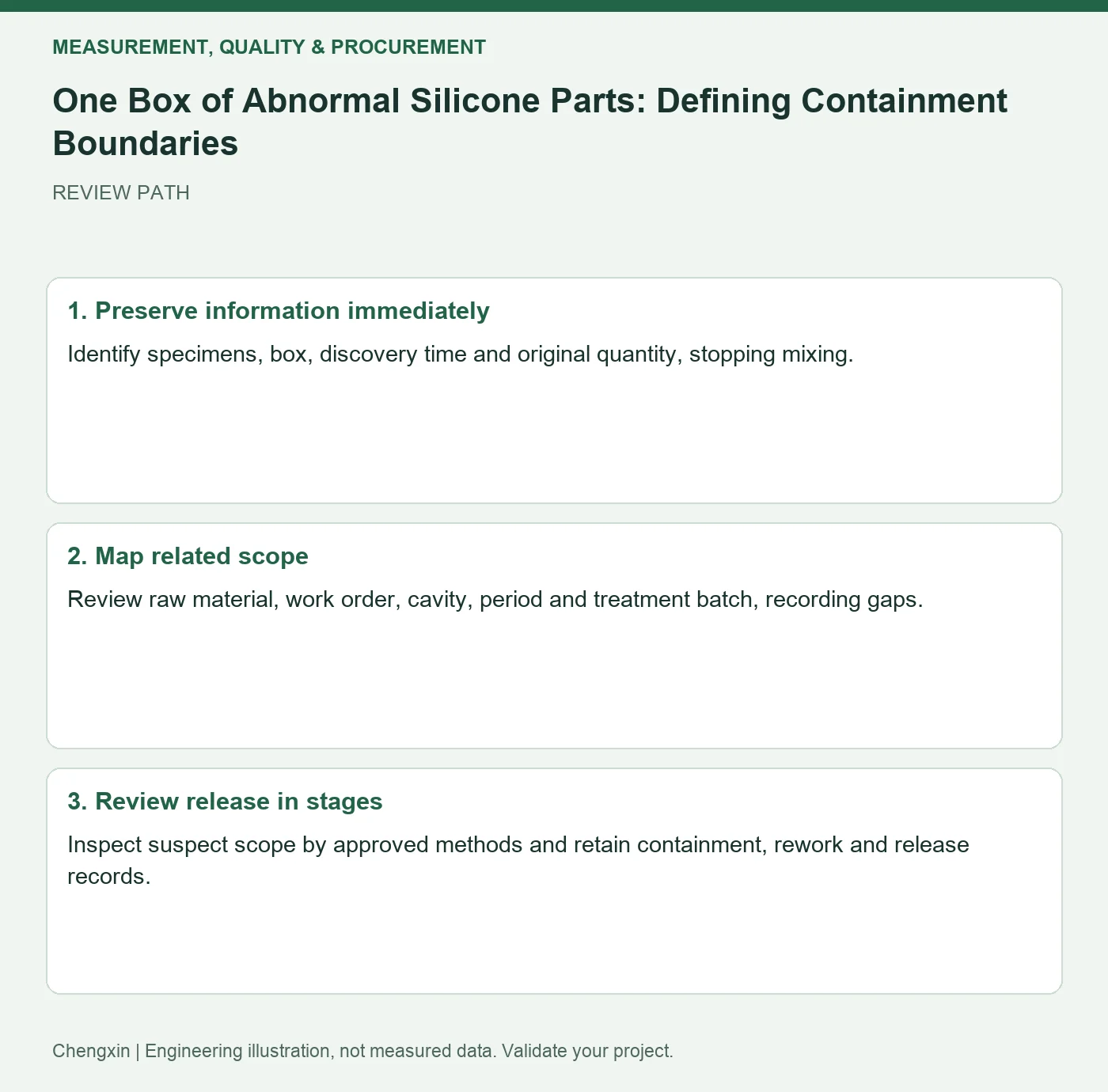
| 1 · Preserve information immediately | Identify specimens, box, discovery time and original quantity, stopping mixing. |
| 2 · Map related scope | Review raw material, work order, cavity, period and treatment batch, recording gaps. |
| 3 · Review release in stages | Inspect suspect scope by approved methods and retain containment, rework and release records. |
A comparison to avoid misinterpretation
Several boxes from one post-curing tray may need common investigation. No defect found in one sampled box does not establish no risk.
Frequently asked question
Can visible rejects be sorted out and the rest shipped immediately?
Confirm cause, sorting effectiveness and authorized release first.
Background and further reading
This note addresses one specific question. For broader concepts, see the related background guide.
Related question: Silicone 8D Reports: Containment, Verified Cause and Lasting Action.
External references support the relevant concepts. The review steps and scenarios are independent engineering discussion guidance, not quotations from a standard or external organization. Use agreed methods, applicable document revisions and complete conditions.
Apply this to your custom part
Compare the structure with Custom Shaped Silicone Parts. Describe the application, geometry, operating conditions, quantity and problem to solve. Submit a custom-parts inquiry, or see how to send drawings and sample photographs by business email. Confirm material, dimensions, costs, testing and delivery requirements for the project.