
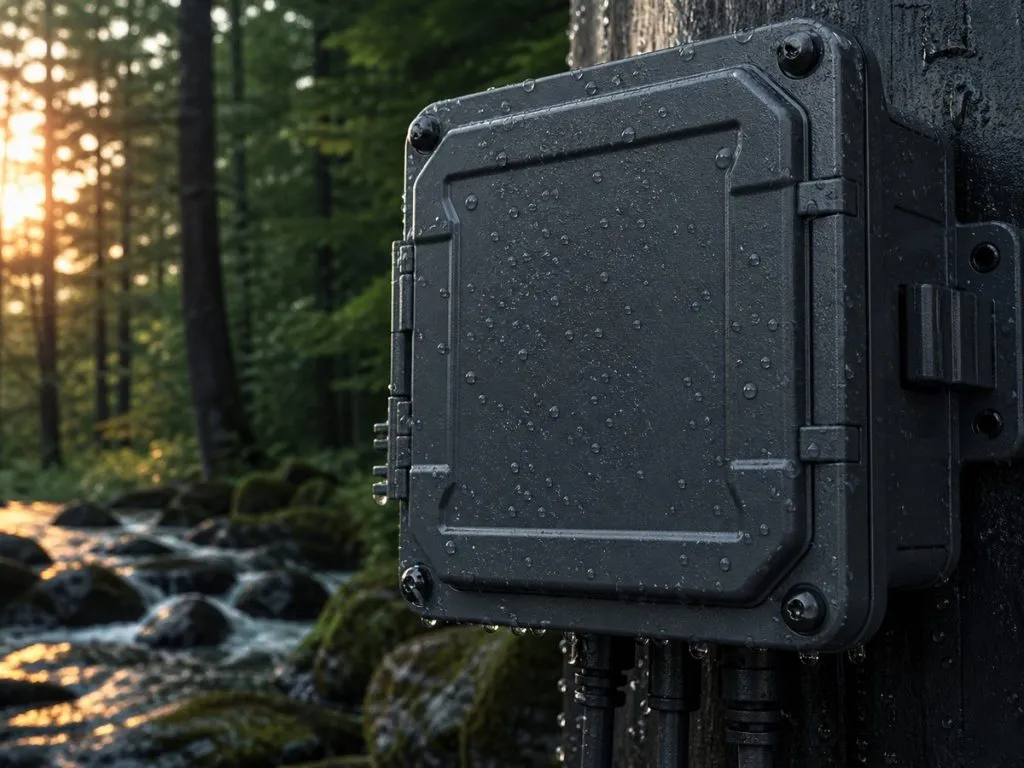
The challenges of sealing outdoor equipment stem from UV exposure, rain, dust, and temperature fluctuations between day and night. During the design phase, it is essential to select weather-resistant materials and allow for enclosure deformation, drainage, and assembly tolerances.
1. Analysis of External Exposure
The levels of sun exposure, water accumulation, and pollution vary greatly depending on the region and installation location.
- Confirm whether the installation is in direct sunlight, under cover, or semi-outdoor
- Identify entry points for standing water, water spray, and dust
- Evaluating the Amount of Deformation in the Housing Due to Thermal Expansion and Contraction
2. Prioritize structural waterproofing
A reliable design should avoid placing the entire burden of waterproofing on the seal alone.
- Install water-guiding, drainage, and anti-drip structures
- Ensure the seal path is continuous and avoids leakage paths through screw holes
- Allow sufficient sealing width at corners and joints
3. Material and Surface Requirements
Weather-resistant silicone must also balance hardness, compression set, and color stability.
- Selecting Material Hardness Suitable for Temperature Differences
- Verification of Yellowing and Chalking Trends in Light-Colored Exterior Parts
- Check for corrosion and migration risks when in contact with metal surfaces
4. Environmental Validation
Accelerated testing should simulate actual failure modes as closely as possible.
- Perform UV, humidity-heat, and temperature cycling tests
- After assembly, conduct rain, spray, or immersion tests
- Inspect for rebound, cracks, and leaks caused by aging
FAQ
1. Since silicone is weather-resistant, does that mean it doesn’t need to undergo UV testing?
Verification is still recommended. Performance varies depending on the formulation, color, wall thickness, and assembly stress.
2. How much compression is required for outdoor seals?
This depends on the cross-section, hardness, grooves, and housing tolerances, and should be determined through dimensional chains and testing of sample parts.