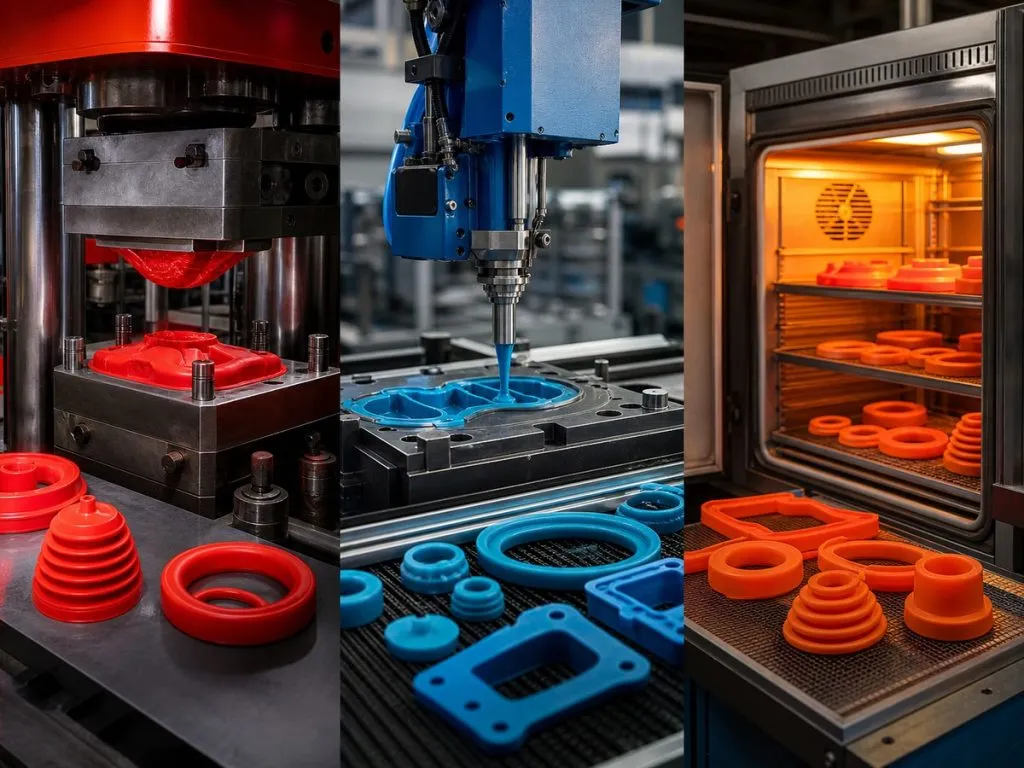
Compression molding, LSR injection and secondary vulcanization are not only process differences, but also have a direct impact on cost, lead time and mass production stability. This article quickly explains the application scenarios and risk differences of each process from the perspective of procurement and mass production.
1. Overview of the three common molding routes
- Compression: Suitable for medium to large sized silicone parts with relatively simple structures.
- Injection/LSR: Suitable for small precision parts and projects with high consistency requirements.
- Post-cure: not a molding method, but a post-treatment to improve stability and reduce volatiles.
2. Press molds: cost-friendly but more dependent on workmanship and trimming
- Advantages: relatively controllable mold costs, suitable for a variety of forms
- Risk points: Fly-edge and burr control; dimensional consistency is more affected by the process
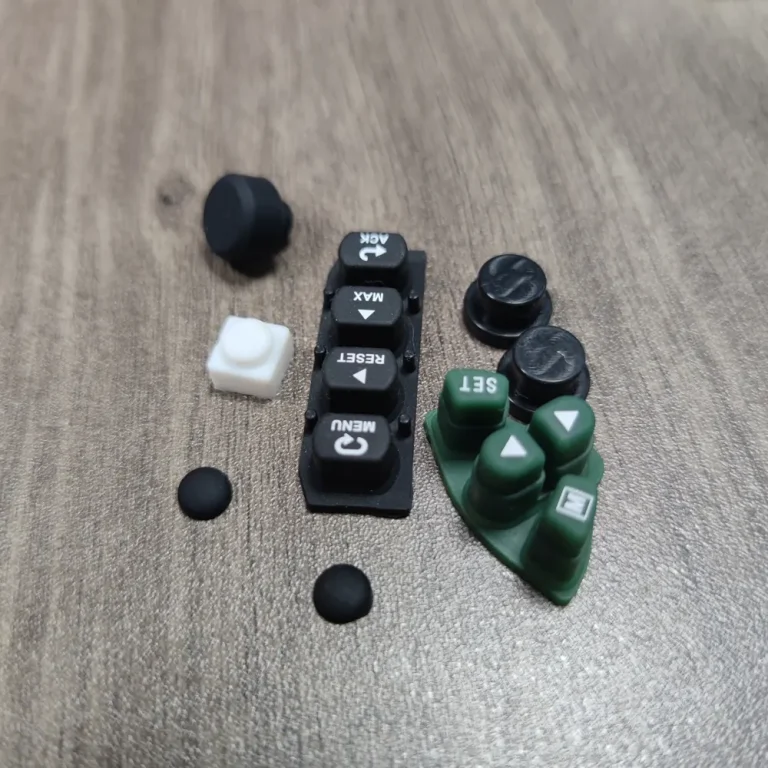
- Application: Seals/gaskets, structural parts, some keyed parts
3. Injection/LSR: Strong consistency but high requirements for molds and equipment
- Advantages: automation friendly, dimensionally stable, high yields
- Risk points: High mold investment, high exhaust/gate design requirements
- Applicable: Precision waterproof rings, precision structural parts, products requiring high consistency in appearance
4. Secondary sulphurization: when recommended
- Sensitivity to odors/volatiles (food contact, maternal and child, medical, etc.)
- High requirements for long-term stability and aging performance
- Need for better retention of physical properties (depending on material system)
5. Delivery risk alerts (procurement perspective)
- Delivery uncertainty often comes from: repeated mold modifications, unclear validation, inconsistent standards
- It is recommended to specify: critical dimensions, tolerances, appearance standards, validation programs and traceability requirements when creating a project.
FAQ
- Is injection always better than compression molding?
Not necessarily. If the product is large or structurally unsuitable for injection, compression molding is more economical. The key is to match the requirements with validation.
- Does secondary vulcanization distort?
Possible. Tooling support, baking conditions and dimensional compensation need to be evaluated and confirmed with pilot production data.