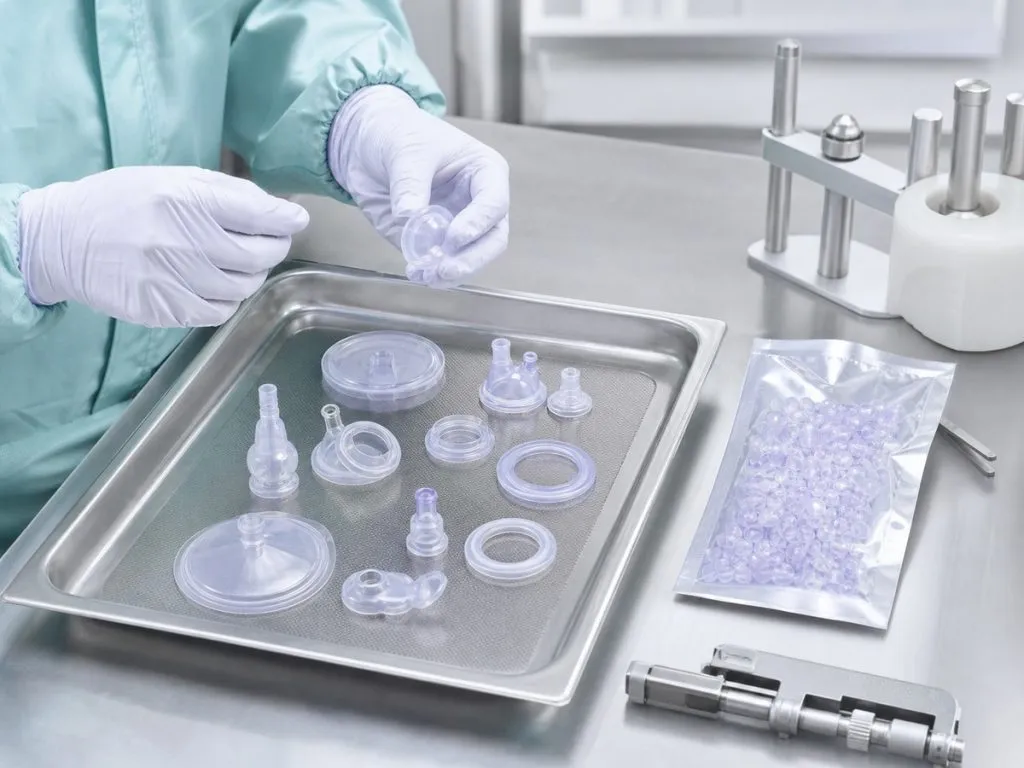
The difficulty of silicone parts for medical devices lies in "material compliance + process traceability + complete validation data". This article summarizes the common concerns of factory auditing/registration, and helps to make up the information link in advance.
1. Audit logic: what regulation and customers want to confirm
- Are the materials you use suitable for this exposure scenario (skin/mucous membrane/in vivo/in vitro)
- Are you able to produce the same quality product consistently and traceably
- Do you have validated evidence that the product meets the functional and safety requirements
2. Common requirements on the material side
- Material Supplier Qualification and COA
- Statement of Prohibited Substances for Key Additives/Colorants
- Provide biocompatibility-related support when needed (per project requirements)
3. Production processes: cleanliness and pollution control
- Zoning management of personnel/materials/work equipment
- Cleaning and drying records (especially volatiles-related requirements)
- Stability and documentation of secondary vulcanization conditions
- Packaging material compliance and package integrity checks
4. Validation of information: the six most frequently asked for types of documents
- Drawings and specifications: key dimensions, materials, appearance standards
- Process Flow and Key Control Points (KCP)
- IQC/PQC/OQC Inspection Specifications and Records
- Functional verification: sealing, pressure resistance, lifetime (as defined by the product)
- Cleaning/residue assessment (if applicable)
- Change control: Re-validation strategy after material, mold, and process changes
5. Suggested batch traceability fields (example)
- Finished product batch number, material batch number, mixing batch, vulcanization parameters, operator, inspector, inspection conclusion
FAQ
1. Does a medical program have to be a "clean room"?
Not necessarily, depending on the risk and product category. However, it must be demonstrated that the contamination controls are effective and documented with evidence of validation.
2. Is secondary vulcanization mandatory?
Many projects are recommended, especially if there are requirements for volatiles, odors, or long-term stability; whether or not it is necessary is subject to customer/regulatory requirements.