
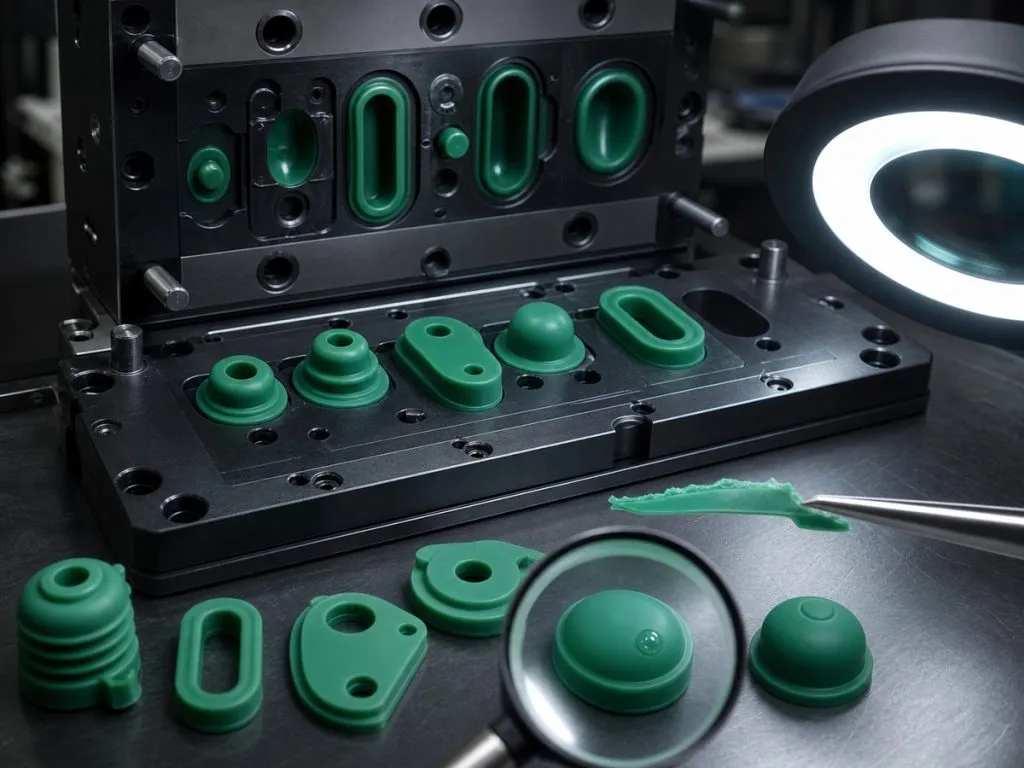
The pursuit of injection molding (especially LSR) is "dimensional stability + consistent appearance + high yield". This article focuses on the three major pain points of air bubbles, lack of glue and flying edges, and gives a list of investigation and improvement that can be put into practice.
1. Bubbles: systemic issues from materials to venting
- Causes: Mixed air, volatiles, insufficient venting, unstable temperature window
- Key Action:
- Material Defoaming/Storage and Shelf Life Management
- Mold exhaust slot design and maintenance (clogging is a common pitfall)
- Optimization of injection speed and holding pressure profile to avoid air rolls
2. Lack of glue: Prioritize "flow path" and "clamping force".
- Reason: Insufficient material quantity, too small gate, high runner resistance, insufficient clamping force leading to material leakage
- Key Action:
- Gate/runner cross-section evaluation and balancing
- Confirmation of filling time and holding time window
- Mold temperature uniformity check (localized cold spots prone to glue shortage)
3. Flying Edge: The parting surface and the process window together decide
- Reason: Wear of parting surface, insufficient clamping force, too high injection pressure, mold fit clearance
- Key Action:
- Review of parting surfaces and wear points
- Matching clamping force to injection pressure
- Tougher fretting standards and trimming processes for sealing surface areas
4. Process control: using data to "lock" the yield
- Key Parameters: Mold Temperature, Material Temperature, Injection Speed, Holding Pressure, Curing Time
- It is recommended to do a small DOE test to find the window of stability and then solidify it into a work instruction manual
- CPK/trend charts for key dimensions for early warning of drift
5. Incoming material and mold maintenance
- Raw material batch consistency: sampling for hardness and viscosity drift
- Mold maintenance: exhaust groove, gate, parting surface is the focus of maintenance
FAQ
1. Can only adjusting the parameter solve the flying edge?
It may be effective in the short term, but the root causes are often wear on the parting surfaces and insufficient clamping force, so it is recommended to check the condition of the mold at the same time.
2. Are air bubbles always a material problem?
Not necessarily. Venting, injection curves and uneven mold temperatures are equally common and need to be troubleshooted on a system-by-system basis.