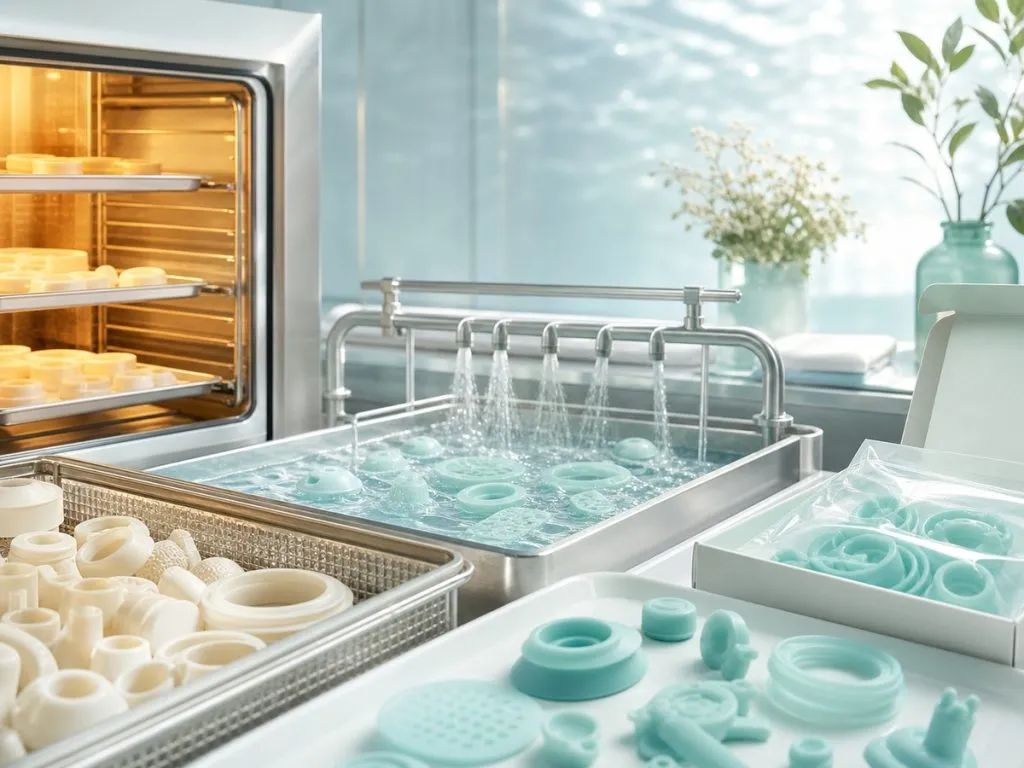
The odor characteristics of silicone parts are influenced by a combination of raw materials, vulcanization, cleaning, and packaging. Particularly for projects in the food, maternal and infant, and consumer electronics sectors, evaluation criteria should be established as early as the prototyping stage.
1. Identify the source of the odor
First, distinguish between volatilization from raw materials, process residues, and migration from packaging.
- Comparison of Different Batches
- Record changes after heating
- Inspect the contact materials
2. Vulcanization Control
Insufficient vulcanization may increase volatile residues.
- Temperature Confirmation Time
- Evaluation of Secondary Vulcanization
- Avoid localized thick-walled areas with insufficient sulfur content
3. Cleaning and Packaging
Improper post-treatment can cause odors to return.
- Using Clean Reusable Containers
- Controlling Release Agents
- Choose low-odor packaging
4. Verification Methods
It is recommended to make a determination based on both the sample and simulated conditions.
- Sensory Comparison at Room Temperature
- Retest After High-Temperature Storage
- Keep the customer's approved sample
FAQ
1. Does secondary vulcanization always eliminate odors?
Not necessarily; this must be evaluated in light of the formulation and the source of the residue.
2. What standards should be used to determine whether an odor is acceptable?
Sensory criteria or corresponding testing requirements should be agreed upon with the client.