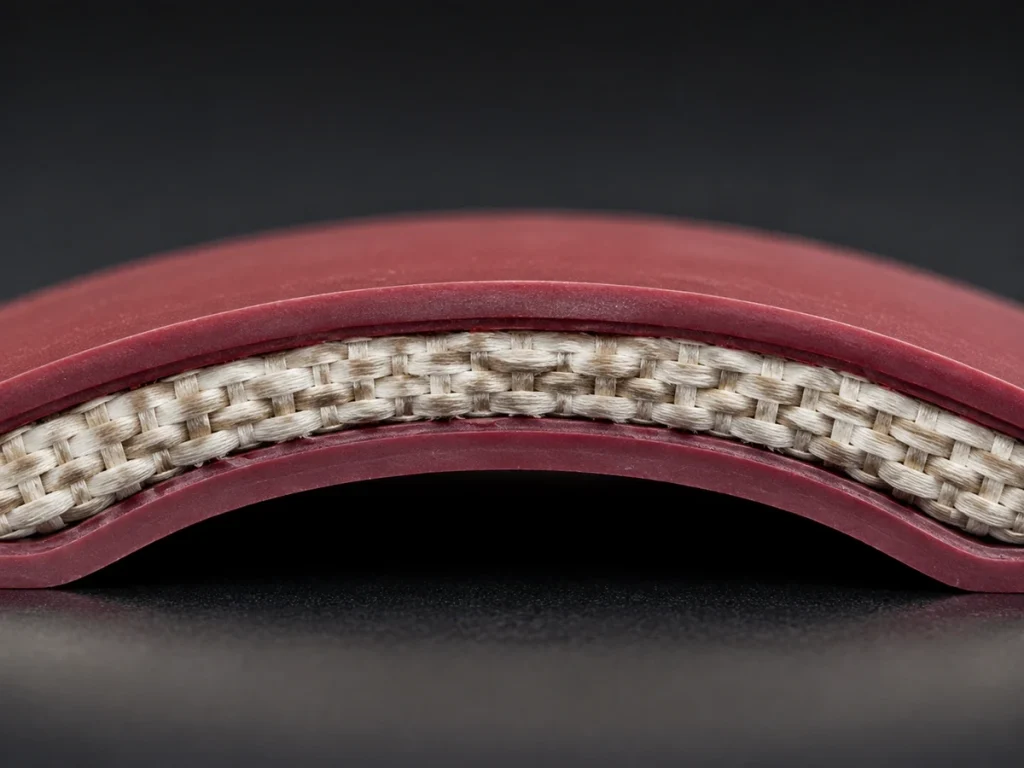
Short answer:Fabric-reinforced silicone diaphragms use a fiber layer to limit elongation and improve pressure resistance and tear resistance, but they also alter flexibility and responsiveness. The fabric material, warp and weft orientations, coating thickness, pretreatment, and edge sealing must be designed in a coordinated manner.
In what kinds of situations are these silicone parts suitable?
Clearly defining the actual application scenarios helps translate material, structural, and validation requirements into actionable technical specifications.
- Pump, Valve, and Diaphragm Pressure Regulation Assemblies
- Gas-Liquid Separator Subject to Repeated Deformation
- Diaphragms for High Pressure Differentials or Dimensional Stability Requirements
Parameters to Confirm Before Selecting a Model
We recommend providing the following information before requesting a quote or ordering a sample to minimize the need for repeated prototyping and misunderstandings regarding specifications.
- Pressure, Stroke, Frequency, and Service Life
- Media Temperature and Cleaning and Sterilization Conditions
- Fabric Type, Orientation, and Permissible Stiffness
Key Points in Structural Design
Structural dimensions, assembly relationships, and material elasticity must be evaluated together; simply increasing a single parameter generally does not directly improve reliability.
- The fiber orientation corresponds to the primary stress path
- Maintain uniform coverage and continuous curvature throughout the work area
- The edges are completely sealed to prevent lint and leaks.
Production and Quality Control
Consistency in mass production results from the combined control of material batches, mold condition, molding windows, and inspection methods.
- Fabric Cleaning and Pretreatment Ensure Interlayer Bonding
- Positioning Jigs Control Creases, Offsets, and Tension
- After molding, check for exposed material, air bubbles, and delamination
Recommended Verification Items
Validation should be conducted using actual or equivalent operating conditions whenever possible, and functionality should be reconfirmed after aging or cycling.
- Testing Pressure-Displacement Characteristics and Burst Strength
- Inspect for interlaminar delamination and cracks after the cycle
- Retest for flexibility and airtightness after the medium has aged
Frequently Asked Questions
Will adding fabric definitely make it last longer?
If the stiffness or edge stress is inappropriate, the service life may actually decrease.
Can the fabric be placed directly into the mold?
Typically, cleaning, positioning, and surface preparation are required.
How do I provide information to suppliers?
Please provide 2D or 3D drawings, photos of samples, material and hardness specifications, operating environment, target quantity, acceptance criteria, and a list of compliance documents. Based on this information, Chengxin Silicone Rubber can evaluate the materials, molds, molding process, and validation plan.