Short answer:The regulatory frameworks, test parameters, migration criteria, and documentation requirements for food contact regulations under the FDA, LFGB, and China’s GB standards differ. Companies should determine their testing protocols based on their target markets, food types, and contact temperatures and durations; a single report cannot cover all applications.
In what kinds of situations are these silicone parts suitable?
Clearly defining the actual application scenarios helps translate material, structural, and validation requirements into actionable technical specifications.
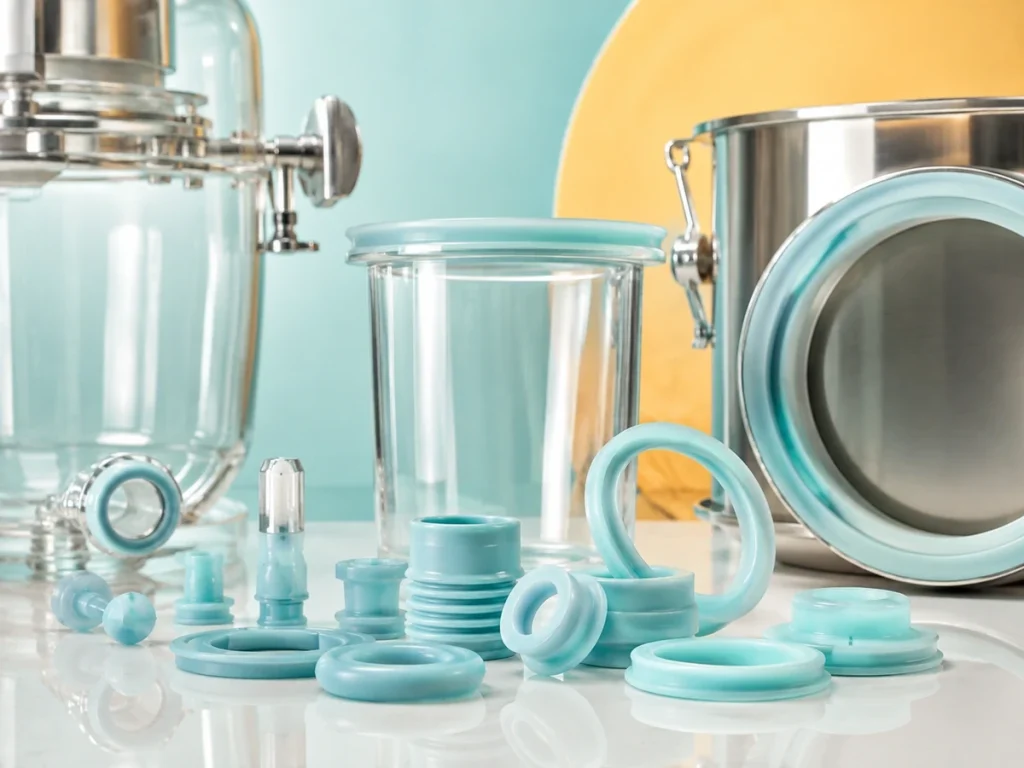
- Seals and Piping for Food Processing Equipment
- Kitchenware, Water Products, and Silicone Products for Mothers and Babies
- Projects for Export to Europe and the U.S. and Domestic Sales
Parameters to Confirm Before Selecting a Model
We recommend providing the following information before requesting a quote or ordering a sample to minimize the need for repeated prototyping and misunderstandings regarding specifications.
- Target Countries and Regions and Specific Regulatory Versions
- Type of Food, Temperature, and Duration of Contact
- Color, formulation, product thickness, and reuse methods
Key Points in Structural Design
Structural dimensions, assembly relationships, and material elasticity must be evaluated together; simply increasing a single parameter generally does not directly improve reliability.
- Identifying the Target Compliance Framework During the Material Selection Phase
- Avoid Introducing Additional Migration Risks from Pigment Additives
- The design makes it easy to clean and reduces food residue
Production and Quality Control
Consistency in mass production results from the combined control of material batches, mold condition, molding windows, and inspection methods.
- Compliance Assessment of Formulation and Supply Chain Changes
- Select samples for testing based on the least representative conditions
- Reports, batches, and raw material certificates are maintained for traceability
Recommended Verification Items
Validation should be conducted using actual or equivalent operating conditions whenever possible, and functionality should be reconfirmed after aging or cycling.
- Develop migration tests based on actual operating conditions
- Olfactory Sensory Testing and Reusability Validation
- The target market document was reviewed by a professional organization.
Frequently Asked Questions
Does FDA approval mean compliance with the LFGB?
They are not the same; the regulations and testing requirements for the two are different.
Can a raw material report replace finished product testing?
In many cases, it is still necessary to evaluate the final product and the impact of processing.
How do I provide information to suppliers?
Please provide 2D or 3D drawings, photos of samples, material and hardness specifications, operating environment, target quantity, acceptance criteria, and a list of compliance documents. Based on this information, Chengxin Silicone Rubber can evaluate the materials, molds, molding process, and validation plan.