Scope and common interpretation errors
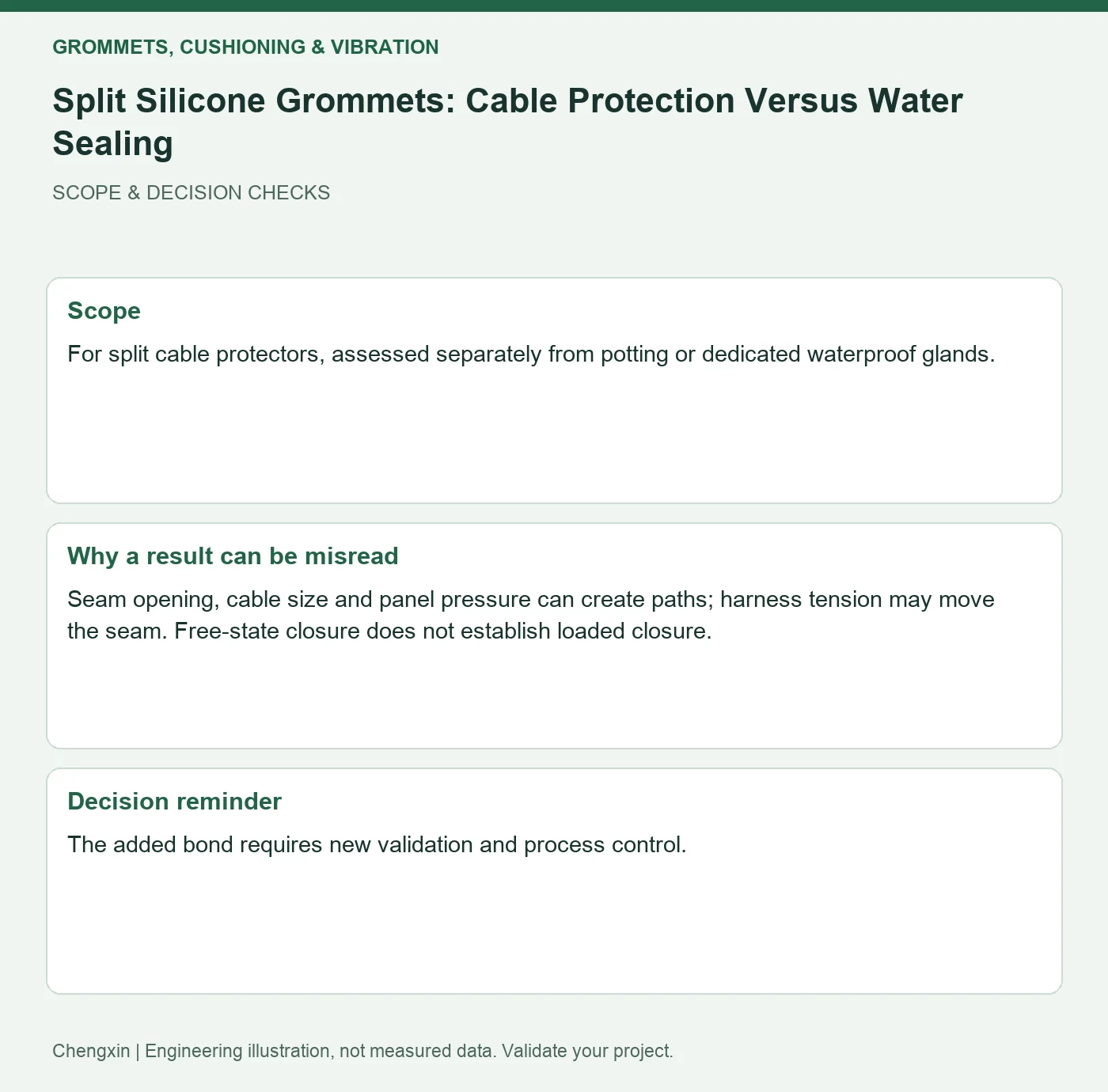
For split cable protectors, assessed separately from potting or dedicated waterproof glands.
Seam opening, cable size and panel pressure can create paths; harness tension may move the seam. Free-state closure does not establish loaded closure.
Turn the review into recorded checks
| Step | Action and evidence |
|---|---|
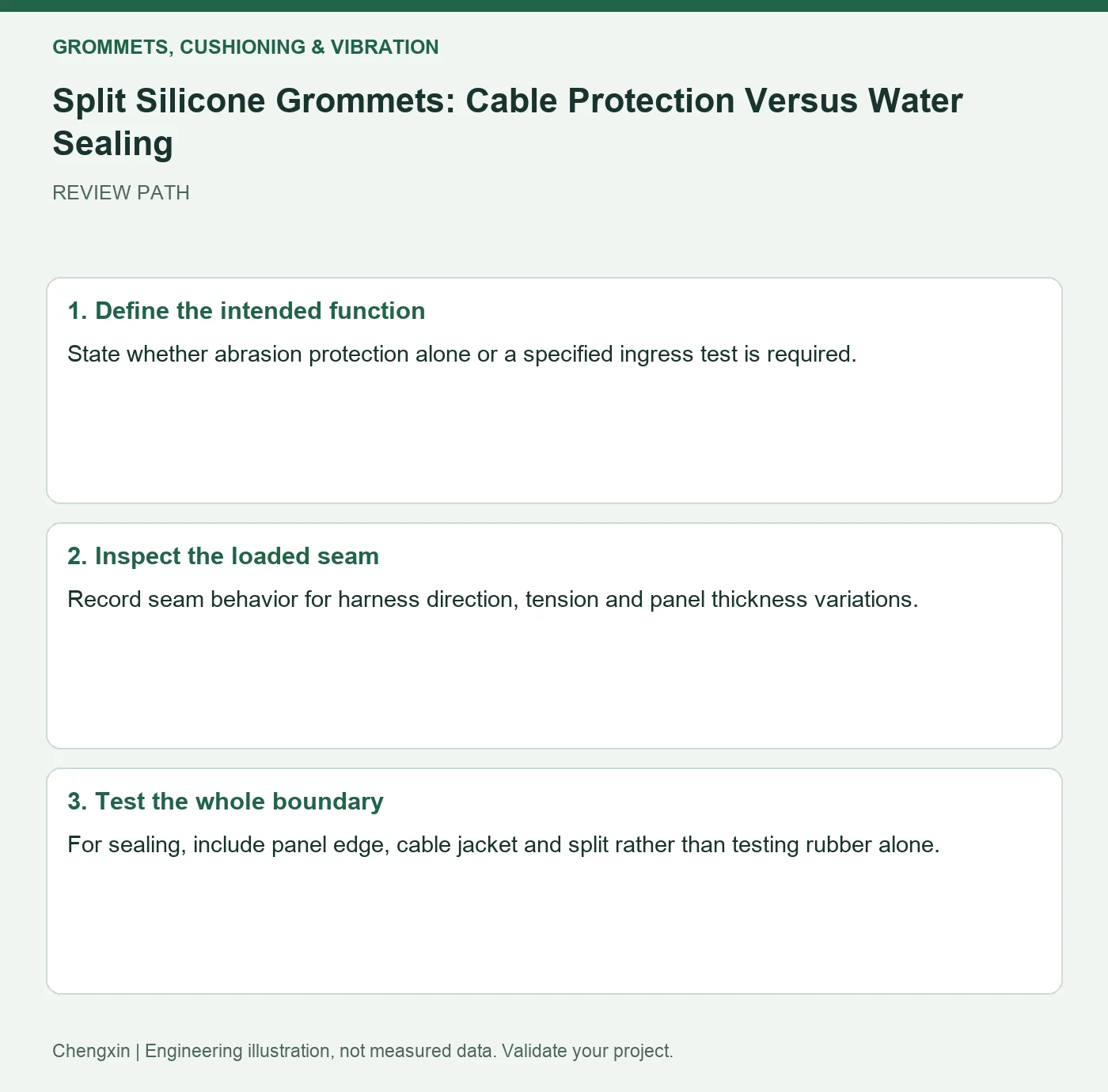
| 1 · Define the intended function | State whether abrasion protection alone or a specified ingress test is required. |
| 2 · Inspect the loaded seam | Record seam behavior for harness direction, tension and panel thickness variations. |
| 3 · Test the whole boundary | For sealing, include panel edge, cable jacket and split rather than testing rubber alone. |
A comparison to avoid misinterpretation
A seam opened by the installed harness may remain suitable for an approved cable-protection use, but cannot inherit a continuous ring's waterproof description.
Frequently asked question
Can adhesive on the split make it waterproof?
The added bond requires new validation and process control.
Background and further reading
This note addresses one specific question. For broader concepts, see the related background guide.
Related question: Thin Silicone Covers Tearing During Removal: Openings and Grip Points.
External references support the relevant concepts. The review steps and scenarios are independent engineering discussion guidance, not quotations from a standard or external organization. Use agreed methods, applicable document revisions and complete conditions.
Apply this to your custom part
Compare the structure with Custom Shaped Silicone Parts. Describe the application, geometry, operating conditions, quantity and problem to solve. Submit a custom-parts inquiry, or see how to send drawings and sample photographs by business email. Confirm material, dimensions, costs, testing and delivery requirements for the project.