Scope and common interpretation errors
For appearance color approval, without a universal color-difference threshold or brand-color guarantee.
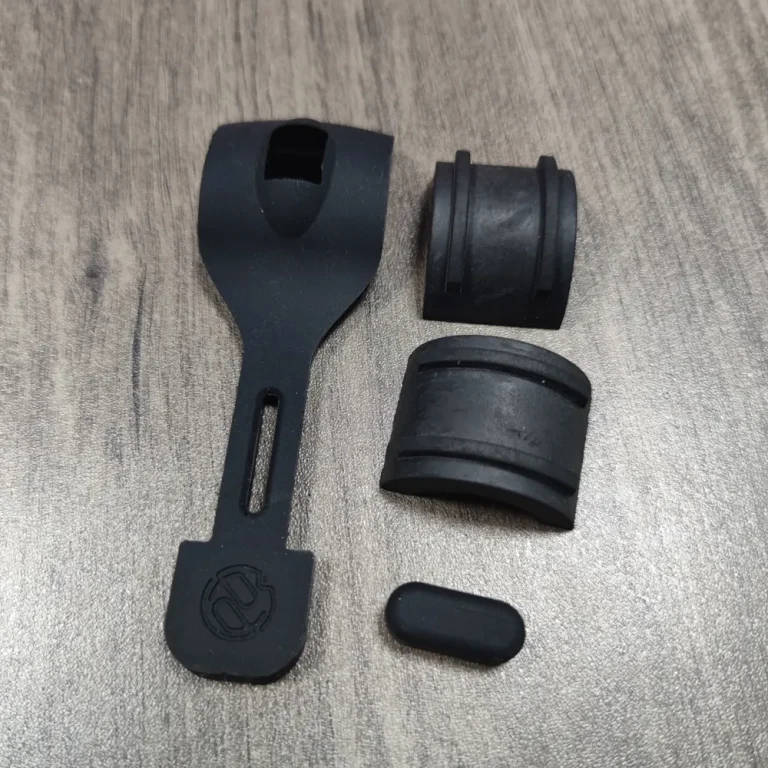
Background transmission, texture and bending change appearance. Different thicknesses can make optical-path differences look like pigment-batch variation.
Turn the review into recorded checks
| Step | Action and evidence |
|---|---|
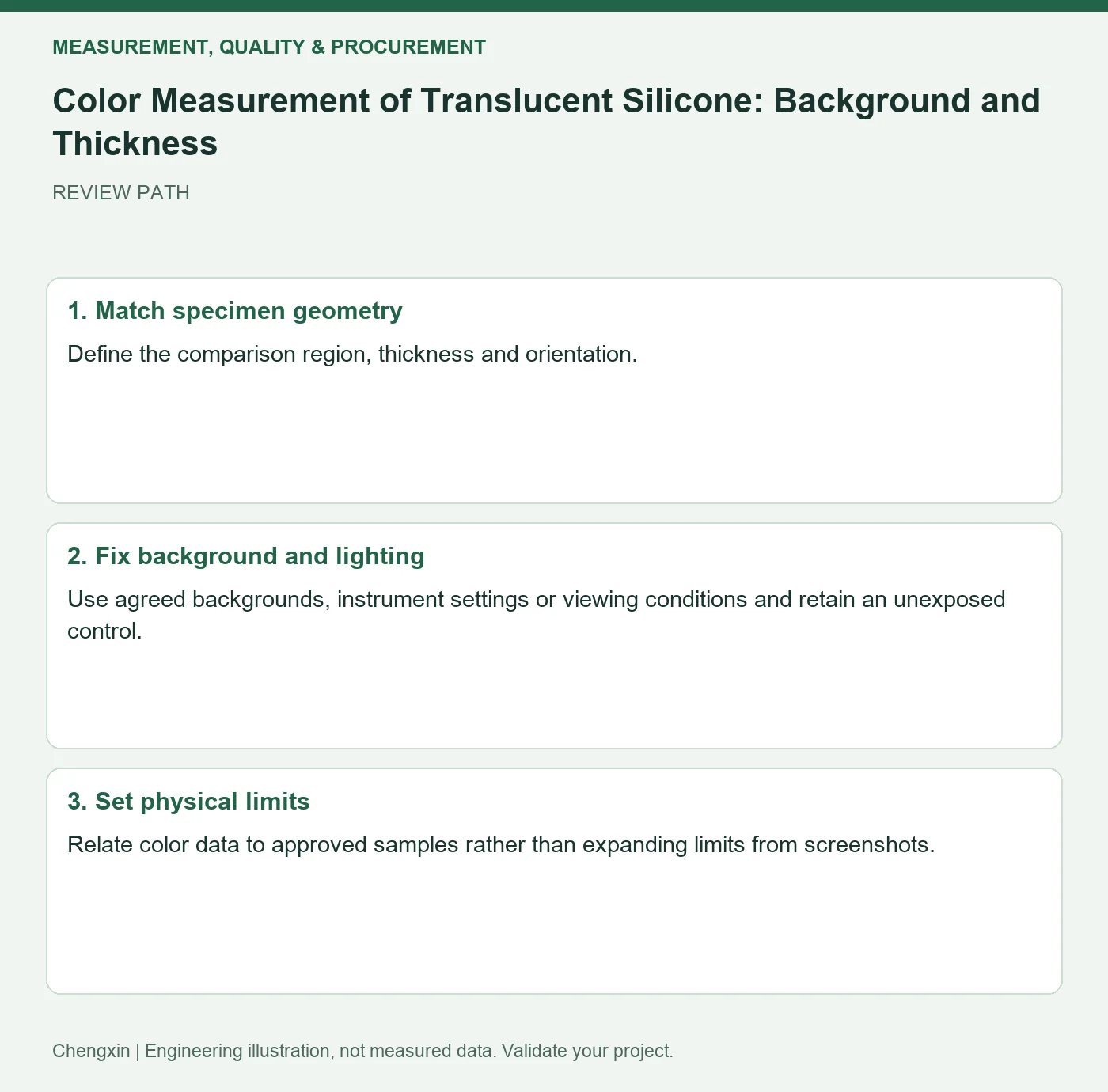
| 1 · Match specimen geometry | Define the comparison region, thickness and orientation. |
| 2 · Fix background and lighting | Use agreed backgrounds, instrument settings or viewing conditions and retain an unexposed control. |
| 3 · Set physical limits | Relate color data to approved samples rather than expanding limits from screenshots. |
A comparison to avoid misinterpretation
One material appearing lighter on white and darker on black needs a defined acceptance background, not repeated recoloring to match photographs.
Frequently asked question
Does one raw-material batch guarantee identical color?
Molding, thickness and surface condition must also remain consistent.
Background and further reading
This note addresses one specific question. For broader concepts, see the related background guide.
Related question: Silicone Visual Inspection Lighting: Distance, Background and Zones.
External references support the relevant concepts. The review steps and scenarios are independent engineering discussion guidance, not quotations from a standard or external organization. Use agreed methods, applicable document revisions and complete conditions.
Apply this to your custom part
Compare the structure with Custom Shaped Silicone Parts. Describe the application, geometry, operating conditions, quantity and problem to solve. Submit a custom-parts inquiry, or see how to send drawings and sample photographs by business email. Confirm material, dimensions, costs, testing and delivery requirements for the project.