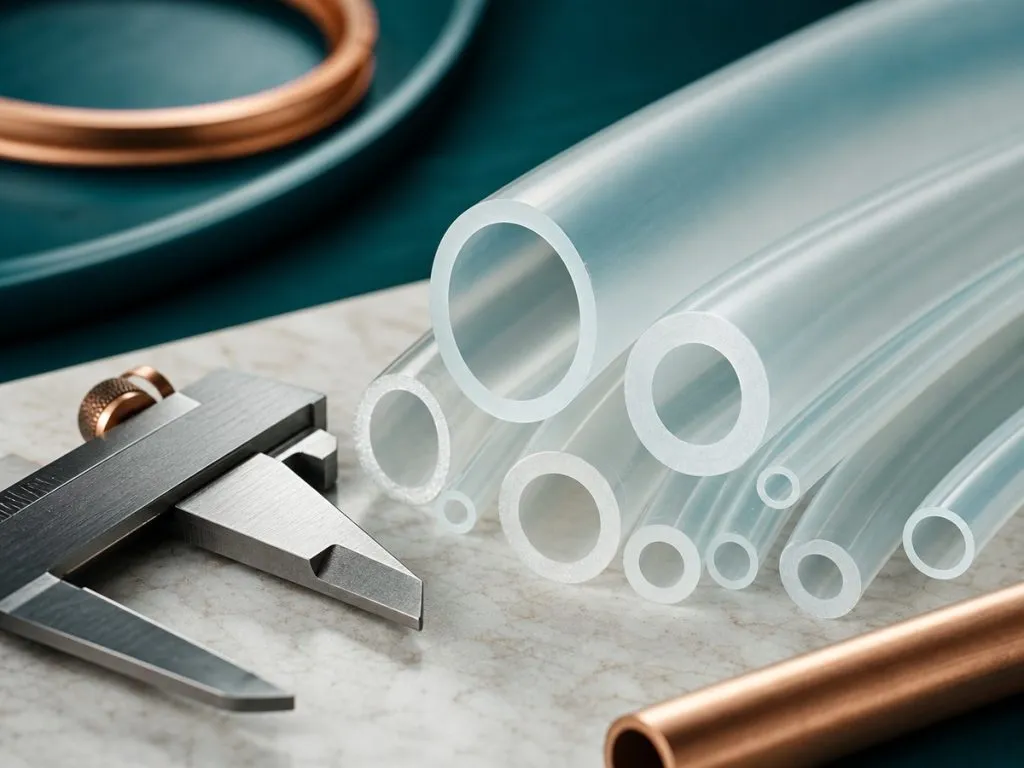
Silicone tubing may appear to have a simple structure, but its actual performance is determined by a combination of dimensional stability, hardness, transparency, the medium it is exposed to, and the operating temperature. Clearly defining the boundary conditions at the start of a project can significantly reduce the number of test samples required.
1. Dimensions are not limited to the inner and outer diameters
Wall thickness uniformity, length tolerance, and ovality directly affect flow rate, insertion force, and sealing performance.
- Specify the inner diameter, outer diameter, wall thickness, and cut length
- Specify the mating dimensions and allowable insertion and withdrawal forces for the plug-in connections.
- Confirm whether long products are packaged in trays, rolls, or cut-to-length
2. Select Materials Based on the Application Environment
Temperature resistance, transparency, odor control, and media compatibility must be evaluated simultaneously.
- Migration testing and documentation requirements for food contact applications must be clearly defined.
- In medical or cleanroom settings, clean production and batch traceability must be ensured.
- For oil, ozone, or outdoor environments, a medium and aging assessment must be conducted first.
3. Control Points for Extrusion Stability
Vulcanization temperature, draw speed, and die design are the key factors affecting dimensional variation.
- Lock in the traction and vulcanization parameters after the first piece is approved.
- Randomly inspect the inner and outer diameters, wall thickness, and appearance by batch
- For transparent tubes, check for bubbles, impurities, and color variations.
4. Validation should be based on real-world applications
Simply meeting dimensional specifications is not sufficient to ensure reliable performance; assembly and service life validation should also be conducted.
- Verify springback after bending and check for any dents
- Testing Insertion, Withdrawal, and Pressure Retention Capabilities
- Confirm changes following cleaning, disinfection, or exposure to high temperatures
FAQ
1. Is a silicone tube easier to install the softer it is?
Generally, plugging is easier, but if the material is too soft, it may cause collapsing, dimensional distortion, or insufficient pressure resistance, so a balance must be struck.
2. Can transparent silicone tubing be completely bubble-free?
Risks can be mitigated through control of raw materials, the extrusion process, and inspection; the final standards should be based on the agreed-upon appearance grades.