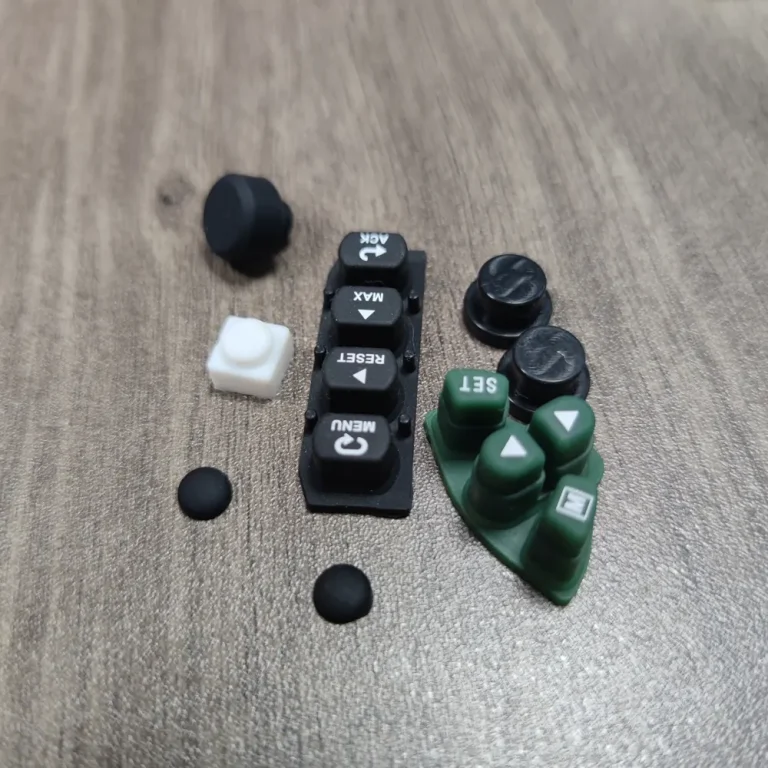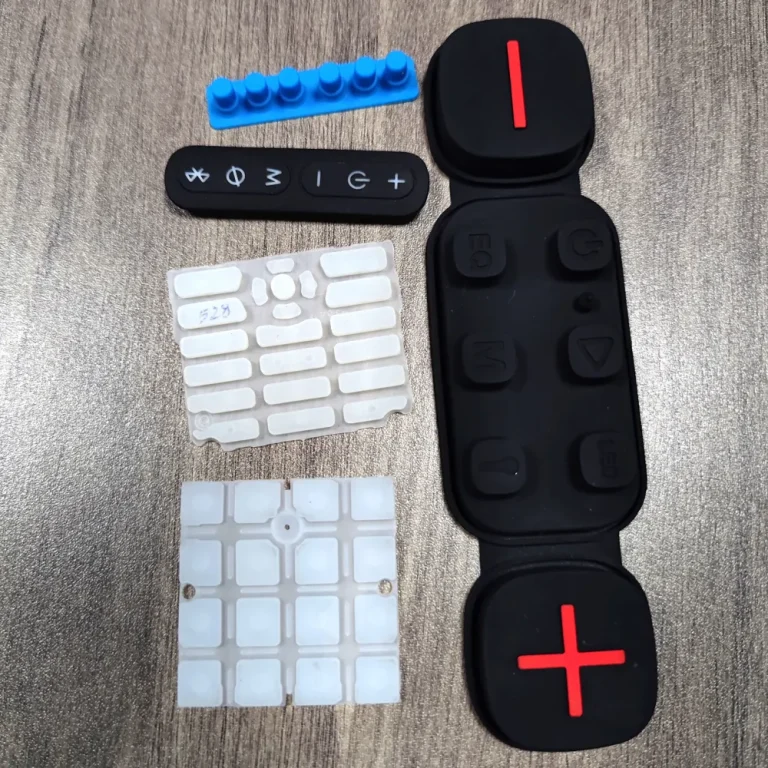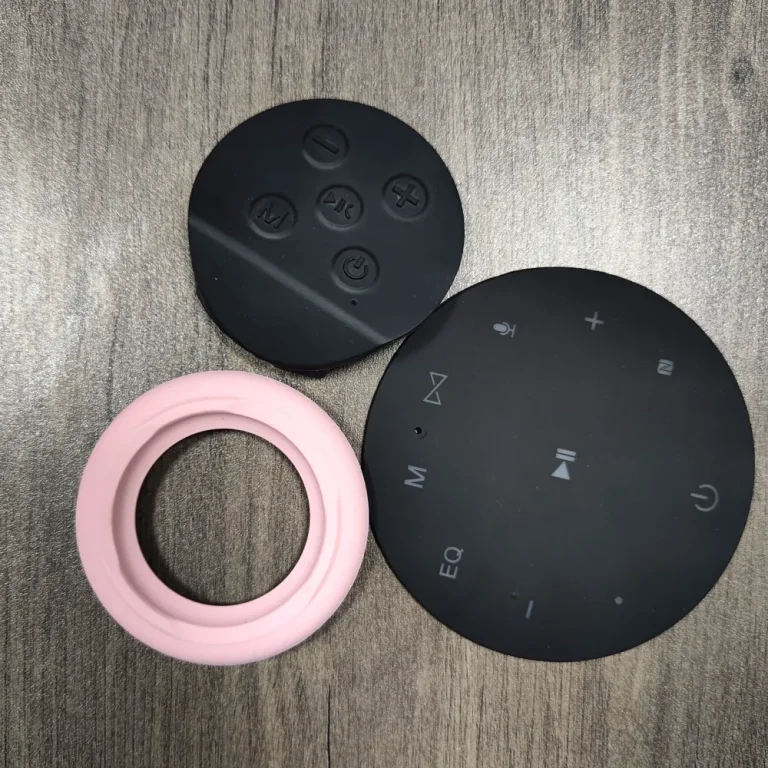

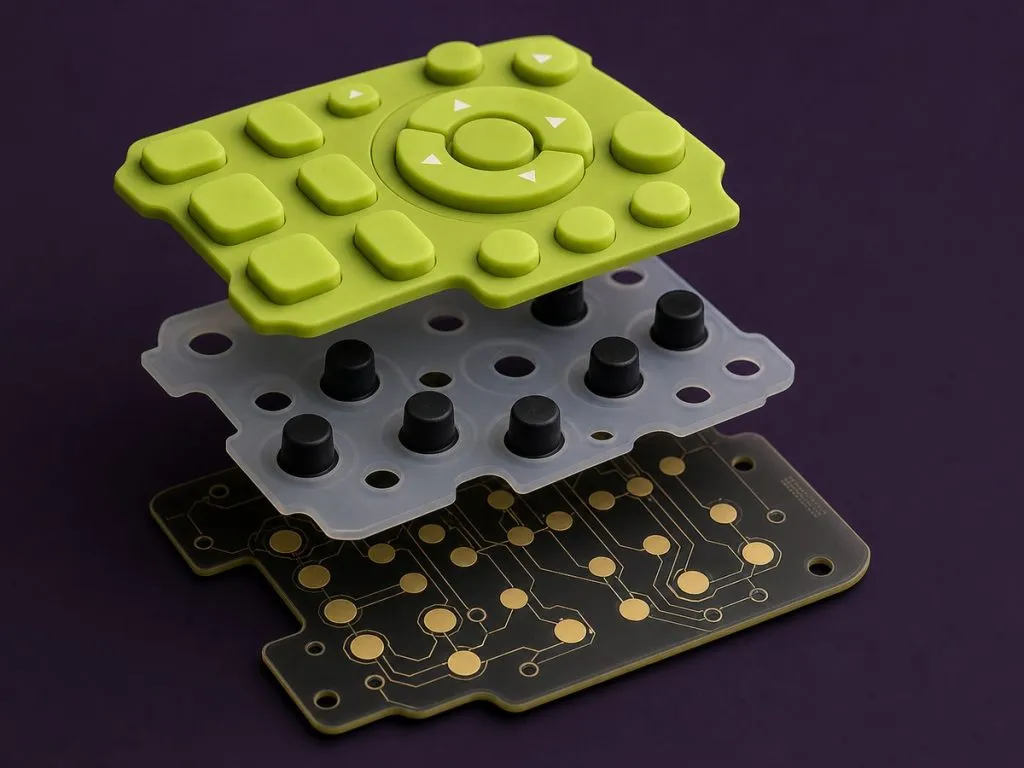
Conductive silicone rubber buttons use carbon particles or other conductive fillers to form contacts; they must provide a comfortable tactile feel while also ensuring low contact resistance and a long cycle life. During the design process, both the mechanical structure and electrical requirements must be defined.
1. First, determine the communication objectives
Contact resistance, actuation force, and actuation travel collectively determine the user experience and circuit reliability.
- Specify the permitted contact resistance range and test current
- Confirm the number of buttons, their layout, and the PCB contact configuration
- Define Trigger Points, Rebound Force, and Travel Window
2. Key Structural Features of Conductive Contacts
The size and shape of the contacts affect the contact area, contact pressure, and repeatable conduction stability.
- Conductive particles should be placed away from thin-walled areas subject to the most severe tensile stress.
- PCB gold fingers or carbon film contacts must be kept clean and flat.
- Prevent contamination of conductive surfaces by paint or oil
3. The tactile feel and resistance must be prototyped simultaneously.
Simply passing the initial functional test does not guarantee acceptance for mass production; the button structure will vary depending on hardness and wall thickness.
- Verify the force-displacement curve using a test specimen
- Resistance Trend Test After Continuous Pressing
- Check for assembly interference between the keycaps, positioning pins, and the panel
4. Recommendations for Mass Production Inspection
Include electrical performance, appearance, and dimensions in the same first-article inspection criteria.
- Spot-Check Contact Resistance and Conductance
- Check the position of the conductive particles, for material shortages, and for contamination
- Retain records of critical batches of materials and test results
FAQ
1. Does a larger conductive particle result in better conductivity?
Not necessarily. The contact size must be compatible with the PCB design; if it is too large, it may cause crosstalk, changes in tactile feedback, or aesthetic issues.
2. Does a malfunctioning button always indicate a problem with the conductive adhesive?
Not necessarily. Oxidation of PCB contacts, assembly misalignment, spray contamination, and insufficient structural rebound can all lead to malfunctions.