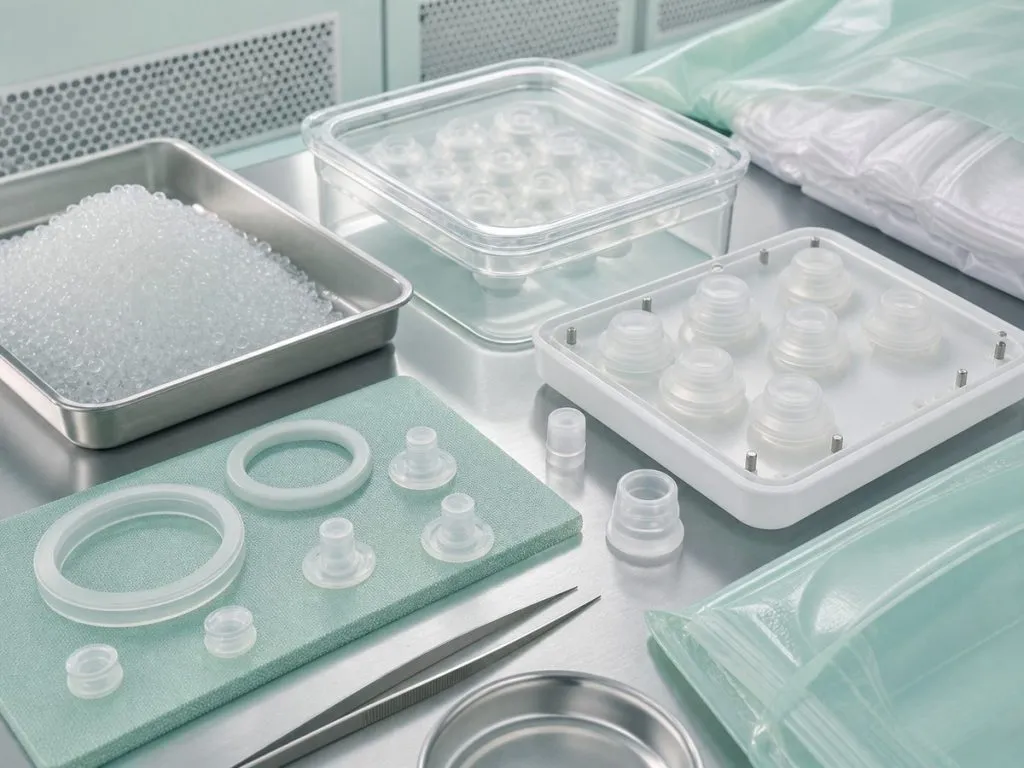
Projects in the medical, food, and electronics assembly industries, among others, are setting increasingly specific requirements for the cleanliness of silicone components. Effective cleanliness control should address foreign matter, oil contamination, volatile residues, and packaging protection—not just the final cleaning step.
1. Define the scope of cleanliness acceptance testing
Since different projects have different focuses, requirements regarding visible foreign matter, particles, oil contamination, odors, or microorganisms should be converted into verifiable criteria.
- Defining Critical Surfaces and Permissible Defect Types
- Confirm whether testing for particles, precipitates, or microorganisms is required
- Specify the sampling method, magnification, and test samples
2. Raw Materials and On-Site Contamination Prevention
Uncovered raw materials, improper glove management, and unclean work clothes are common sources of contamination.
- Store the compound in sealed containers and follow the first-in, first-out (FIFO) principle for each batch.
- Personnel must wear cleanroom suits, gloves, and use tools according to their assigned areas.
- Establish a Cleaning Schedule for Molds, Jigs, and Containers
3. Post-Molding Treatment
The demolding, trimming, and secondary vulcanization processes can all introduce dust or oil contamination.
- Minimize unnecessary human contact and open storage
- Choose a cleaning and drying method suitable for the material
- After cleaning, use a dedicated container to isolate and transport the items.
4. Packaging and Traceability
Packaging is the final line of defense in maintaining cleanliness.
- Use inner bags and sealing methods that match the cleanliness level
- Indicate the lot number, quantity, date, and inspection status
- Maintain records of cleaning, inspection, and packaging
FAQ
1. Do all silicone parts need to be manufactured in a cleanroom?
No. The cleanliness level should be determined by the product’s intended use and associated risks; excessive requirements can significantly increase costs.
2. Is it possible to wash the items only once before shipping?
If process contamination is not controlled, end-of-line cleaning will have difficulty consistently removing oil and foreign matter; therefore, prevention at the source is necessary.