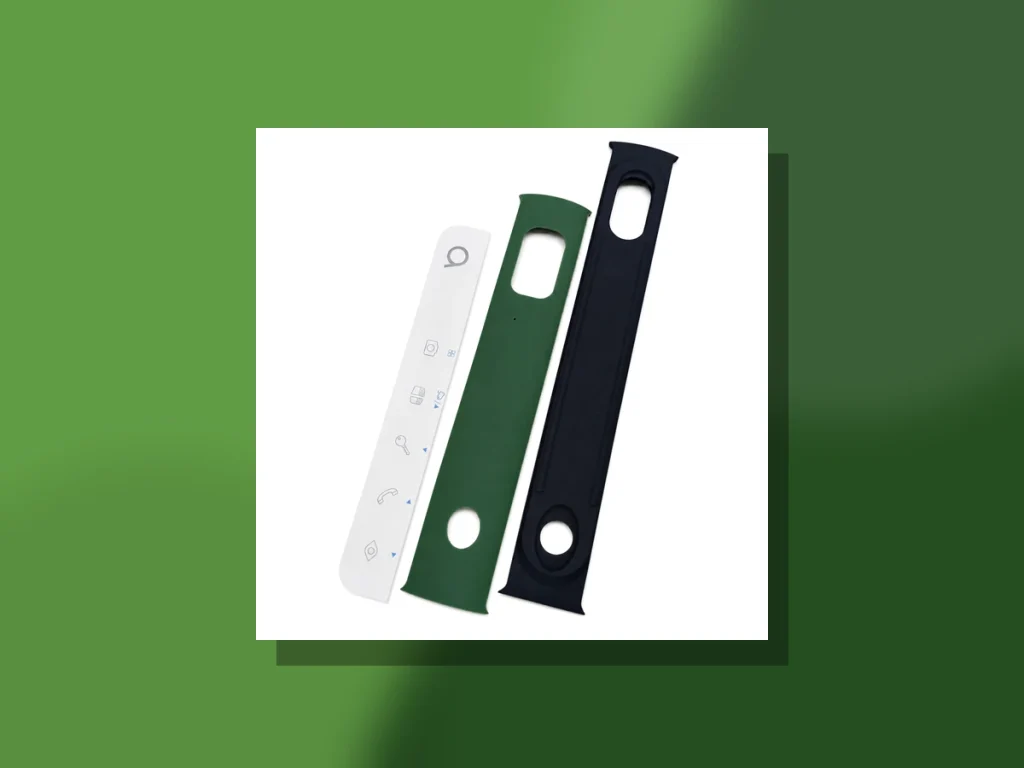
Short answer:Silicone encapsulation of sensors must block moisture and contaminants while preventing curing shrinkage, thermal expansion, or the transmission of external forces to the sensitive elements. The material modulus, encapsulation thickness, interface adhesion, and cable exit must be designed in conjunction.
In what kinds of situations are these silicone parts suitable?
Clearly defining the actual application scenarios helps translate material, structural, and validation requirements into actionable technical specifications.
- Housings for Temperature, Pressure, and Environmental Sensors
- Automotive, Industrial, and Outdoor Sensing Modules
- Flexible probes and small assemblies with cables
Parameters to Confirm Before Selecting a Model
We recommend providing the following information before requesting a quote or ordering a sample to minimize the need for repeated prototyping and misunderstandings regarding specifications.
- Target IP, medium, temperature, and pressure
- Allowed Stress and Signal Drift in Sensitive Components
- Housing, Cable Materials, and Bonding Requirements
Key Points in Structural Design
Structural dimensions, assembly relationships, and material elasticity must be evaluated together; simply increasing a single parameter generally does not directly improve reliability.
- Install a flexible stress isolation layer in sensitive areas
- Cable exits provide both sealing and tensile strength
- Avoid sharp corners, thick rubber layers, and air gaps at interfaces
Production and Quality Control
Consistency in mass production results from the combined control of material batches, mold condition, molding windows, and inspection methods.
- Control of insert positioning, pretreatment, and overmolding thickness
- Vent to prevent the formation of air pockets that could create pathways for moisture
- After curing, inspect the appearance, dimensions, and electrical properties.
Recommended Verification Items
Validation should be conducted using actual or equivalent operating conditions whenever possible, and functionality should be reconfirmed after aging or cycling.
- Detecting Signal Drift After Immersion and Pressure Cycling
- Re-test IP after thermal cycling, vibration, and tensile testing
- Inspect for Adhesion and Cracks After the Medium Has Aged
Frequently Asked Questions
Does thicker packaging mean better waterproofing?
Excessive thickness may increase thermal stress and response delay.
Can a silicone non-stick case still provide a seal?
Some structures can be compressed to form a seal, but the interface path must be verified.
How do I provide information to suppliers?
Please provide 2D or 3D drawings, photos of samples, material and hardness specifications, operating environment, target quantity, acceptance criteria, and a list of compliance documents. Based on this information, Chengxin Silicone Rubber can evaluate the materials, molds, molding process, and validation plan.