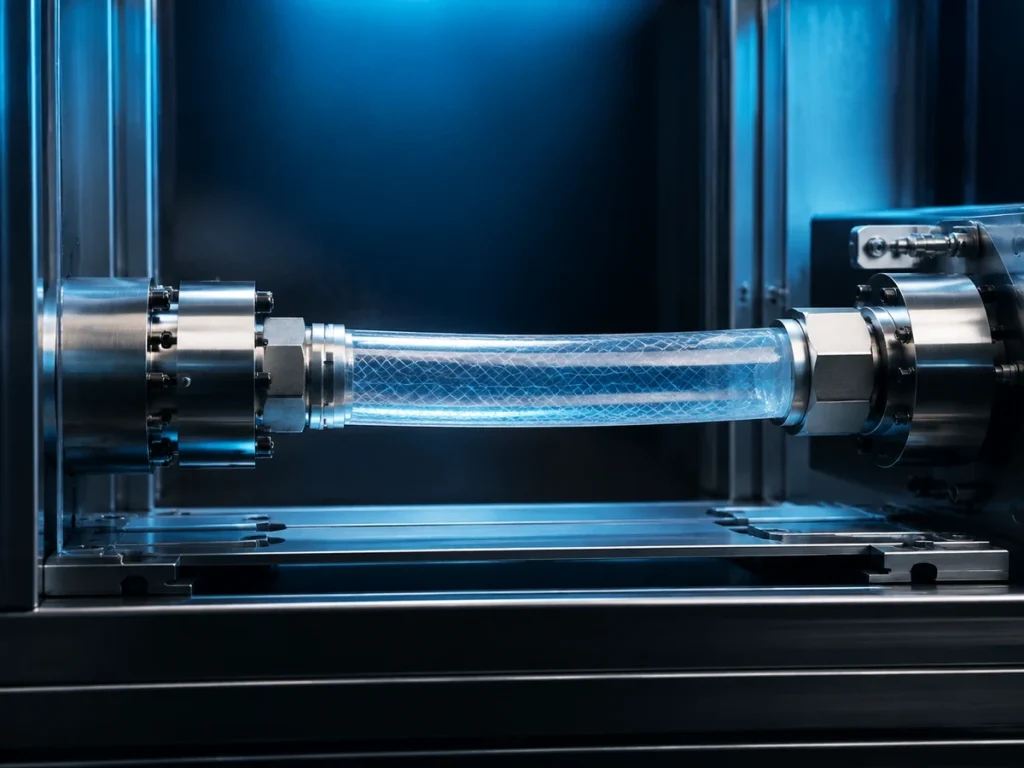
Short answer:The burst pressure of a silicone hose is affected by its inner diameter, wall thickness, material strength, temperature, and manufacturing eccentricity. In design, the burst pressure value should not be directly used as the working pressure; instead, safety factors should be applied based on operating conditions, pulsation, aging, and connection methods.
In what kinds of situations are these silicone parts suitable?
Clearly defining the actual application scenarios helps translate material, structural, and validation requirements into actionable technical specifications.
- Equipment Air Lines and Low-Pressure Fluid Delivery
- Pump and Tube Connections for Food, Medical, and Laboratory Applications
- Flexible Connecting Hoses for Pressure Pulses
Parameters to Confirm Before Selecting a Model
We recommend providing the following information before requesting a quote or ordering a sample to minimize the need for repeated prototyping and misunderstandings regarding specifications.
- Peak Operating Pressure, Pulsation, and Temperature
- Inner Diameter, Wall Thickness, Tolerances, and Minimum Bending Radius
- Joint Structures, Clamps, and the Risk of Detachment
Key Points in Structural Design
Structural dimensions, assembly relationships, and material elasticity must be evaluated together; simply increasing a single parameter generally does not directly improve reliability.
- Balancing Flexibility and Pressure Resistance Through Wall Thickness and Material Selection
- Chamfering the joint prevents nicks on the inner wall of the pipe
- Pipe routing that minimizes bends and localized tension
Production and Quality Control
Consistency in mass production results from the combined control of material batches, mold condition, molding windows, and inspection methods.
- Online Monitoring of Outer Diameter, Wall Thickness, and Eccentricity During Extrusion
- Check for bubbles, pinholes, and surface scratches
- Cut and package the tubing to prevent damage to the ports
Recommended Verification Items
Validation should be conducted using actual or equivalent operating conditions whenever possible, and functionality should be reconfirmed after aging or cycling.
- Conduct burst tests at a specified rate of pressure increase
- Conducting Pulse and Pressure-Hold Tests Under Operational Pressure
- Re-test the pressure retention rate after high-temperature aging
Frequently Asked Questions
Can half the burst pressure be used as the working pressure?
The safety factor must be determined based on both the standards and actual operating conditions.
Is a burst at the coupling considered a hose problem?
It is important to distinguish between pipe body dimensions, fitting sizes, and assembly damage.
How do I provide information to suppliers?
Please provide 2D or 3D drawings, photos of samples, material and hardness specifications, operating environment, target quantity, acceptance criteria, and a list of compliance documents. Based on this information, Chengxin Silicone Rubber can evaluate the materials, molds, molding process, and validation plan.