Describe differences explicitly
List old and new grades, suppliers, reason, affected parts and inventory. Formulation details may be confidential, but suppliers should still explain critical differences and their implications. Similar-looking TDS documents do not justify bypassing finished-part validation.
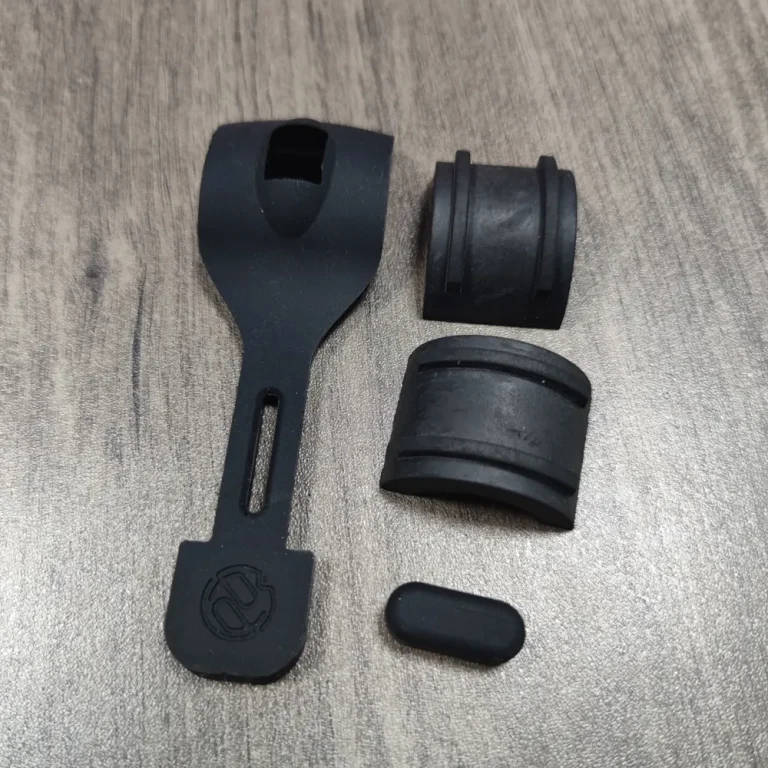
Match tests to failure risk
For seals review squeeze, media and leakage; for keys review force and travel; for bonded parts review adhesion and aging. Report appearance, dimensions and function separately. Responsible specialists must check contact-use requirements or approved-material lists; ordinary substitute trials are not compliance conclusions.
Keep an auditable switch boundary
Retain comparison samples, validation, approvals and first-lot labeling rules. Define use of old stock, work-in-progress separation and rework-mixing risks. Track first-lot abnormalities and exit criteria; if validation fails, retain the material and process revision needed to restore the approved arrangement.
Project review checklist
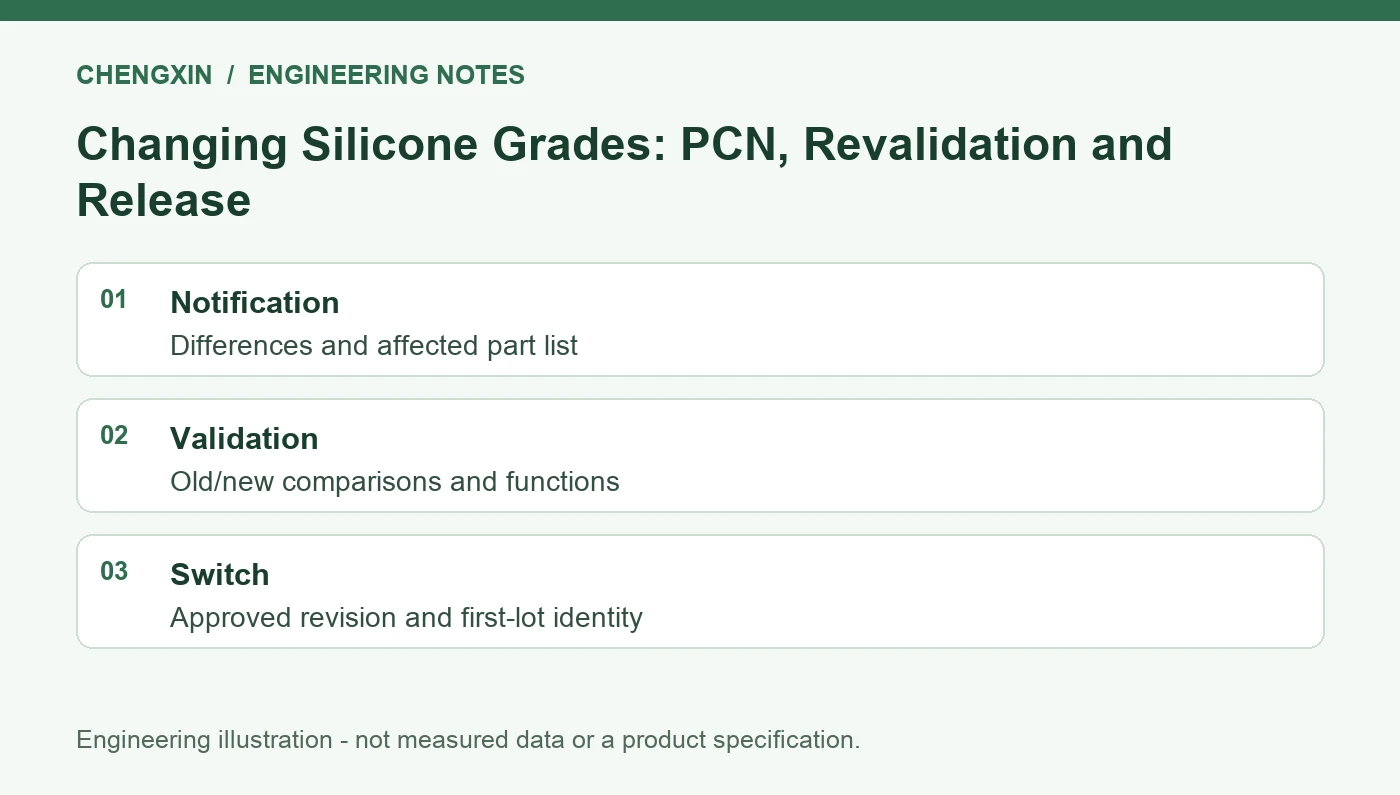
| Stage | Record | Release focus |
|---|---|---|
| Notification | Differences and affected part list | Relevant parties informed |
| Validation | Old/new comparisons and functions | Actual failure risks covered |
| Switch | Approved revision and first-lot identity | No confusion between inventories |
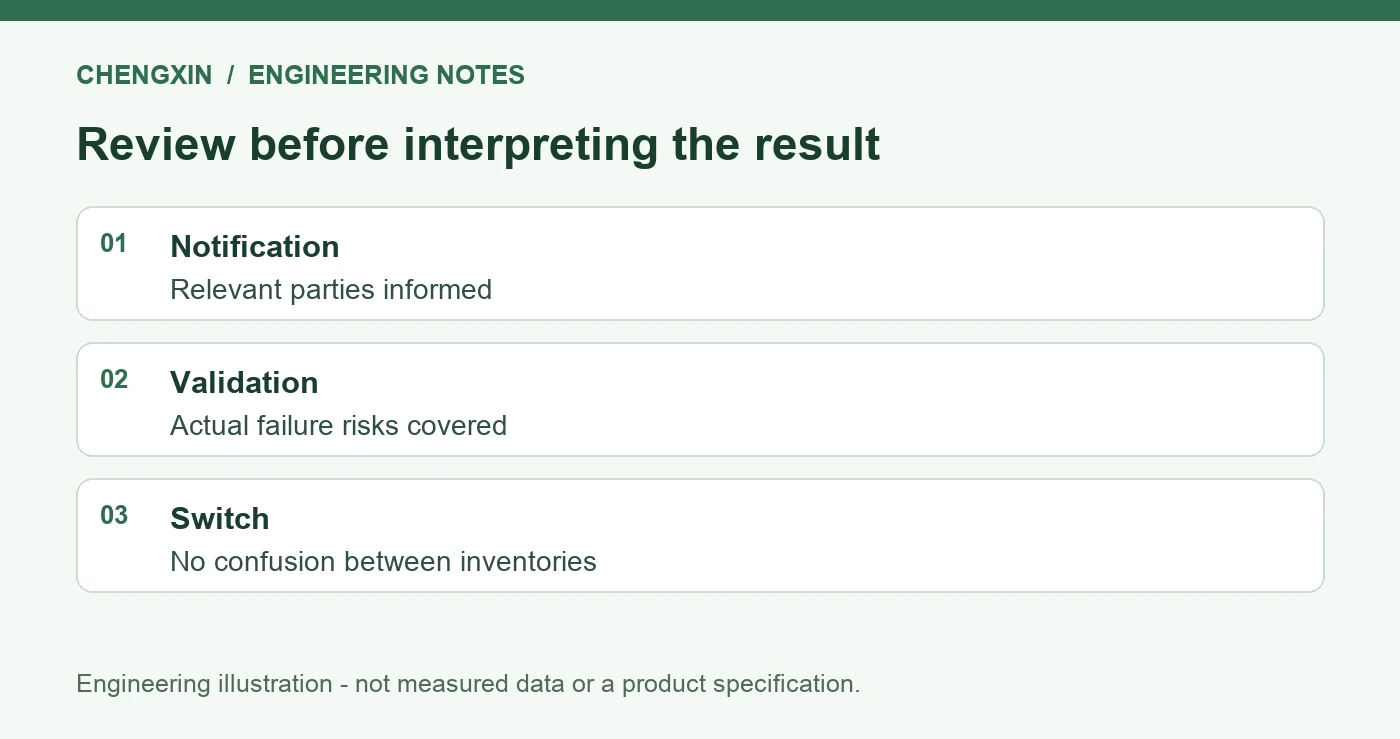
Illustrative project example
A substitute may pass dimensions while aged-bond results remain unavailable. Keep that bonding use open rather than declaring every application approved because samples passed one check.
Frequently asked questions
Does a color change without a grade change need review?
Check whether pigment or formulation changes affect function or agreed requirements, then set the validation scope.
Is a supplier equivalence statement sufficient?
It is an assessment input. Adoption still has to satisfy drawings, purchasing agreements and application validation.
Related product and project inquiry
Custom Shaped Silicone Parts · Silicone Shipment Documents: Matching Batches, Reports and Samples
For a custom part review, send the drawing, application, material or performance needs, key dimensions, quantity and target test conditions. Material, tooling and acceptance requirements are confirmed for each project.