Define measurable responses
For a flash-versus-short-shot problem, record defect location, critical dimensions and function instead of one overall good/bad impression. Candidate factors may include temperature, time and injection conditions. Set their levels within material, equipment and tooling boundaries; do not extend ranges without a sound basis.
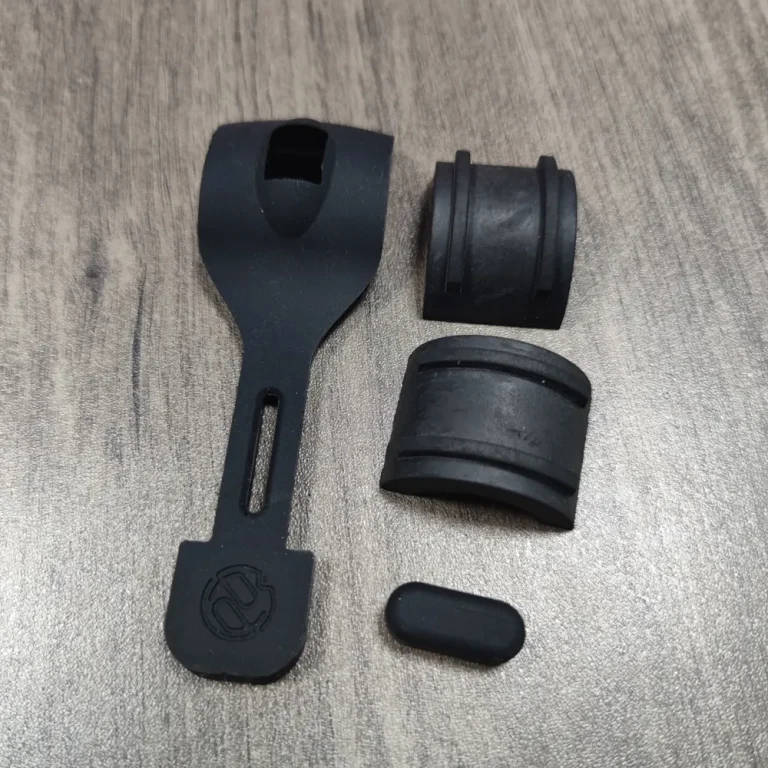
Allow for interactions
NIST explains that one-factor-at-a-time changes may miss interactions: one factor's effect can depend on another factor's level. Understand which effects a design can identify and which are confounded. Retain material-lot or date blocks in records and analysis when they constrain execution.
Confirm the candidate combination
Repeat a promising combination under comparable conditions, then evaluate permitted process variation and boundary states. Do not announce best parameters from one favorable sample. A material or equipment change requires reassessing the earlier DOE's applicability.
Project review checklist
| Stage | Decision | Record |
|---|---|---|
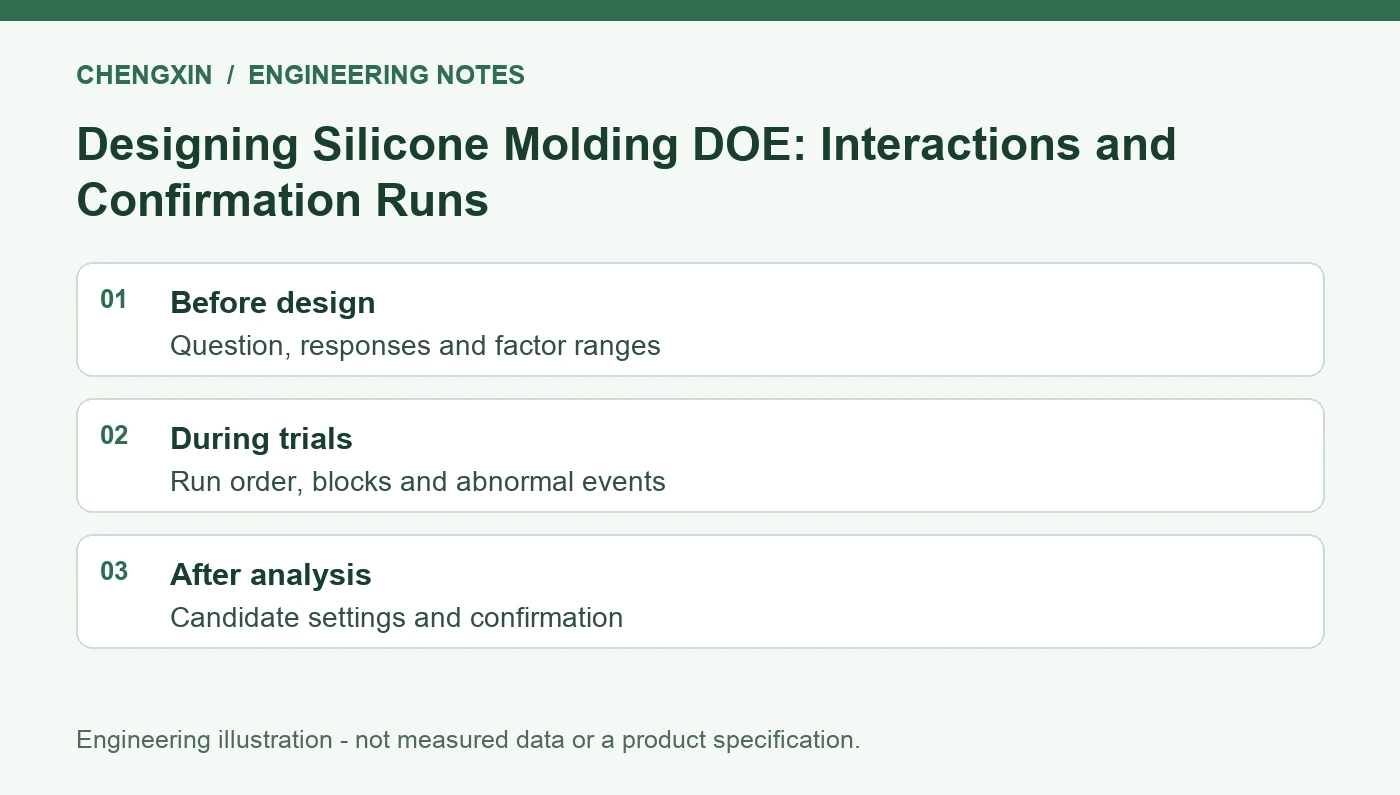
| Before design | Question, responses and factor ranges | Plan and measurement methods |
| During trials | Run order, blocks and abnormal events | Raw data and actual conditions |
| After analysis | Candidate settings and confirmation | Effects, limitations and confirmation results |
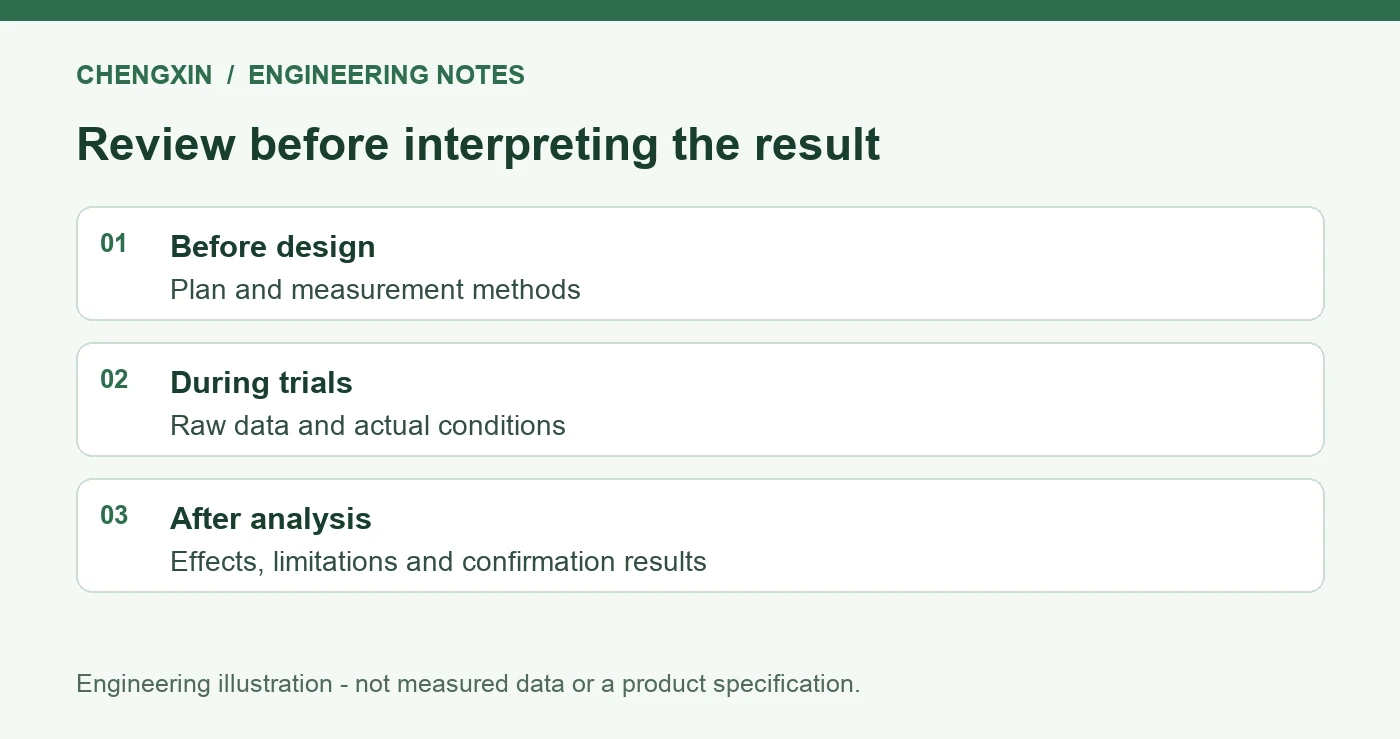
Illustrative project example
If higher temperature helps only at short cure time but not at longer time, an interaction may be involved. Establish it with the design and data rather than declaring temperature or time independently better when increased.
Frequently asked questions
Are more factors always more efficient?
No. Screen important factors and match run count, interpretability and execution capability.
Must every run be fully randomized?
Constraints may require appropriate blocking or other designs. Explain them so time drift is not mistaken for a factor effect.
Technical references
References explain methods and terminology. They do not establish certification, acceptance limits or measured performance for a Chengxin product. Confirm the applicable edition and project-specific method with the responsible laboratory.
Related product and project inquiry
Custom Shaped Silicone Parts · More Flash After Deepening Mold Vents: Defect Mapping First
For a custom part review, send the drawing, application, material or performance needs, key dimensions, quantity and target test conditions. Material, tooling and acceptance requirements are confirmed for each project.