Choose a relevant specimen and method
ASTM D429 includes several static rubber-to-rigid-substrate adhesion methods, including a 90° peel configuration. Select the method for the structure and objective rather than using one grip arrangement for every overmold. If standard specimens are impossible, define a finished-part comparison and disclose differences from the standard method.
Keep the curve as well as the peak
Specify substrate, preparation, adhesive layer, cure and conditioning. Fix width, angle and speed and retain force–displacement curves with the valid analysis interval. Do not treat a gripping transient automatically as steady peel. Align normalization and units before comparing different widths.
Use failure faces to guide the next trial
Photograph both sides and identify interface, adhesive, rubber and mixed failure regions. Compare initial and aged results to distinguish weak initial bonding from durability loss. Bulk tearing describes the failure path in that test; it does not establish reliability under every load or environment.
Project review checklist
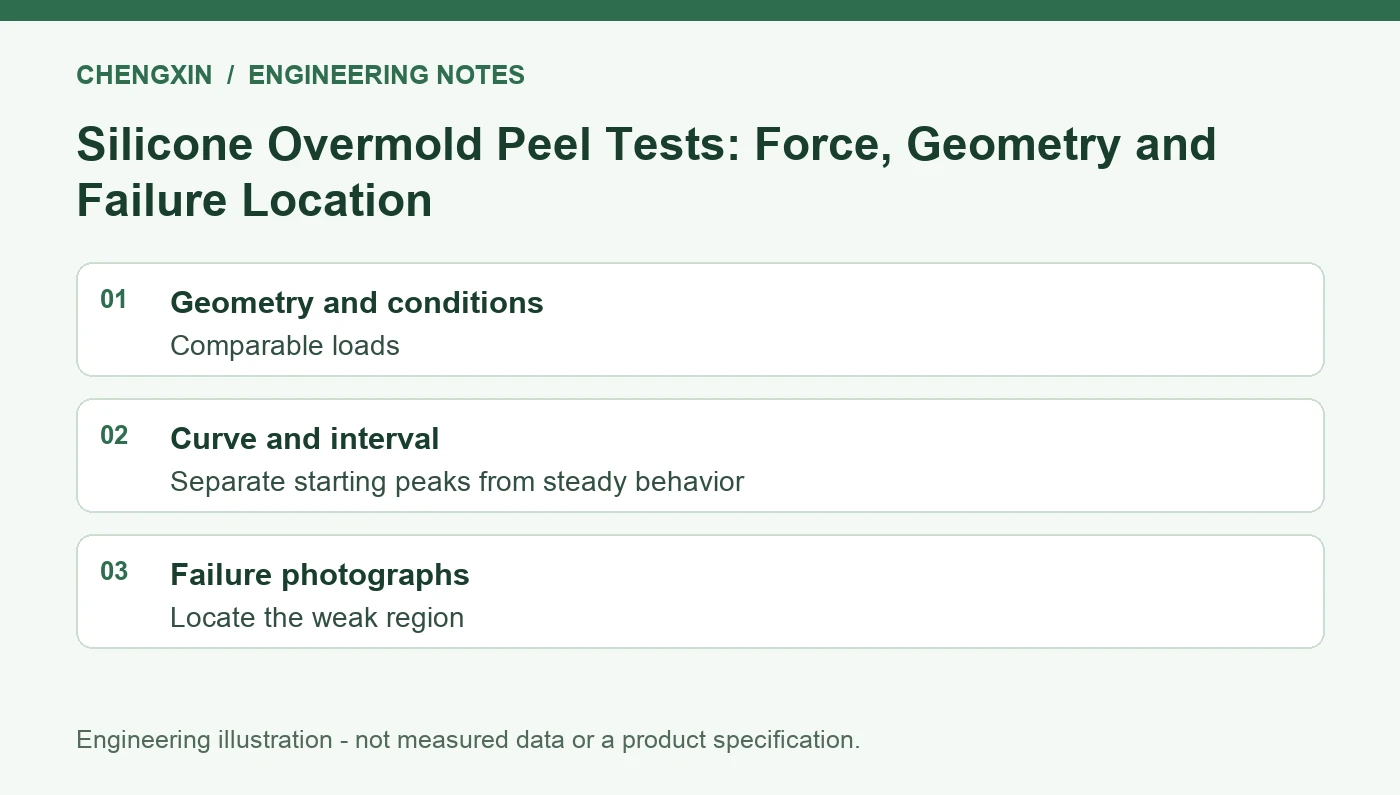
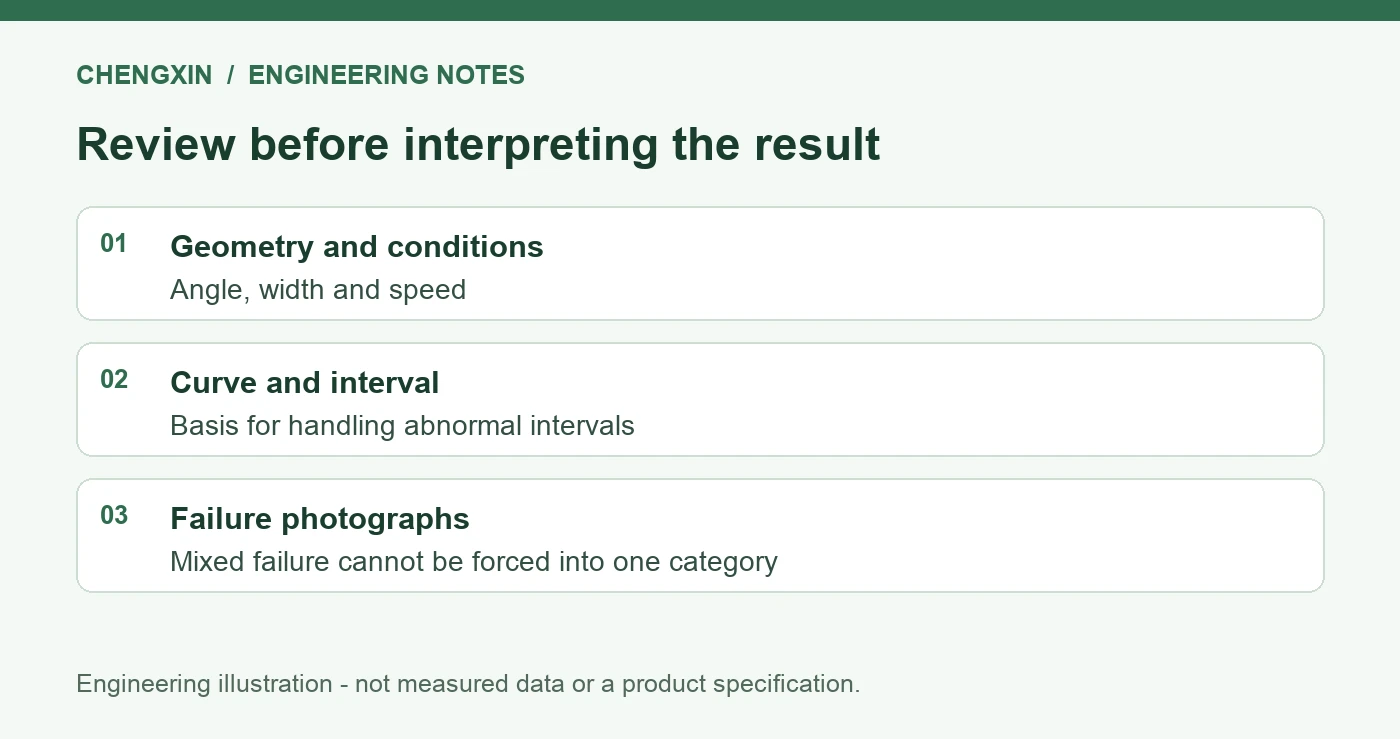
| Report item | Purpose | Common omission |
|---|---|---|
| Geometry and conditions | Comparable loads | Angle, width and speed |
| Curve and interval | Separate starting peaks from steady behavior | Basis for handling abnormal intervals |
| Failure photographs | Locate the weak region | Mixed failure cannot be forced into one category |
Illustrative project example
Specimen A may have a high peak followed by extensive interfacial separation, while B has steady load and some bulk tearing. Judge against application criteria, the stable region and aged behavior rather than ranking peaks alone.
Frequently asked questions
Does inability to pull it apart mean it passes?
Define limits, grip slip and acceptance criteria. Instrument range limits or fixture failure are not bond acceptance.
Can hand tearing replace a specified peel test?
It can aid quick observation but cannot reliably control conditions or replace contractually required quantitative evidence.
Technical references
References explain methods and terminology. They do not establish certification, acceptance limits or measured performance for a Chengxin product. Confirm the applicable edition and project-specific method with the responsible laboratory.
Related product and project inquiry
Custom Shaped Silicone Parts · Mold Release Before Silicone Bonding: Residue and Process Separation
For a custom part review, send the drawing, application, material or performance needs, key dimensions, quantity and target test conditions. Material, tooling and acceptance requirements are confirmed for each project.