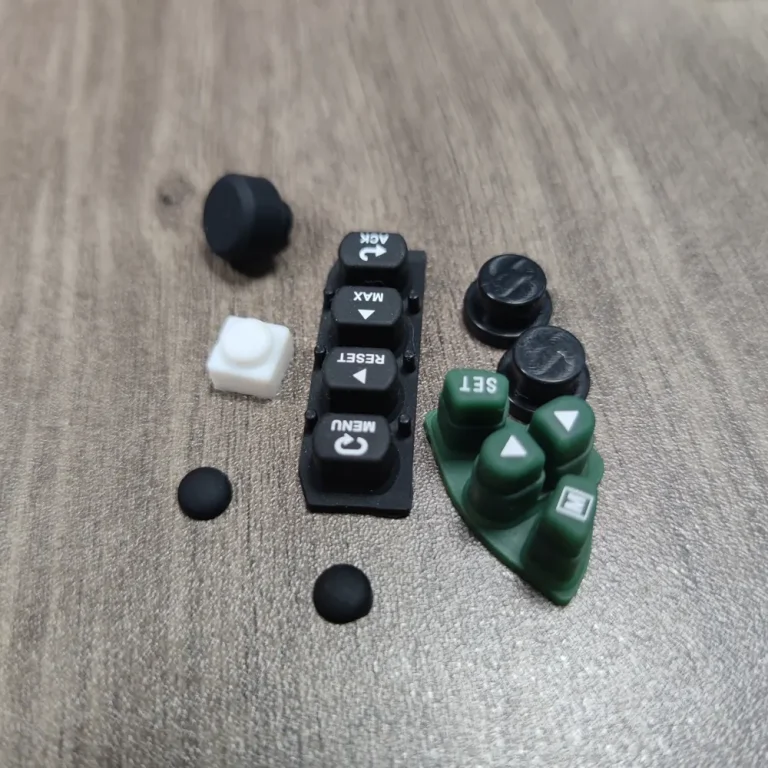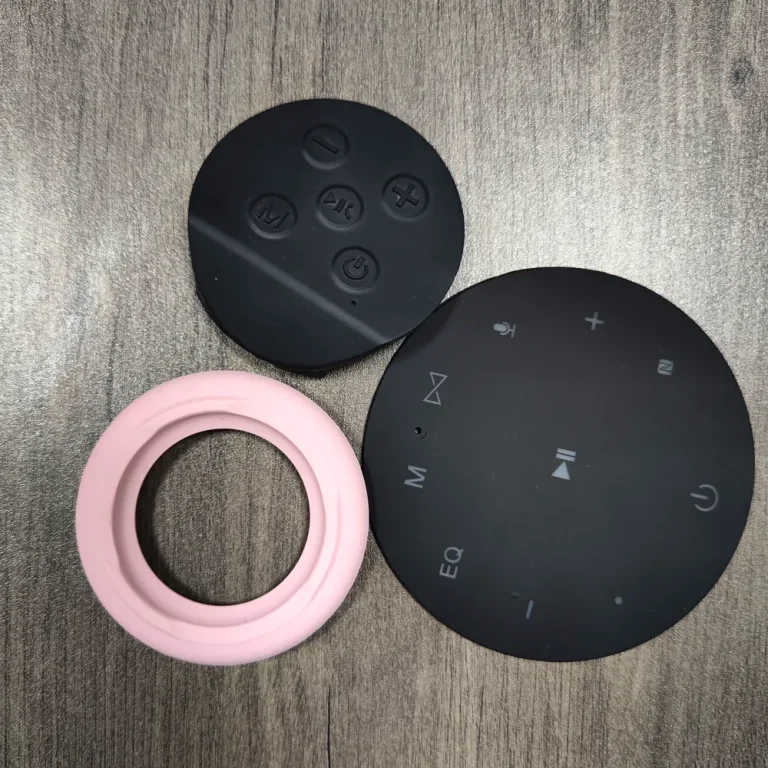
Scope and common interpretation errors
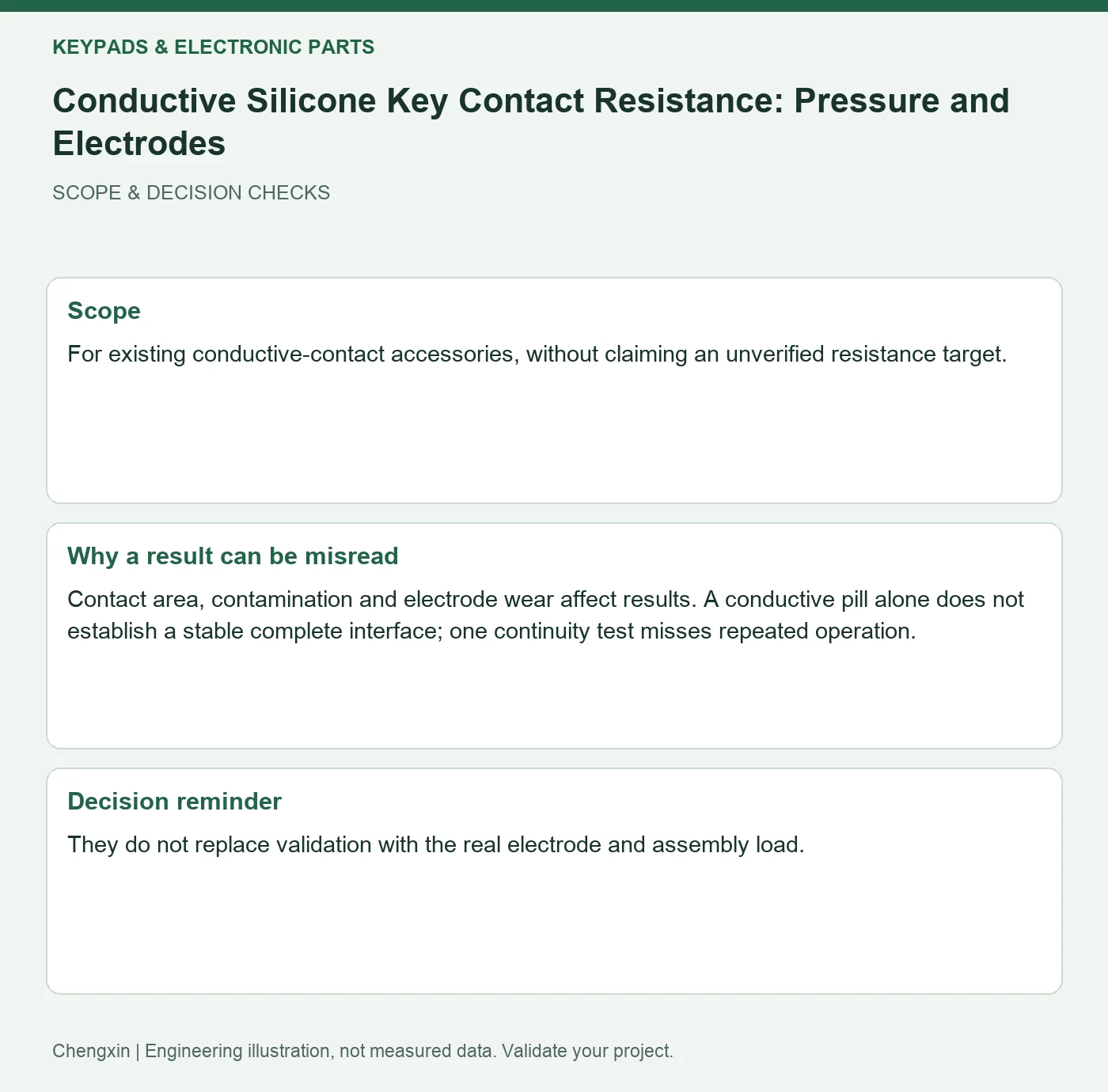
For existing conductive-contact accessories, without claiming an unverified resistance target.
Contact area, contamination and electrode wear affect results. A conductive pill alone does not establish a stable complete interface; one continuity test misses repeated operation.
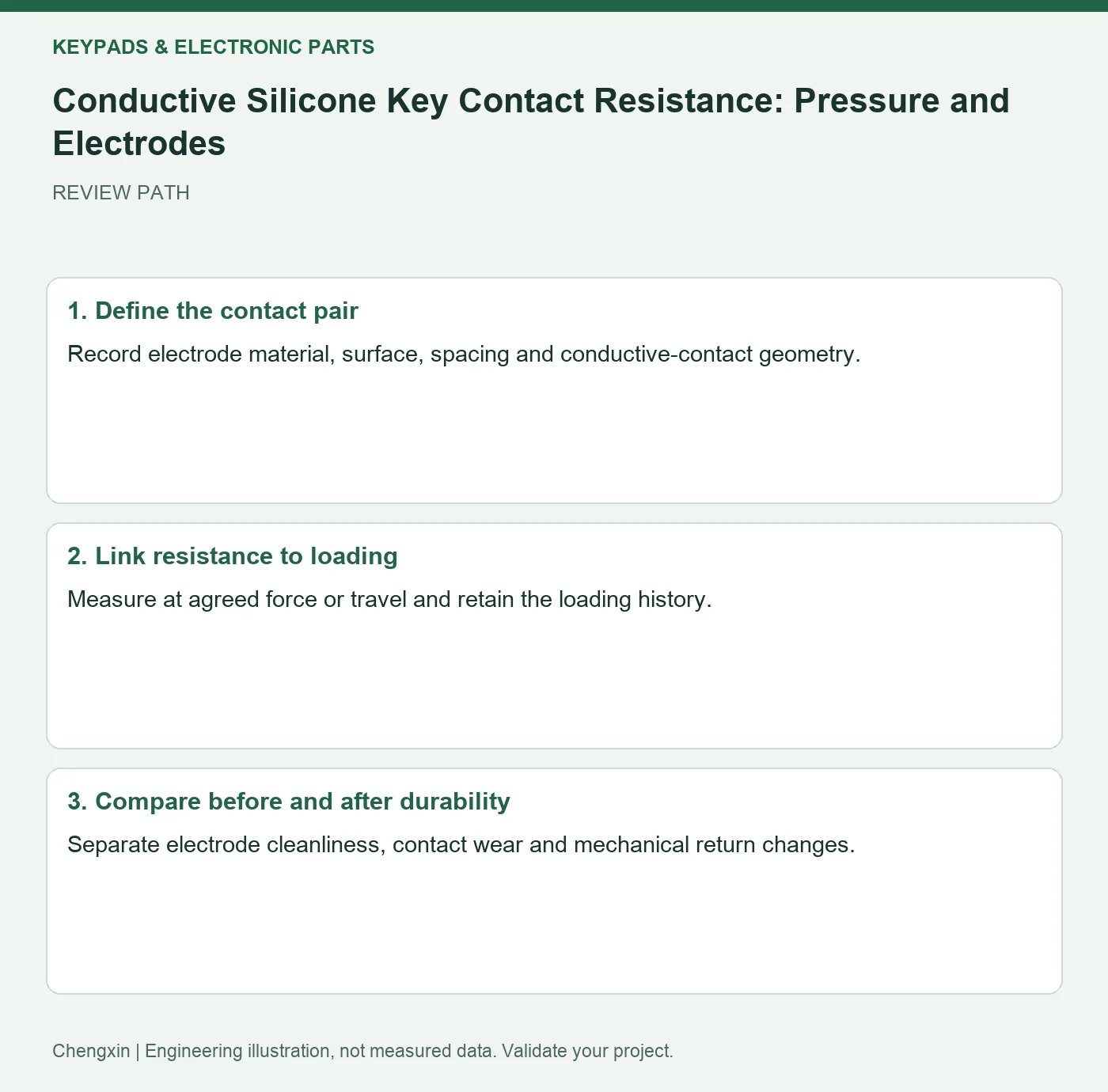
Turn the review into recorded checks
| Step | Action and evidence |
|---|---|
| 1 · Define the contact pair | Record electrode material, surface, spacing and conductive-contact geometry. |
| 2 · Link resistance to loading | Measure at agreed force or travel and retain the loading history. |
| 3 · Compare before and after durability | Separate electrode cleanliness, contact wear and mechanical return changes. |
A comparison to avoid misinterpretation
Compare clean and controlled-contamination electrodes at equal force to investigate interface sensitivity. Such testing does not authorize contamination in production.
Frequently asked question
Can probes pressed directly onto a conductive pill qualify the part?
They do not replace validation with the real electrode and assembly load.
Background and further reading
This note addresses one specific question. For broader concepts, see the related background guide.
Related question: Multiple Events from One Key Press: Contact Bounce and Debouncing.
External references support the relevant concepts. The review steps and scenarios are independent engineering discussion guidance, not quotations from a standard or external organization. Use agreed methods, applicable document revisions and complete conditions.
Apply this to your custom part
Compare the structure with Custom Silicone Parts for Electronics. Describe the application, geometry, operating conditions, quantity and problem to solve. Submit a custom-parts inquiry, or see how to send drawings and sample photographs by business email. Confirm material, dimensions, costs, testing and delivery requirements for the project.